
Tk 11 Crore Project in Bogura
Machines to do animal slaughter, meat processing
- 15 cows can be slaughtered and meat processed per hour
- Biogas can be produced from animal waste
- City Corporation will be in charge
- Cost per cow may be Tk 1,000

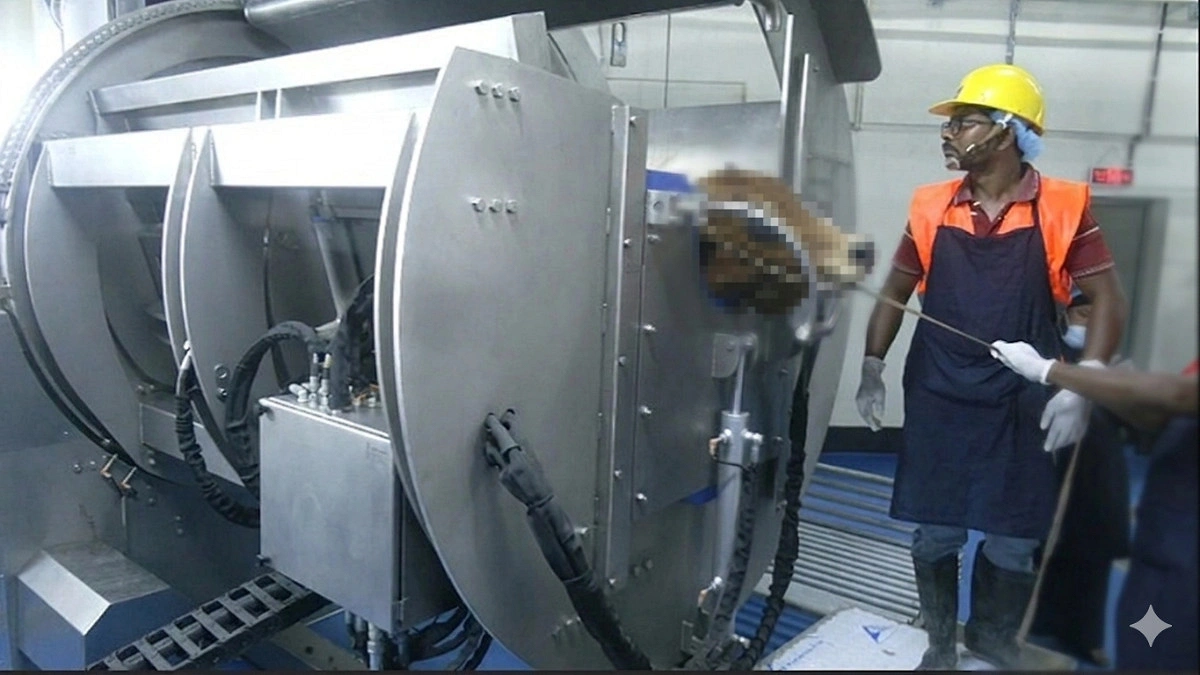
Agamir Somoy image regenerated by AI.
A modern and scientific slaughterhouse, designed on the model of developed countries, is being launched in Bogura. At this facility, the entire process—from slaughtering cattle and goats to meat processing—will be carried out using automated machines without direct human contact. At the same time, animal waste will be used to produce biogas and other useful by-products.
Officials said that animals will be slaughtered in a hygienic and halal manner at this modern slaughterhouse. After slaughter, most tasks such as cutting, storing, and processing meat will be completed using automated technology. This will ensure food safety while also reducing environmental pollution.
According to the District Livestock Office, the slaughterhouse has been built on 50 decimals of land in the Joypurpara area of Bogura city. It has been constructed under the Livestock and Dairy Development Project, an initiative of the Ministry of Fisheries and Livestock, with funding from the World Bank. Construction of the project began in October 2024, with an estimated cost of around Tk 110 million.
The facility also includes an effluent treatment plant (ETP), a chilling house, a power generator, and a biogas plant. Two authorities will jointly manage operations. The technical aspects of slaughtering and meat processing will be overseen by the District Livestock Department, while Bogura City Corporation will be responsible for its operation.
The slaughterhouse was officially inaugurated on May 17 by State Minister for Fisheries and Livestock, Sultan Salauddin Tuku. Although inaugurated, it has not yet started full operations. The City Corporation will take necessary steps to begin its operation. The District Livestock Office will provide training to those assigned to work at the facility.
Livestock officials said that in this modern slaughterhouse, it will be possible to slaughter 15 cattle and 30 goats or sheep per hour and process the meat in a hygienic manner. This machine-based system will ensure speed, safety, and quality.
Explaining the meat processing system, Bogura Sadar Upazila Livestock Officer Md. Raihan said it is a fully scientific and hygienic process. After an animal is brought in, a veterinary doctor will first examine whether it is healthy. If it is found healthy, the meat will be deemed suitable for consumption. The animal will then be cleaned and prepared for slaughter.
Raihan added that many people wonder how machine-assisted slaughter can be halal. Even if machines are used, the slaughter itself will be done by hand. A trained Muslim person will carry out the slaughtering process. After that, skinning and meat cutting will be done automatically using machines.
The slaughterhouse has also been designed to produce renewable biogas from the dung of slaughtered animals. For this purpose, two separate plants have been installed. In addition, animal bones, blood, and other usable by-products will be collected and supplied to relevant industries. The biogas produced from the plant will be used to meet the slaughterhouse’s electricity demand. Meanwhile, bones and other waste materials will be sold to various factories, allowing the facility to generate financial profit. Local residents have welcomed the initiative, saying it will help ensure safe protein-based food.
Welcoming the modern slaughterhouse, hotel owner Tahmina Parvin Shyamoli said that the hygienic meat processing system will definitely be safe for consumers. However, she noted that in Bangladesh such initiatives often fail after some time. She expressed hope that this slaughterhouse will not face a similar fate.
Regarding the facility, Sanwar, a meat seller from Fateh Ali Market in Bogura city, said the system is certainly good, but it will not be practical for them. He explained that slaughtering a cow and bringing it to the market costs them around 100–150 taka. If they use the slaughterhouse, expenses will increase due to transportation costs, slaughter fees, and possible delays in queues. For these reasons, he believes it will not bring much benefit to small traders.
However, meat processing entrepreneurs have welcomed the modern system. Shafiqul Alam, owner of a meat market business called Meat Market in the Upashahar area, said, “For processing meat for export or supply to other districts, this slaughterhouse will be very useful for us. We will be able to supply directly from there.”
Such mixed opinions among meat traders are natural, as it will take time to adapt to a new system from a long-established traditional one, said District Livestock Officer Dr. Kazi Ashraful Islam. He said meat will be supplied to consumers in a completely halal and safe manner. The City Corporation will manage the operation, while the Livestock Department will provide technical support.
Modern slaughterhouses have been built in 13 districts, including Bogura, all of which are under the control of municipalities or city corporations. The Bogura slaughterhouse will employ at least 12 staff members, including one veterinary doctor. It will be operated by the Bogura City Corporation through a vendor company. The initial estimated cost per cow may be around Tk 1,000, although the final rate will be set by the City Corporation.
Former Bogura Municipality Executive Officer Rezaul Karim said the slaughterhouse has already been inaugurated and is fully ready, but it will be launched after staffing arrangements are completed. The Livestock Department has sent a letter for its handover. Since the city corporation has only recently been formed, a third party will be involved in its management before it begins full-scale operations.
