


‘Sometimes I could smell burning flesh’

Collected Photo
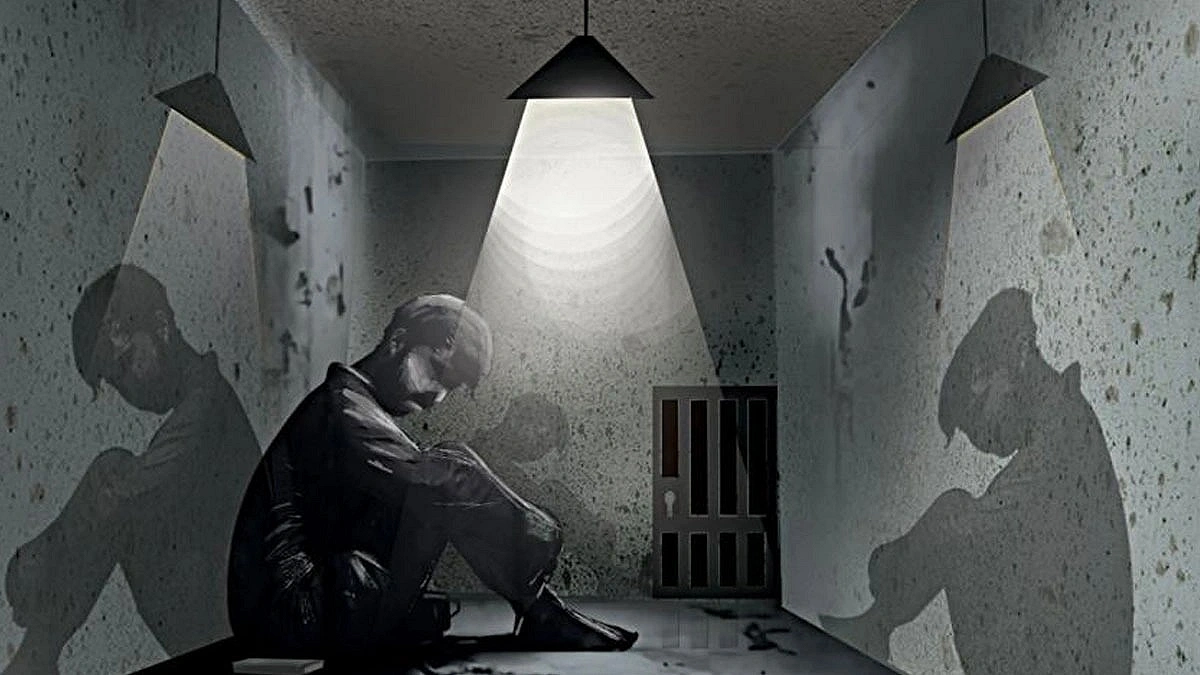
A room. Completely enclosed. Cut off from the outside world. No sound of crying could be heard there. Nor screams. That was because the rooms were soundproof. During torture, loud music was played outside so that the cries of those inside could not reach the outside in any way. Their eyes were blindfolded. Their hands were handcuffed. Sometimes they were hung by their bound feet. At other times, electric shocks were administered to their bodies. Pins were inserted under their fingernails. They were beaten mercilessly. Brutal torture was carried out in the name of interrogation. Victims held in the detention cells of the so called Aynaghar have described such horrific experiences to the Commission of Inquiry on Enforced Disappearances.
One such victim is a 29-year-old man who disappeared after being taken by members of the intelligence branch of the Rapid Action Battalion and RAB 5 in 2010. He remained missing for about 46 days. He described the torture inflicted on him to the Disappearance Commission this way: ‘At Aynaghar, four or five people would beat him and hang him from a hook. They would remove his clothes and attach electrical clips to sensitive parts of his body. As soon as they pressed the switch, his body would shake. The pain was unbearable. It felt as if his organs were burning. Sometimes I could smell the kind of odor you get when flesh burns.’
Describing his brutal experience of being subjected to electric shocks, the young man further said, ‘When they gave me a shock, it felt as if my whole body was curling up like a football. Not just once. He was given electric shocks eight or ten times. Along with this, there was relentless beating. No part of his body from his feet to his neck was spared. His entire body had turned black from the torture.’
This was how people who were picked up by law enforcement personnel and held in torture cells at secret detention facilities were tortured. According to the victims’ testimonies, the torture rooms at the secret detention facilities had been specially constructed. Most of the rooms were soundproof. Loud music was played during torture. The sole purpose was to ensure that no sound from inside could reach the outside.
The detainees also had no personal privacy. They were monitored through CCTV cameras even when using the toilet. Some cells were so small that there was virtually no separation between the sleeping area and the toilet.
There were widespread allegations of enforced disappearances during the 16 years of Awami League rule. Following the 2024 student and public uprising, the interim government led by Dr. Muhammad Yunus formed a commission to investigate allegations of enforced disappearances. The commission’s investigation revealed a horrifying picture. Although attempts had been made to destroy evidence, inspectors found special interrogation rooms and torture equipment at almost every detention center in the country during their visits.
A report by the Disappearance Commission said, ‘Almost every detention center that was inspected had interrogation rooms specially prepared for torture. In some places, rotating chairs were found. In others, there were “Yam Caps.” In some places, there were “pulley systems” for hanging people and torturing them.’
According to the commission, a rotating chair was found at RAB 2. “Yam Caps” were found at RAB 4 and the Detective Branch. Equipment used to hang people for torture was found at the Taskforce for Interrogation (TFI) cell. Signs of soundproofing were also found at several locations that had reportedly been destroyed. This indicates that measures had also been taken to prevent screams from passing through the walls and reaching the outside. However, no precise figure could be established for the total number of such secret detention facilities across the country.
Secret detention facility with 22 rooms: According to information from relevant sources, a secret detention facility with 22 rooms was operated in a two-story building at the Dhaka headquarters of the Directorate General of Forces Intelligence (DGFI). Information was also found about a prison like secret detention facility inside the police lines in Bogura.
In Dhaka’s Uttara area near the airport, a TFI cell was located in an old two story building next to the armory inside the RAB 1 battalion compound. According to those familiar with the matter, it was one of the main detention facilities used for enforced disappearances during the Awami League government.
There were 10 cells on the ground floor of the building. Each had an average size of about 5 feet by 8 feet. The toilets were open. Accommodation for RAB members responsible for security was also located on the same floor.
There were another 10 cells on the second floor. Their average size was about 14 feet by 4 to 5 feet. Two of the larger cells were known as “VIP cells.” Near the staircase at the entrance were another seven extremely small cells. Each was approximately 2 feet by 4 feet. These were known as “death cells” or “Yam cells.”
There were cameras even in the toilets: According to relevant sources, most of these cells were extremely small and confined. In some cells, there was not even a separate wall around the toilet pan. As a result, when detainees lay down, their bodies would often end up over the pan.
They had to spend long periods surrounded by dirt, urine and feces. On top of that, CCTV cameras were installed. They were not free from surveillance even while using the toilet. As a result, in addition to physical torture, detainees were subjected to extreme humiliation and mental suffering.
According to accounts from victims, they were subjected to at least 10 types of physical torture. When injuries developed on their bodies, they were sometimes given medicine or ointment. Once the wounds had partially healed, they were presented in public as accused persons.
Call to preserve locations and evidence: Ejazul Islam, executive director of Human Rights Support Society, said that the locations where secret detention, torture or enforced disappearances took place and the evidence identified during investigations must be preserved.
In his view, prosecuting enforced disappearances is not a matter of political revenge. It is a question of state accountability, the rule of law and people’s fundamental rights. If past enforced disappearances are not brought to justice, it will be difficult to prevent enforced disappearances in the future. At the same time, strong laws and independent institutions are needed so that no citizen can be made to disappear in the future under the cover of state power.
Every allegation must be investigated impartially: Abu Ahmed Faizul Kabir, senior coordinator of Ain o Salish Kendra (ASK), said that enforced disappearances will not end simply by enacting laws. Every allegation must be investigated independently, impartially and effectively. The whereabouts of missing people must be established and the right of victims and their families to know the truth must be ensured.
He also emphasized the need to uncover the truth about past incidents and ensure accountability while establishing effective state protection mechanisms to prevent enforced disappearances from happening again in the future.


