
Dipen Dewan to Vacate Official Residence

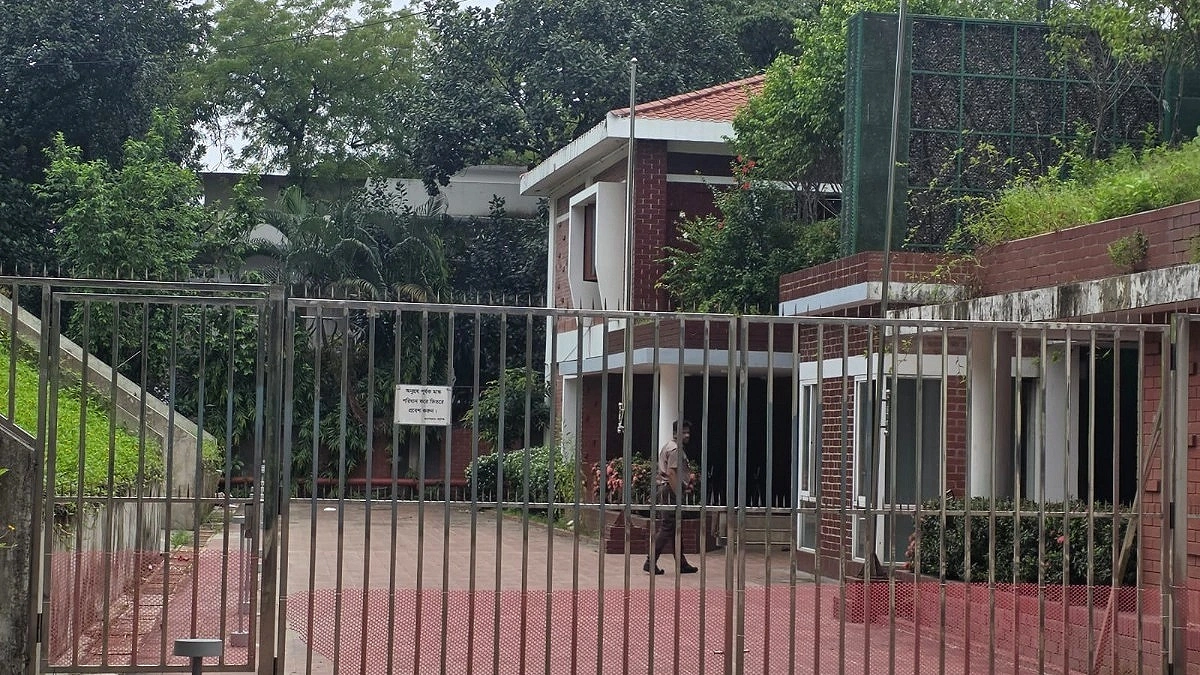
Dipen Dewan preparing to vacate Baily road residence. Photo: Agamir Somoy
At 10:10 am on Sunday, there was an eerie silence in front of the grand and elegant Parbatya Complex on Bailey Road in Dhaka. After confirming the directions from the guard on duty, Maruf Hossain, I stepped forward toward my destination, the official residence of recently resigned Chittagong Hill Tracts Affairs Minister Dipen Dewan, who stepped down just seven days ago.
At the entrance of the residence, Rangaamati District Fishermen’s Party convener Nurul Alam Bacha was seen. He has already received a show-cause notice from the district BNP after making what the party termed ‘inappropriate remarks’ at a protest rally in Rangaamati’s Reserve Bazaar on Tuesday, held in response to Dewan’s resignation.
He said he had come to meet the former minister to express his pain, claiming that his remarks were distorted and that he was being turned into a victim.
Inside the ground-floor room where the minister usually met visitors, the first meeting took place with him, the former minister. Dipen Dewan sat on a chair, while his wife Maitri Chakma sat on a nearby sofa. After exchanging warm greetings, the former minister began speaking, at times trembling with emotion, at times speaking in anger, and at times appearing tearful.
He said he had read all recent reports published by Agamir Somoy and praised the coverage. He spoke at length but warned that nothing he said should be published, describing it as ‘off the record’, effectively holding back what could have been a sensational account of his resignation.
Hospitality continued alongside the conversation. Meanwhile, two of Dewan’s key political allies from Rangaamati arrived, district BNP vice presidents Saiful Islam Bhutto and Saiful Islam Panir. His closest political associate Ali Ashraf was also present.
Laughter, informal discussion, and self-reflection continued for nearly one and a half hours. Dewan spoke about his dreams, ambitions, what he had wanted to achieve, and his unfulfilled expectations. Others also shared their hopes, disappointments, and sense of disillusionment, while collectively reaffirming their trust and commitment to the party leadership.
At one point, his wife Maitri Chakma showed this correspondent around the ground and first floors of the residence. The aesthetically designed house was allotted to them on the 18th of last month. She had personally made modifications to parts of it, including a beautifully designed rooftop sitting space on the second-floor balcony. Who knew they would have to leave the house in less than a month!
She said preparations were underway to vacate the residence. They are now looking for accommodation at the MP Hostel in the NAP Building and will move there as soon as a place is secured. She added that they will spend most of their time in Rangaamati from now on.
On the way back after leaving the former minister’s residence, this correspondent spoke with his closest political associate, Ali Ashraf. He said, “You have never come before. If you had come before his resignation on June 1, it would have been impossible to meet or talk with him because of the crowd. There were always people and party workers. Now there is only silence, as if everyone’s need has ended.”
Security guard Maruf Hossain of the Parbatya Complex said, “Sir is a very kind person. He used to speak to me nicely as well. There is no government vehicle or police protocol for him now. He may leave at any time. Earlier, many people used to come; now hardly anyone does.”
The elegant Parbatya Complex stands beside the Officers Club on Bailey Road in the capital. Built during the previous authoritarian government, the picturesque complex was constructed in 2016 at a cost of Tk 1.06 billion amid strong opposition from a section of bureaucrats over land acquisition issues. The project was nevertheless pushed through at the personal interest and preference of the then prime minister.
The complex includes multiple halls, separate bungalows for the minister and the regional council chairman, and several rest houses. It is open for accommodation to anyone coming from the three hill districts, including district council chairmen. The complex is usually bustling with ruling party leaders and activists, but now it stands in silence. Just seven days ago, one of the most influential figures from the hills was still here, only his post and flag are gone, and with them, the entire scene has changed.
