
‘Indian hilsa’ in official documents being sold as Myanmar hilsa

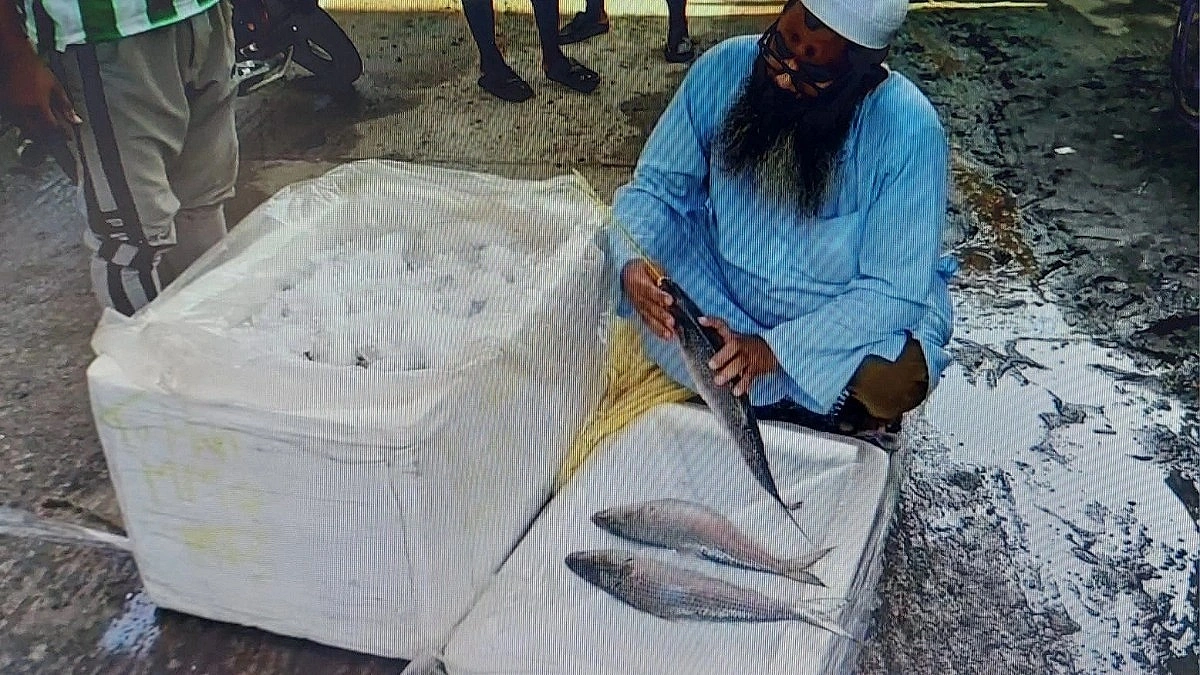
Photo: Agamir Somoy
Hilsa imported through the Benapole Land Port is identified as Indian hilsa in official government documents. However, the same fish is being sold as “Myanmar hilsa” in markets in Jashore. The discrepancy between official documents and market labeling has created confusion among buyers about the source of the fish. It has also raised questions about the transparency of market monitoring.
Meanwhile, the Directorate of National Consumer Rights Protection said regular monitoring and drives are being conducted in markets to prevent fish from being sold by concealing its source.
At around 11:30 am on Wednesday (September 16), a drive was conducted at the fish market in Jashore’s Bara Bazar. A wholesale fish trader named Karnaphuli Fish was fined Tk 5,000 for failing to show the fixed price and documents related to the letters of credit for imported fish.
The drive was led by Md. Selimuzzaman, Assistant Director of the Jashore office of the Directorate of National Consumer Rights Protection. Various retail and wholesale fish shops at Bara Bazar were monitored during the drive. He said the purchase and sale prices of Indian hilsa and related activities will be monitored regularly in the market.
According to information from the Benapole Fisheries Quarantine Office, a total of 352,786 kilograms of hilsa was imported from India during July and August, the first two months of the current 2026 to 2027 fiscal year. Of the consignments imported through 22 importing companies, 91.66 percent arrived in August.
In July, 29,440 kilograms of hilsa was imported through three companies. The average daily import was around 950 kilograms. In August, 323,346 kilograms of hilsa arrived through 19 companies, with an average daily import of around 10,430 kilograms. This means hilsa imports increased by around 10.98 times in one month.
The total declared value of the hilsa imported over the two months was Tk 69,294,510. Accordingly, the average declared value was around Tk 196 per kilogram.
Confusion has arisen over the source of fish legally imported through Benapole. Nilmal Kumar, a fish trader and wholesaler at Jashore Bara Bazar, claimed that the large hilsa being sold at lower prices in the market is mainly from Myanmar. According to him, these fish enter Bangladesh through Benapole via India.
However, Ashwadul Alam, an inspector at the Benapole Fisheries Quarantine Office, said the hilsa imported through Benapole is Indian. He said the hilsa mainly comes from Gujarat in India. According to him, Myanmar hilsa is generally imported through the Chattogram Port.
A significant price difference was found between local and imported hilsa in the Jashore market. Local hilsa weighing 1.2 to 1.3 kilograms is being sold at Tk 3,300 to Tk 3,400 per kilogram. On the other hand, imported hilsa weighing 1.3 to 1.4 kilograms is being sold at around Tk 1,400 per kilogram.
Although the declared price at the import stage is around Tk 196 per kilogram, the price difference reaches around Tk 1,200 when the fish is sold in the market. As the fish look almost identical, it has become difficult for ordinary buyers to distinguish between local and imported hilsa.
Local resident Waheduzzaman said he bought the fish believing it was local hilsa and noticed differences in taste and smell after cooking it. According to him, it is difficult for ordinary buyers to identify differences in the source or quality of the fish.
Jashore District Fisheries Officer Monirul Mamun said there is no direct provision under the fisheries law to take action against sellers for selling imported fish as local fish.
Regarding the matter, Assistant Director of the Directorate of National Consumer Rights Protection Md. Selimuzzaman said monitoring and drives are continuing in markets to prevent fish from being sold by concealing its source. He said the purchase and sale prices of Indian hilsa and import related documents will be monitored regularly.
