


Doctors Struggling to Manage Measles Patients

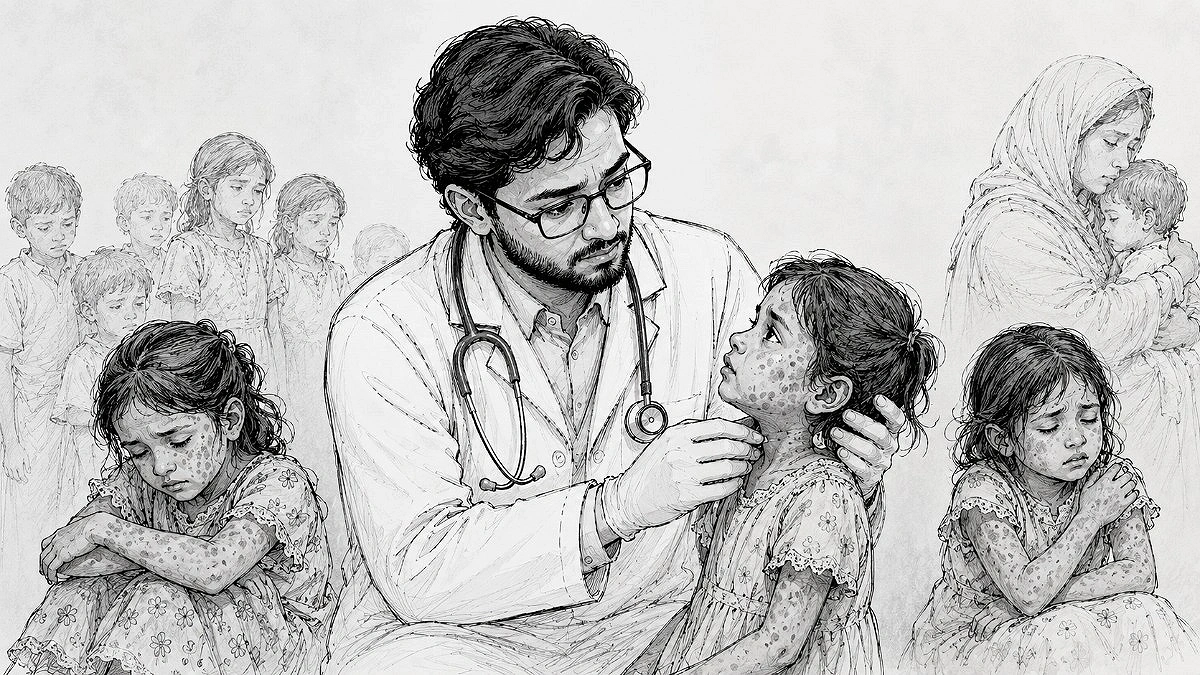
Graphics: Agamir Somoy
A medical protocol is the roadmap for healthcare. Without a medical protocol, patient risk increases and the quality of healthcare is disrupted. Health experts believe that the absence a medical protocol for measles in the country is making it difficult to manage measles patients, and is also contributing to a higher number of deaths.
They say that without a protocol, different doctors may provide different types of treatment for the same disease. In emergency situations, the lack of specific guidelines can cause a patient's condition to deteriorate. Whether this is happening with measles needs to be investigated.
Specialists at two hospitals in the capital that treat measles say that a protocol is needed to determine when a measles patient should be referred. They are receiving many patients in such critical condition that treatment options are very limited. They claim that patients are not being referred in a timely manner. Furthermore, without an integrated protocol for infectious diseases like measles, problems arise in detection, treatment, and surveillance. Doctors also say they often struggle with the management of measles patients.
Public health expert Mushtaq Hossain said, "In the changed circumstances, a medical protocol was very necessary to reduce child deaths from measles. If the government shows sincere willingness, considering the emergency situation of measles, it could be created within 24 hours."
The Bangladesh Children's Hospital and Institute is the country's largest hospital for children. Dr. Md. Mahbubul Haque, head of the Critical Care Pediatrics department at the hospital, said, "Most of the patients admitted here with measles are in critical condition. These children are brought to the hospital late. Additionally, it needs to be examined whether patients are being referred on time."


