
PM Tarique Rahman Walks to Osmani Hall to Inaugurate DC Conference

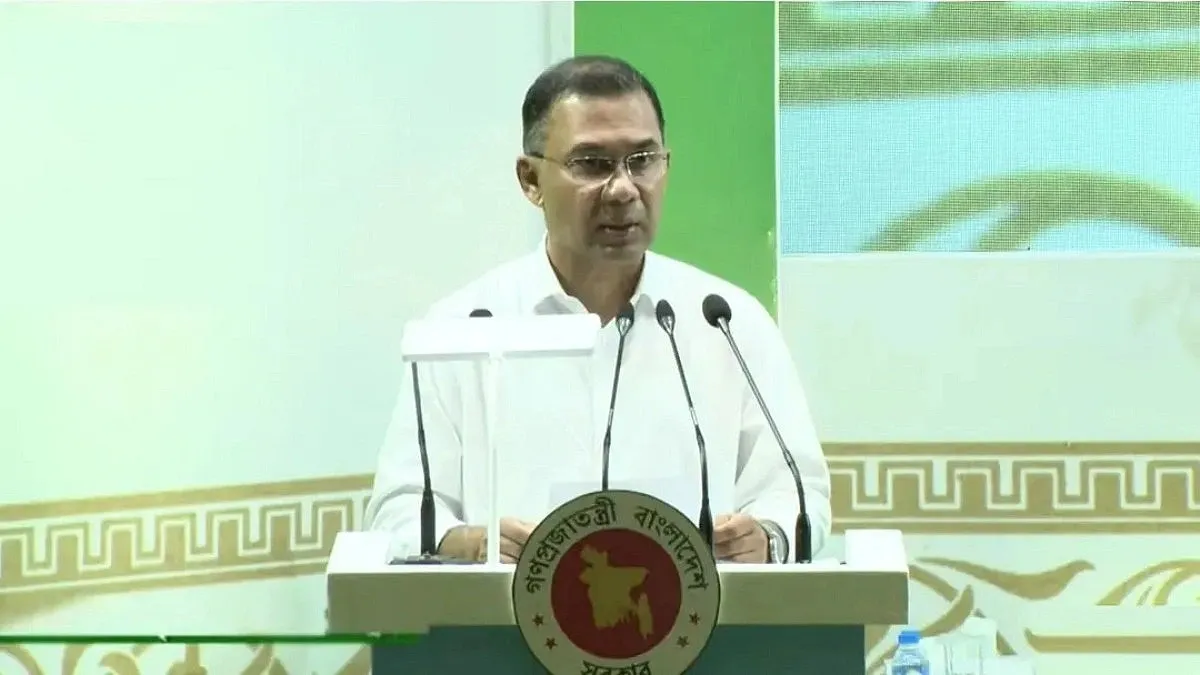
Prime Minister Tarique Rahman speaks at the DC conference in Dhaka. Photo: BSS
Prime Minister Tarique Rahman has inaugurated the four-day District Commissioner (DC) Conference in Dhaka. He opened the conference today (Sunday) at 10:30 AM at the Osmani Memorial Auditorium in the capital.
The Prime Minister arrived at the Osmani Memorial Auditorium at around 10:20 AM, on foot from his office at the Bangladesh Secretariat to open the ceremony. As he walked, people standing on both sides of the road greeted him, and the Prime Minister responded by waving back.
The Prime Minister's Additional Press Secretary, Atiqur Rahman Rumon, confirmed the news, reports BSS.
The conference is being attended by Public Administration Ministry Adviser Md. Ismail Zabiullah, Minister of State Md. Abdul Bari, the Prime Minister's Principal Secretary ABM Abdus Sattar, and District Commissioners from across the country.
During the summit, top policymakers are presenting the government's governance philosophy to the field administration. This marks the first DC Conference held since the BNP-led government assumed office. Earlier on Saturday afternoon, Additional Secretary of the Cabinet Division Humayun Kabir said at a press conference that this year's summit will span four days.
The event features a total of 34 sessions, including 30 working sessions involving 56 ministries and departments. Divisional Commissioners and District Commissioners have submitted 498 proposals for the conference. Ministers and Ministers of State from 56 ministries will provide necessary directives to the District Commissioners regarding their respective sectors.
"We received 1,729 proposals from the field administration this time," Humayun Kabir said. "Out of these, 498 have been included in the working papers. The highest number of proposals pertains to the Health Services Division." He further noted that the primary topics of discussion at the conference include l
anagement, law and order, local government, disaster management, employment, social security, e-governance, education, healthcare, environmental conservation, infrastructure development, and the monitoring of various development activities.
