BRTC’s Plan to Buy 340 Buses Stuck in Limbo

Graphics: Agamir Somoy
The promises were ambitious. The vision was even bigger. The plan aimed to transform the face of public transportation. But reality now stands far from those promises and aspirations.
The project in question involves the Bangladesh Road Transport Corporation’s (BRTC) initiative to procure 340 compressed natural gas (CNG)-powered buses. Under the plan, 140 buses would join Dhaka’s public transport fleet, while the remaining 200 would operate outside the capital. However, three years after receiving formal approval, the project now appears headed toward cancellation.
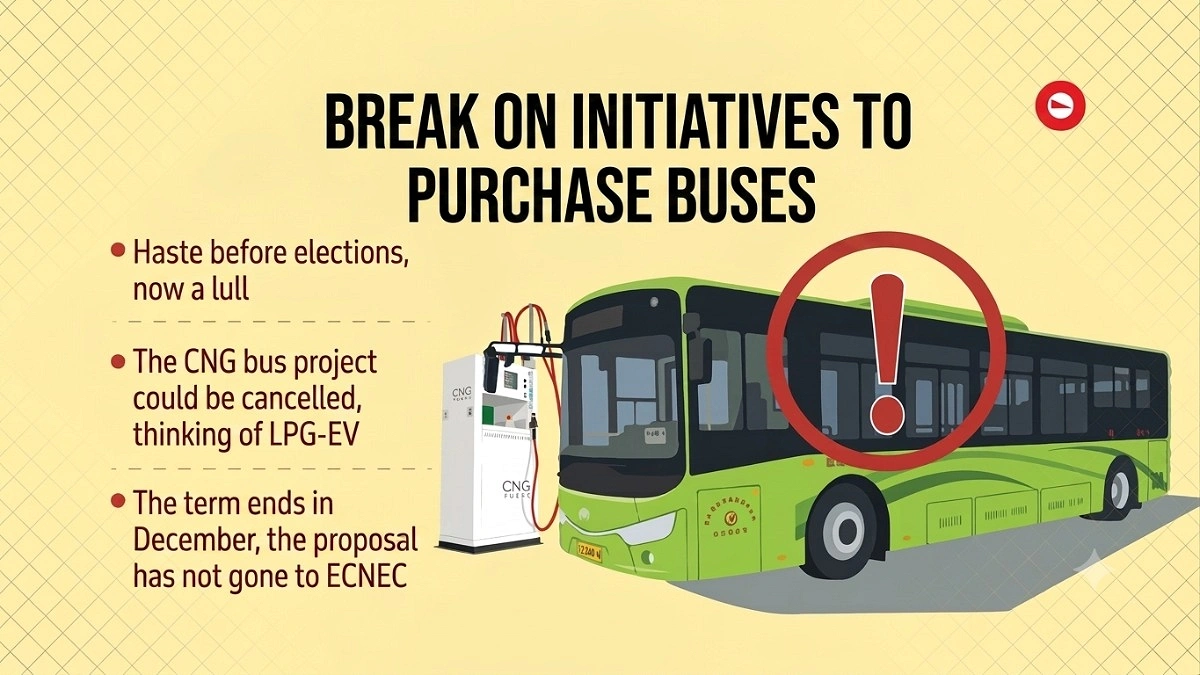
All procurement activities have stalled. Although authorities invited bids at the last moment, the process failed to move forward. The project also failed to meet contractual conditions within the deadline set by the lender. Yet authorities have neither canceled the existing tender nor issued a new one. The project’s implementation period expired six months ago. BRTC submitted a proposal to the Planning Commission seeking an extension three months before the deadline expired, but the proposal remains pending. The Executive Committee of the National Economic Council (ECNEC) has yet to discuss it. The project remains in limbo, neither advancing nor being canceled, and its future remains uncertain.
ECNEC approved the project to procure air-conditioned single-decker CNG buses for BRTC on September 5, 2023. Administrative complications, delays in the tender process, and various issues involving the foreign lender effectively brought the project to a standstill. However, activity suddenly accelerated ahead of the last national election. Under the original plan, authorities were supposed to complete the project within a year and a half. The project aimed to modernize Dhaka’s urban transport system, support the bus route rationalization program, and gradually replace aging diesel-powered buses. It also sought to introduce modern and environmentally friendly buses on inter-district routes outside the capital.
Most of the project’s funding, Tk 829 crore, was expected to come from a loan provided by South Korea’s Economic Development Cooperation Fund. The government was to contribute the remaining Tk 305 crore. However, delays began almost immediately after approval. It took nearly 15 months to appoint a project director and hire a Korean consultant after ECNEC approval. Authorities then prepared the tender documents and submitted them to the Export-Import Bank of Korea in November 2024. The bank returned multiple rounds of comments on the documents, requiring repeated revisions and resubmissions.
Ahead of the election, allegations emerged that authorities had rushed the procurement process without sufficient transparency. Questions also arose regarding certain tender conditions and the financial structure of the project.
According to BRTC’s international tender notice, the project included the procurement of buses as well as equipment and maintenance tools. Suppliers would have to deliver the buses in fully assembled condition. Bidders were required to provide a security deposit of $1 million. Companies also had to demonstrate at least 20 years of experience in bus supply. In addition, bidders needed to show that they had exported at least 200 diesel buses and at least 340 CNG-powered buses abroad over the past 20 years. The tender further required manufacturers to have the capacity to produce at least 250 CNG-powered single-decker air-conditioned buses annually. Companies also had to submit proof of manufacturing facilities and production capabilities. Despite these requirements, the procurement process ultimately failed to progress.
BRTC Chairman Abdul Latif Molla has now outlined his position. Speaking to Agamir Somoy, he said, “I only know that I need buses. Whether they bring CNG buses, keep the project, or cancel it, that is for the government to decide. I do not have the authority to cancel the project.”
When asked about the current status of the procurement process and reports that LPG-powered buses may receive priority, the chairman became visibly irritated.
“If it is LPG, then it will be LPG. There may be a separate project for that. There are many projects for EVs as well. Why would this project be canceled? It is proceeding as it has been,” he said in an agitated tone.
Although several additional questions were posed, he did not provide any clear answers.
Another BRTC official, however, offered more details. “We applied for a project extension in September last year, but we have yet to receive a response. The proposal has not even reached ECNEC. Under these circumstances, the project exists only on paper,” the official said.
The official added, “If the government were interested, the project would move forward. There is a loan agreement in place, so the government cannot simply cancel the project overnight. However, it is clear that the government is not interested. The government appears far more interested in EVs than in CNG buses.”
The project officially expired in December last year. Earlier that month, BRTC issued a tender notice to appoint a contractor. According to the notice, authorities were expected to complete the tender process by January 29. They later extended the deadline once more to allow interested contractors additional time to submit bids.
According to BRTC sources, eight companies submitted bids. Under procurement rules, authorities disclose the names of participating companies after opening the tenders. The lowest bidder typically gains an advantage in the selection process. After the tenders are opened, bidders must undergo both technical and financial evaluations.
Under the agreement with the lender, the validity period of the tender was three months. That meant authorities were expected to finalize contractor selection by February. However, four additional months have already passed since the deadline for signing the contract expired.
Repeated attempts were made over several days to contact Project Director Kazi Ayub Ali for comment on the project’s current status, but those efforts were unsuccessful.
A project official, however, provided some insight. According to the official, the Technical Subcommittee must first evaluate the tenders. Only bidders that pass the technical evaluation can proceed to the financial stage. Authorities will ultimately select the lowest bidder. However, no progress can be made because project funding has not been released. The project also lacks a valid implementation period.
“If the government extends the project period, work can continue. Otherwise, everything will remain frozen. In practical terms, the project is waiting for formal closure,” the official said.
Meanwhile, authorities eased contractor selection requirements beyond the conditions set out in the original Development Project Proposal (DPP) and loan agreement. The original proposal required the buses to be manufactured in South Korea. Under the revised conditions, the buses no longer need to be made in Korea; only the supplying company must be Korean.
BRTC sources said the tender documents received a total of nine comments from the lender. Resolving those issues caused further delays. Eventually, on November 20, 2025, the Export-Import Bank of Korea granted final approval to the tender documents. Authorities then published the tender notice in newspapers on December 1.
The project was one of several initiatives aimed at changing the bleak state of Dhaka’s public transportation system. The government has struggled to add new buses through private operators. Efforts such as bus route rationalization have failed to deliver results, and urban transport reforms have not achieved their intended goals.
Broken windows, rusted roofs, and torn seats exposing dirty foam remain common sights on Dhaka’s buses.
Meanwhile, expired, unsafe, and unfit vehicles continue operating freely on the city’s roads despite existing regulations. Although authorities are supposed to conduct regular enforcement drives, aging and dilapidated buses continue to dominate major roads. Officials have taken no meaningful steps either to remove these vehicles from service or to replace them with new buses.
Transport expert Professor Shamsul Hoque of the Bangladesh University of Engineering and Technology questioned why BRTC, as a government agency, remains interested in purchasing buses at all.
“What will BRTC do with these buses? It does not actually operate them. It leases them out and rents them to various organizations. The government may spend more than Tk 1,000 crore, but that will not bring real improvement to public transportation,” he told Agamir Somoy.
“And BRTC has no sense of shame. It has to occupy roads just to park its buses. It does not even have adequate space to keep its own fleet. Authorities should first determine where the buses will operate and where they will be parked. They can think about buying buses afterward.”