
Cheap Lifts, Costly Consequences for Lives and Limbs
- Human Lives Valued Less Than Money
- Choosing low-quality lifts over modern ones with ARD saves a few hundred thousand taka
- Makeshift repairs replace monthly professional inspections to cut costs
- The oversight has led to 887 accidents and injuries to 900 people
- Hospitals and government buildings face the highest risks

Graphics: Agamir Somoy
As the number of high-rise buildings in Bangladesh grows at a geometric rate, lifts, or elevators, have evolved from a luxury feature into an everyday necessity. But behind this mechanical mode of transport lies extreme negligence and irresponsibility. The temptation to save a small amount of money, unskilled workmanship and the use of outdated equipment have turned lifts in high-rise buildings into moving death traps. The public is paying for the lack of regular maintenance and the cost-cutting measures with their lives, while many others are being left disabled.
According to experts and engineers, most lifts used in Bangladesh have a normal service life of 20 to 25 years. However, hundreds of buildings across the country continue to operate risky lifts for years after they have exceeded that lifespan.
Many building owners also choose low-quality and unbranded lifts from the market to save a small amount of money when purchasing them. Moreover, these lifts are often installed by completely unskilled technicians without any consultation with professional engineers. As a result, major technical flaws remain from the very beginning.
After installation, lifts require regular monitoring. However, most buildings in the country do not conduct any institutional maintenance of their lifts. Accidents are increasing at a geometric rate because of makeshift maintenance and repairs carried out by unskilled people.
Experts say lifts are turning into operational death traps mainly due to four major failures. One of the key issues is the lack of monitoring. Although lifts are supposed to undergo inspections at least once a month and a full examination of all components once a year, these measures are rarely followed.
Another major cause of accidents is the absence of an Automatic Rescue Device (ARD). This device is essential to ensure that a lift does not become stuck midway during a power outage. However, cheaper lifts often do not include this feature.
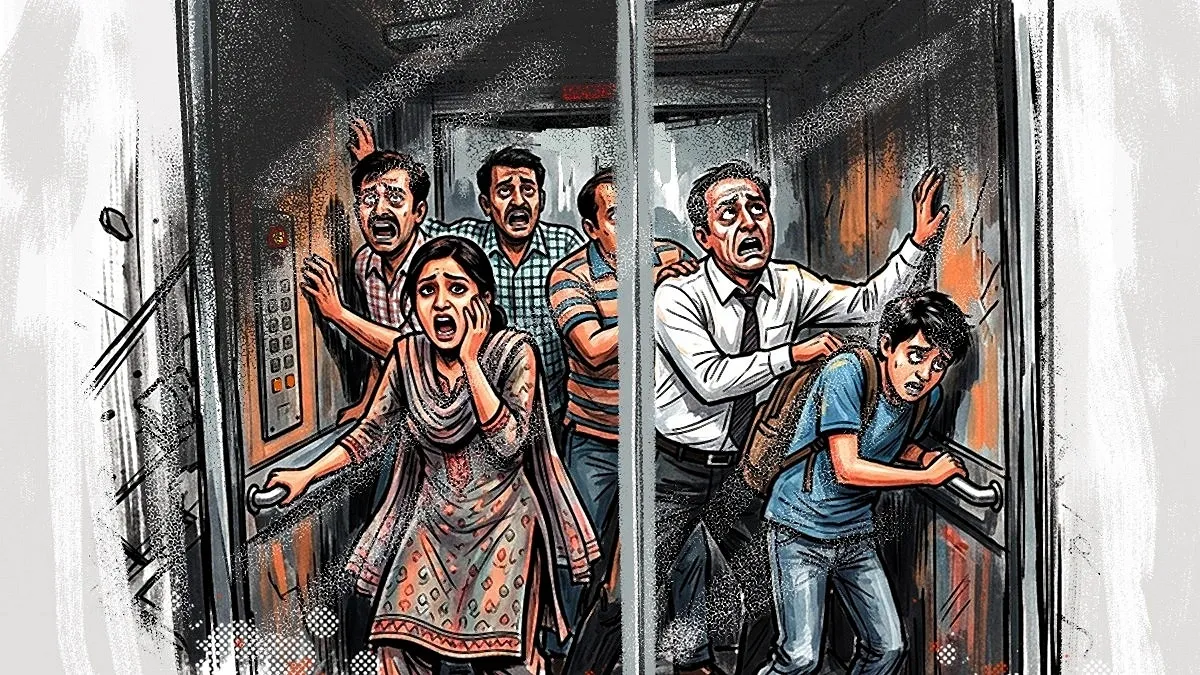
Malfunctioning alarms and fans also contribute to casualties in accidents. In most cases, the ventilation fan and emergency alarm button inside the lift do not work when passengers become trapped. As a result, people inside suffer panic attacks or become ill due to a lack of oxygen. Some even die.
Carrying passengers beyond a lift’s capacity also increases the risk of accidents. Ignoring the stated passenger capacity and overcrowding lifts often leads to disasters.
Many lifts also carry passengers beyond their intended capacity, which is extremely risky. Therefore, passengers also need to be aware. However, if a lift gets stuck for any reason, panicking, crying or shaking the doors can make the situation worse; instead, people should remain calm and wait.
