

Padma Bridge Completes 4 Years, Tk 3,394cr Toll Collected

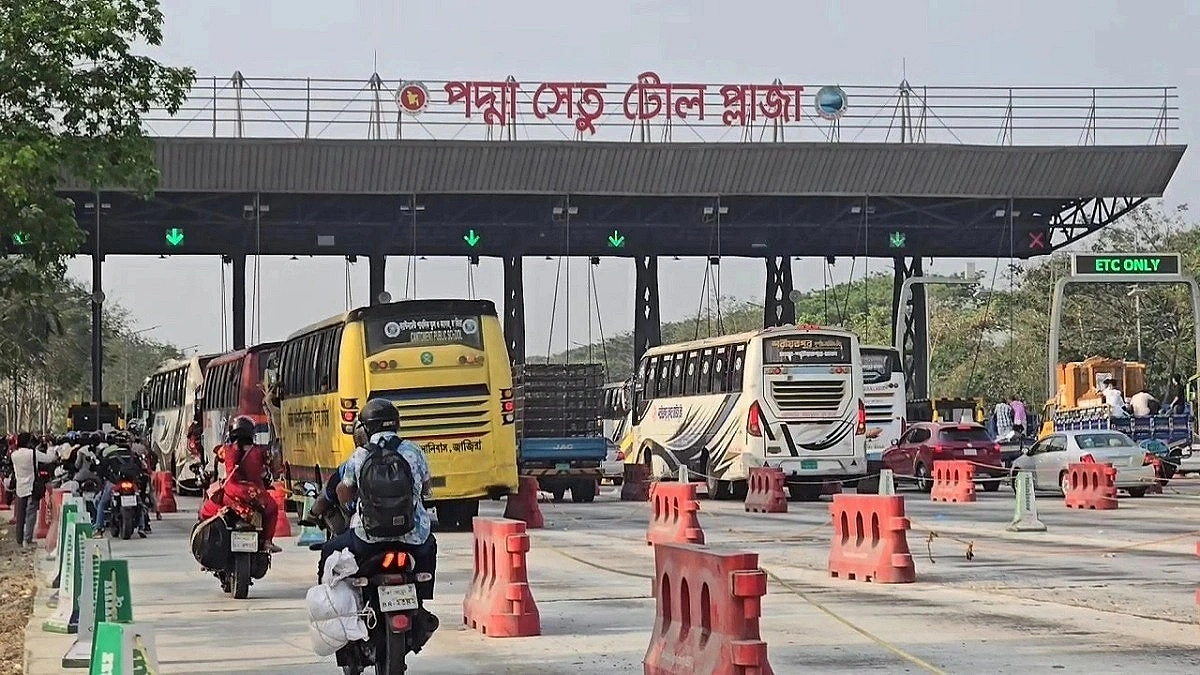
Photo: Agamir Somoy
Padma Bridge, a cornerstone of Bangladesh’s infrastructure that revolutionized communication in the southwestern region, completed its fourth year of operation on Thursday.
Since its inauguration on 25 June 2022, and the commencement of traffic the following day, the 6.15-kilometer mega-structure has facilitated the passage of around 2.67 crore vehicles.
Executive Engineer Abu Saad Niloy confirmed that total toll collection has reached Tk 3,394.45 crore.
The bridge has transformed the lives of residents across 21 southwestern districts by slashing travel time and transportation costs. According to the Bridge Division, the project directly or indirectly impacts nearly 29 percent of the nation’s total land area.
Farmers and fishermen are the primary beneficiaries of this connectivity. Perishable goods, such as vegetables and fish from Khulna and coastal regions, now reach markets in Dhaka and Chittagong within hours, eliminating the risk of products rotting at ferry terminals.
In Dumuria, Khulna, a massive wholesale market now ships 100 tons of vegetables daily, with a significant portion traversing the bridge. Moreover, the bridge has boosted shrimp exports by allowing exporters to easily access Chittagong Port despite limitations at Mongla Port.
The tourism sector is also flourishing, with increased investments in hotels and resorts near the Sundarbans, Kuakata, Payra, and Mongla. Commercial activity has expanded around the Mongla seaport as well as the Bhomra and Benapole land ports.
Freight trucks that previously spent over a day reaching the capital now complete the journey in just a few hours.
Despite these successes, industrialization has lagged behind expectations in districts like Khulna, Faridpur, and Shariatpur. While many industrial groups have purchased land, factory construction has yet to begin.
Local businessmen and economists cite the lack of gas connections, infrastructure gaps, and investment environment limitations as the primary obstacles to industrial growth.

