
Saudi pipeline shutdown puts 4% of global oil supply at risk

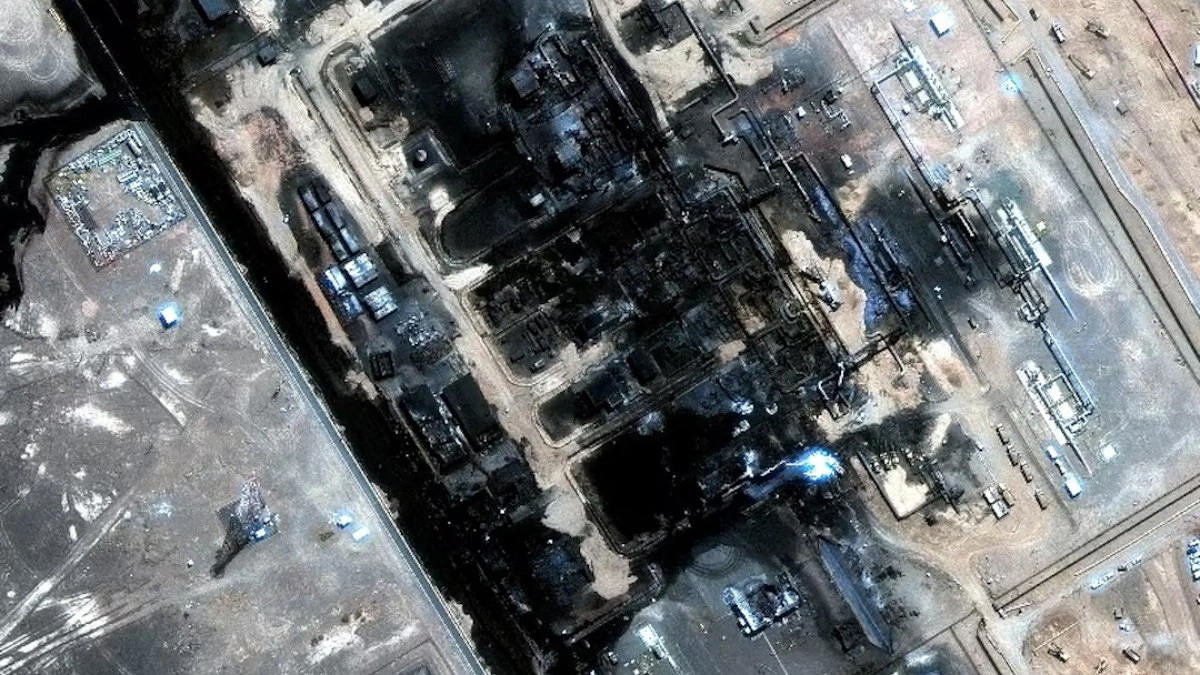
Photo: REUTERS
Saudi oil buyers and traders said Saudi Arabia will completely exhaust its export oil reserves unless authorities restart the primary east-west pipeline to the Red Sea within days, leading to a loss of up to 4 percent of global supply.
This potential drop in Saudi shipments threatens to intensify an escalating global supply crunch, which has already propelled fuel prices to record highs worldwide, fueled global inflation, and driven US bond yields to their highest marks since the 2008 financial crisis.
Drones struck and forced the shutdown of the massive east-west oil pipeline on Friday, yet officials in Riyadh have withheld detailed information regarding the true scale of the destruction or the duration of the operational outage.
Industry sources offered differing assessments, with one source estimating that engineers might require five to six weeks to complete repairs, whereas another source suggested that crews could repair the damage faster and partially restore pumping operations during ongoing maintenance work.
Neither Saudi Arabia’s government media office nor the Energy Ministry provided an immediate response to inquiries regarding the situation. Over the preceding six months, this pipeline stretching across the desert of the Arabian Peninsula insulated Saudi Arabia from the severe disruptions of the wartime closure of the Strait of Hormuz, an embargo that severely crippled energy exports from neighboring nations.
The world’s leading oil exporter relied on this strategic pipeline to divert roughly 4 million barrels per day - representing around 4 percent of global supply - directly to the Red Sea port of Yanbu.
However, three industry sources familiar with Saudi export operations confirmed that the offline pipeline leaves Yanbu with sufficient oil reserves to sustain exports for only five to seven days. A fourth industry source noted that Saudi Arabia maintains additional backup stocks to serve clients for several days through Egyptian facilities at Ain Sukhna on the Red Sea and Sidi Kerir on the Mediterranean.
Industry calculations place the storage capacity of Yanbu around 35 million barrels, while facilities at Ain Sukhna and Sidi Kerir hold 18 million and 20 million barrels respectively. All four sources emphasized that storage tanks are not filled to capacity and will inevitably empty if the east-west pipeline remains out of service.
On Friday, the International Energy Agency (IEA) reported that reduced transit through both Hormuz and the Red Sea dragged Saudi oil shipments in August down to a three-decade low.
The IEA, which aligns Western energy policies, projected that overall world oil supply will shrink by 5.7 million barrels per day - or roughly 6 percent - this year.
Compounding the crisis, Houthi fighters in Yemen, who previously threatened Saudi maritime oil shipments, seized a strategic island located at the mouth of the Red Sea on Friday. Prior to the conflict, the Middle East exported around 22 million barrels per day of crude oil.
Industry insiders indicate that daily volume passing through the Strait of Hormuz has dropped sharply to between 6 million and 9 million barrels per day.
Moreover, Saudi Arabia informed OPEC last week that its domestic crude production tumbled to 6.2 million barrels per day in August, down steeply from 10.9 million barrels per day in February prior to the outbreak of the war.
Source: Reuters (adapted)
