
Google sends alerts to Android phones seconds before earthquake strikes

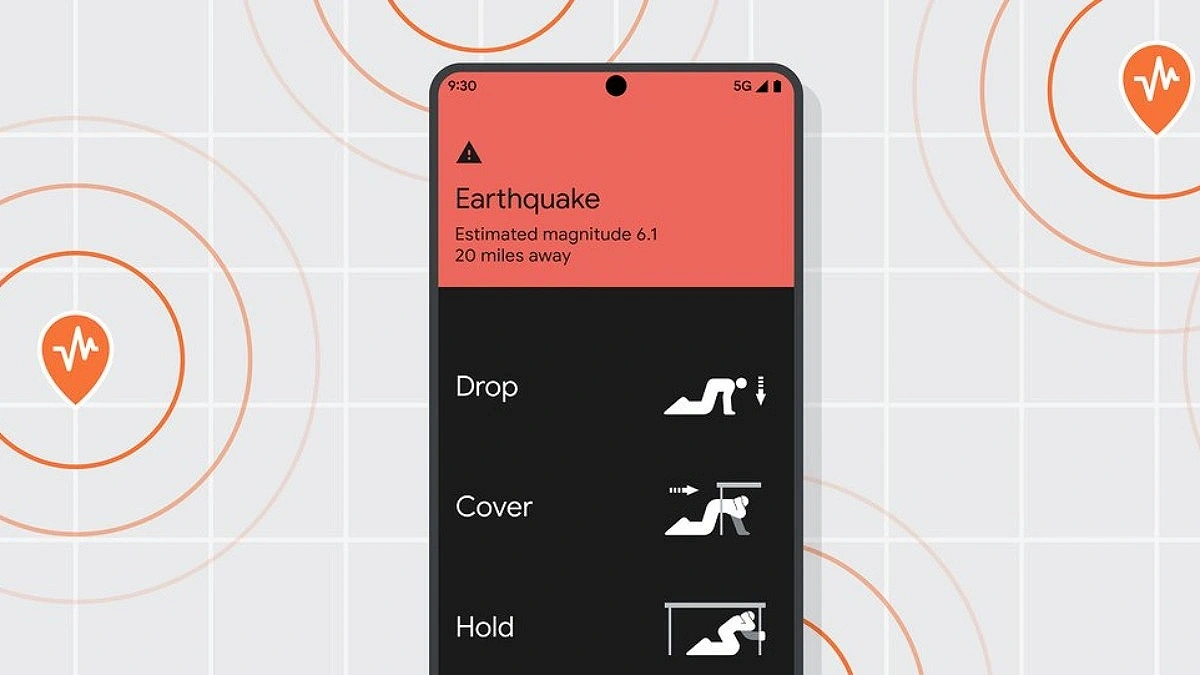
Google sends alerts to Android phones seconds before earthquake strikes Venezuela.
Just seconds before a 7.2-magnitude earthquake struck Venezuela, Google sent alert messages to many Android users' phones. The message displayed the potential magnitude of the earthquake and its distance from the user's location, giving them a brief but critical window to move to safety.
Only 39 seconds after the first tremor, a stronger 7.5-magnitude earthquake hit. So far, 164 deaths have been confirmed from these two earthquakes, and nearly a thousand people have been injured. It is feared that the death toll could exceed 10,000.
Following this, many have asked: did Google give an early warning of the earthquake?
The answer is no. Google did not predict the earthquake. Rather, their Android Earthquake Alert System detected the initial tremors and sent out warnings a few seconds before the main shock struck.
Many users on social media platform X reported that as soon as the alert alarm rang on their phones, they quickly evacuated their homes.
How Google's alert system works
According to Google, every Android phone acts like a small seismometer.
The tiny accelerometer inside the smartphone can detect the initial tremors of an earthquake. When a phone picks up such tremors, it sends a signal with approximate location data to Google's servers.
When numerous phones send similar signals simultaneously, Google's servers analyze them to determine whether an earthquake is occurring.
The signals reach the server at near-light speed, which is much faster than the propagation of earthquake waves. This allows alert messages to be sent to users' phones before the main tremors arrive.
Seismologists Dr. Richard Allen, Dr. Qingkai Kong, and disaster expert Dr. Lucy Jones jointly developed this technology.
How Japan issues early warnings
Even after long-term research, specific earthquake prediction is still not possible. However, countries like Japan have built effective systems to detect initial tremors and quickly alert people.
Japan has been operating an early earthquake warning system since 2007. The country's Meteorological Agency (JMA) provides warnings about the potential intensity of the earthquake and how much time is left before the tremors strike.
In 2022, the JMA and the Headquarters for Earthquake Research Promotion (HERP) further improved this system to identify the risk of major mega-earthquakes.
This 'foreshock-based warning' is activated when an initial earthquake of magnitude 7 or higher is detected in a major subduction zone.
Source: WION
