
Khawaja Asif
'Pakistan’s Economy has Come Out of ICU'

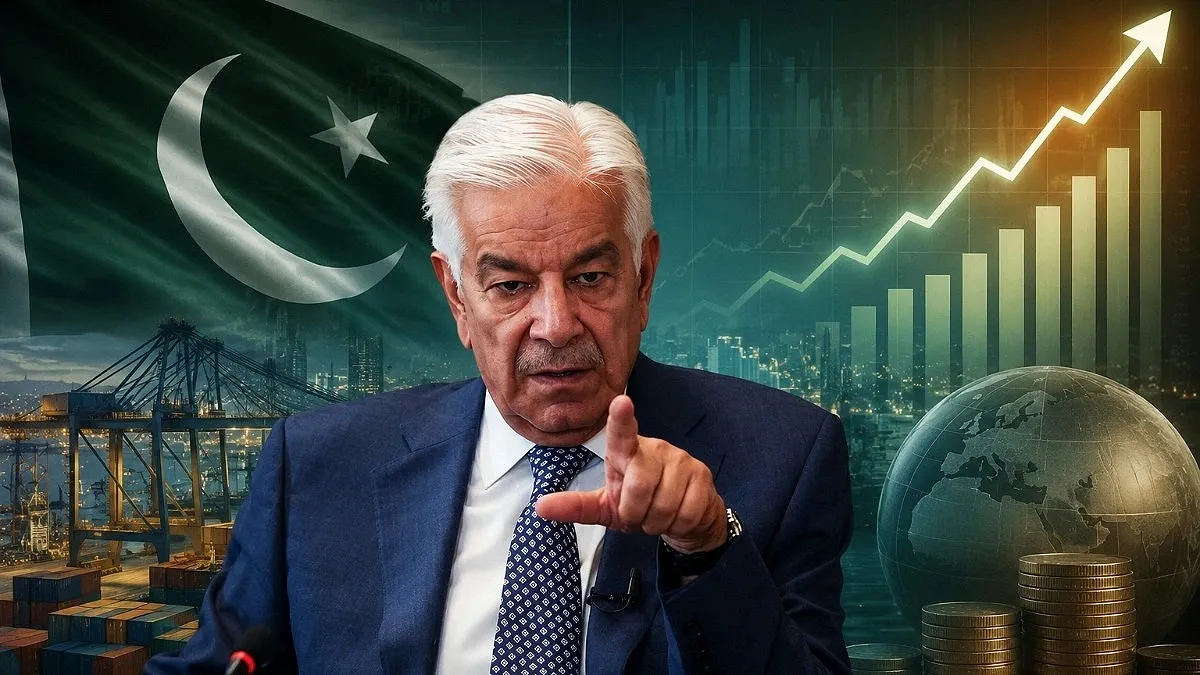
Generated by AI
Pakistan’s Defence Minister Khawaja Asif has said that the country’s economy has “come out of the ICU.” Speaking in the National Assembly, he said that Pakistan, which was once at risk of defaulting on its debt, is gradually recovering and could achieve 6 to 7 percent growth within the next one to two years.
He also spoke about the security situation in Balochistan and Pakistan’s role in facilitating understanding between the United States and Iran.
He said, “When we first presented the budget, the country was practically in a state of bankruptcy. Every day there was fear that we might default on our debt. The International Monetary Fund (IMF) provided assistance under strict conditions. We are still bearing that burden, but we have regained capacity. Our economy is now breathing; it has come out of ICU.”
He added, “I am not saying we are about to touch the sky. But our progress shows that within one or two years, Pakistan can reach a growth rate of 6 to 7 percent.”
Asif said the country still has various 'hidden taxes' and that these must be reduced to strengthen the economy.
He argued that tax rates should be lowered to a level where people are encouraged to pay taxes willingly, without feeling burdened.
“Why should we force people to look for ways to evade taxes? We need a tax system that creates an enabling environment so that people pay taxes with pride,” he said.
The defence minister also highlighted the issue of terrorism in Balochistan, saying the situation was not created “yesterday or the day before” but was the result of many actors over time.
“I do not want to name anyone, but everyone shares responsibility,” he said.
He added that if the roads in Balochistan are unsafe, then the responsibility lies with all members of the National Assembly.
Referring to Pakistan’s role in facilitating understanding between the United States and Iran, Asif said the world has recognised Pakistan’s importance within just one year. He praised the leadership of the army, the prime minister, and the entire team involved.
He said, “I think the entire nation should be grateful to them, because they have brought us out of a crisis that seemed almost impossible.”
Asif further said that recent positive developments in relations with Iran could bring significant benefits to Pakistan, particularly if sanctions are eased and restrictions on Iran’s oil and gas exports are lifted.
He noted that Balochistan would be the biggest beneficiary of these changes.
