
7,000 humanoid robots sold in one year

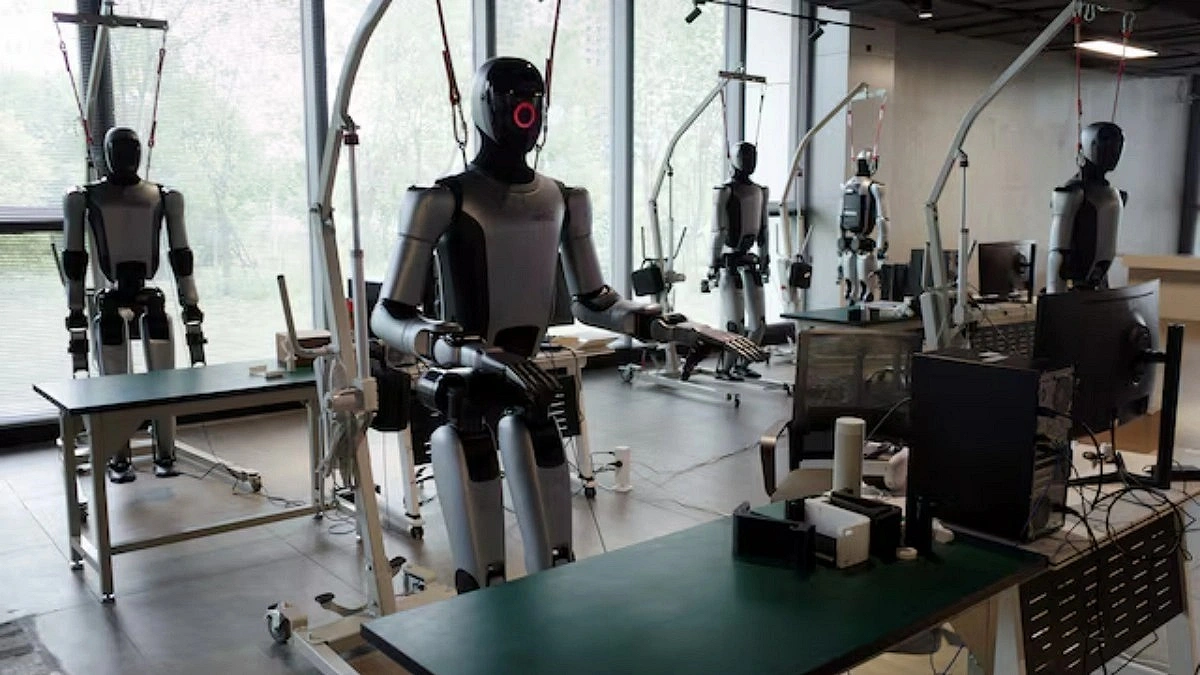
Automakers have also started experimenting with humanoid robots. Photo: Reuters
Around 7,000 humanoid robots were sold worldwide last year. These robots were used in industrial and professional services. The International Federation of Robotics (IFR) provided the information.
The number of humanoid robots sold remains relatively small. However, the organization expects the technology to expand significantly in the coming years.
There is particularly strong interest in humanoid robots in China, the world’s largest market for industrial robots. At a robot games event recently held in the country, the robots were seen performing tasks such as running and boxing.
IFR’s current estimates are based on information from suppliers and industrial associations in various countries. Robots designed for consumer use and humanoid robots used for military purposes are not included.
Humanoid robots do not simply refer to robots that look like humans. According to IFR’s criteria, a robot must have a human like form and be capable of working in environments designed for humans. They are not required to have humanlike legs.
The IFR data provides an important picture of the technology’s current market. Billions of dollars are being invested in developing humanoid robots. Various companies are also showcasing impressive demonstrations of their capabilities.
Suzanne Bieller, secretary general of the Frankfurt based IFR, said humanoid robots still account for only a fraction of the total number of robots used worldwide.
The comparison becomes clearer when looking at the numbers of other types of robots. Around 542,000 conventional industrial robots were installed worldwide in 2024.
In the same year, an estimated 199,000 service robots were sold for use in areas such as transportation, hospitality and cleaning.
IFR will publish comprehensive data on industrial and service robots for 2025 on September 24.
According to IFR data, many of the humanoid robots sold last year were not used directly for productive work. Some were purchased by research institutions. Other organizations are using them to collect information or data to further improve artificial intelligence (AI) models.
Automakers have also started experimenting with humanoid robots. According to IFR data, some automakers are running pilot projects involving single digit or sometimes double-digit numbers of humanoid robots at their factories.
Humanoid robots do not simply refer to robots that look like humans. According to IFR’s criteria, a robot must have a human like form and be capable of working in environments designed for humans.
IFR has been collecting data on the global robot market for nearly three decades. However, this is the first time the organization has separately collected data on humanoid robots.
According to Bank of America Global Research, 90,000 humanoid robots could be supplied worldwide this year. The institution forecasts that the number could rise to 1.2 million by 2030.
IFR’s current estimates are based on information from suppliers and industrial associations in various countries. Robots designed for consumer use and humanoid robots used for military purposes are not included. Robots used in the medical sector are also considered a separate category.
Source: Reuters (Adapted)
