The man who kept winter coming


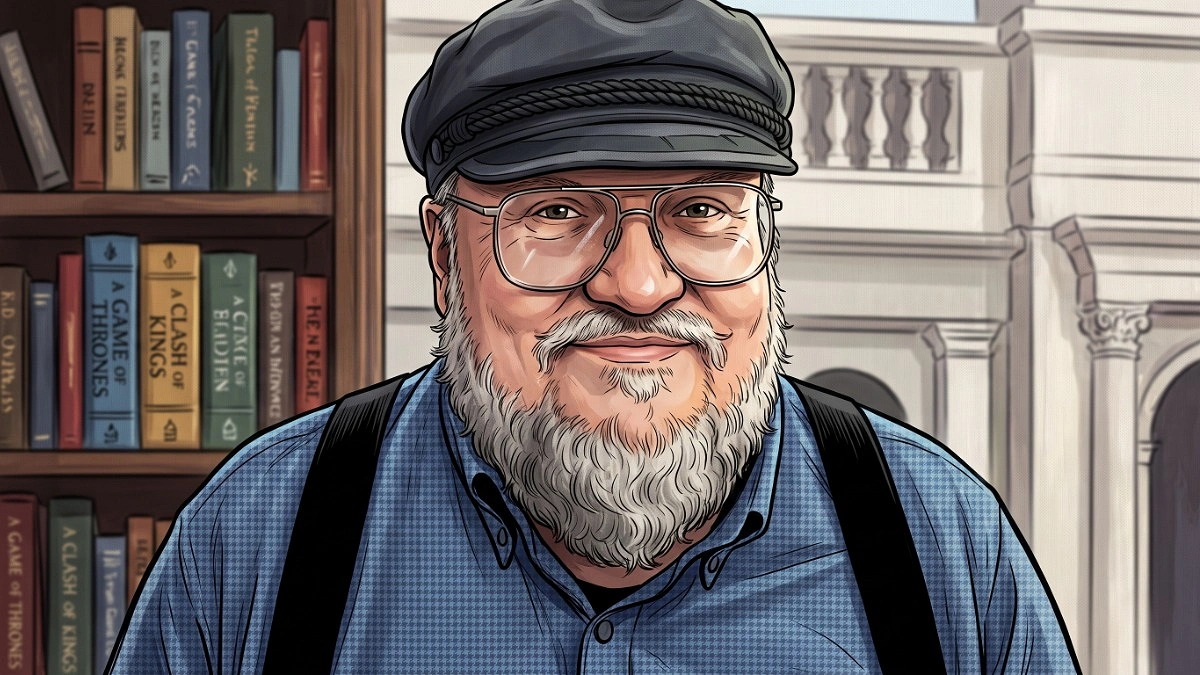
Generated by AI
At 78, George R. R. Martin remains the most famous unfinished writer in the world, a storyteller who reshaped modern fantasy and then found himself trapped inside the expectations he created.
On a peninsula in New Jersey, sometime in the late 1950s, a boy sold monster stories to the other children in his housing project for pennies, complete with dramatic readings. The business collapsed when a customer’s mother complained that her child was having nightmares.
That boy was George Raymond Martin, born in Bayonne on September 20, 1948, who added the confirmation name Richard at the age of 13 and who today celebrates his 78th birthday as one of the most widely read authors alive. The nightmares, it turns out, were only the beginning.
Martin’s world as a child was almost comically small. His family lived first in a house on Broadway that belonged to his great grandmother, then moved in 1953 into a federal housing project near the Bayonne docks. His father, Raymond Collins, was a longshoreman. His mother, Margaret Brady Martin, came from a family that had once owned a successful construction business before the Great Depression took it away, a loss the boy was reminded of daily as he walked past what had been the family dock and house.
His entire universe ran, by his own account, from First Street to Fifth Street, between his grade school and his home. He wanted desperately to travel. He could not. So he read, voraciously, and he invented. He wrote stories about a mythical kingdom populated by his pet turtles. The turtles kept dying in their toy castle, so the boy concluded they must be murdering one another in sinister plots.
Anyone who has read A Song of Ice and Fire will recognize the template. The kingdom, the castle, the dynastic slaughter. It was all there before he was ten.
The fanboy who bought ticket number one
At Marist High School, Martin became a devoted reader of Marvel Comics. He later said something that still startles literary critics: that Stan Lee may be the single greatest literary influence on his work, more than Shakespeare, more than Tolkien.
He wrote letters to the editor. One of them appeared in Fantastic Four issue 20 in November 1963, the first of many. Other readers wrote back, and through that correspondence Martin drifted into the young world of comics fandom, contributing fiction to fanzines. In 1964 he bought the first ticket to the first comic book convention held in New York. In 1965, at 16, he won comic fandom’s Alley Award for Best Fan Fiction for a prose superhero story called “Powerman vs. The Blue Barrier.”
It is worth pausing on that detail. The man who would later dismiss fan fiction as a poor training ground for young writers, and as copyright infringement besides, won his first award for exactly that.
He went on to Northwestern University’s Medill School of Journalism, earning a bachelor’s degree in journalism with a history minor in 1970, graduating summa cum laude, and a master’s degree the following year. Eligible for the draft during the Vietnam War, a war he opposed and later called a terrible mistake for America, he applied for and received conscientious objector status. From 1972 to 1974 he performed alternative service as a VISTA volunteer with the Cook County Legal Assistance Foundation.
Chess paid the rent
Martin sold his first professional science fiction story, “The Hero,” to Galaxy magazine, which published it in February 1971. He was 21. More sales followed. “With Morning Comes Mistfall,” published in Analog in 1973, brought him his first Hugo and Nebula nominations.
What it did not bring was a living. The short stories earned him something, but never enough to pay his bills, and the day job he needed kept him from the full time writing career he wanted.
Rescue arrived from an unlikely quarter. Bobby Fischer’s victory in the 1972 world chess championship set off an American chess craze, and Martin, a capable player, was hired as a tournament director for the Continental Chess Association. The tournaments ran only on Saturdays and Sundays. From 1973 to 1976 he had five clear days a week to write. By the time the craze faded and the income with it, he was established.
Still not established enough, as it happened. In the mid 1970s he met the English professor George Guthridge at a science fiction convention in Milwaukee and persuaded him, a man who by his own admission despised science fiction and fantasy, to take the genre seriously and even to write in it. Guthridge went on to Hugo and Nebula shortlists and a Bram Stoker Award. In return, he helped Martin find work at Clarke College in Dubuque, Iowa, where Martin taught English and journalism from 1976 to 1978 and served as writer in residence for the year after.
His first novel, Dying of the Light, was completed in 1976 and published in 1977, the year Star Wars detonated across the publishing industry. He sold the book for what three years of teaching would have paid him.
Then, in late 1977, his friend and fellow author Tom Reamy died suddenly. Martin took stock. In 1979 he resigned his teaching post and moved to Santa Fe. His first marriage, to Gale Burnick, ended in divorce that same year before they could settle there together. He lived alone in New Mexico for nearly three years, a stretch he has described as tremendously productive.
Failure, Hollywood, and the lost year
The 1980s nearly ended him as a novelist. Fevre Dream, his 1982 vampire novel set aboard the great paddle steamers of the Mississippi, was a critical success; one critic called it among the greatest vampire novels ever written. Its follow up, the 1983 horror novel The Armageddon Rag, was a commercial disaster. Martin has said flatly that the failure essentially destroyed his career as a novelist at the time. He considered going into real estate.
He went into television instead. A producer who had hoped to adapt The Armageddon Rag into a film ended up running the revival of The Twilight Zone, and Martin was offered a job. Television paid better than literature. He moved to Hollywood, worked as a staff writer and then an executive story consultant, migrated to Max Headroom when the first show was cancelled, then to Beauty and the Beast, where he became co supervising producer and wrote more than a dozen episodes.
Along the way came his other great collaborative project. Obsessed with a superhero role playing campaign he was running in Albuquerque, Martin stopped writing prose for most of 1983, a period he calls his lost year. Watching his bank balance shrink, he wondered whether the characters invented around that gaming table might be worth something. They were. The Wild Cards shared universe anthology series, in which a slice of postwar humanity gains superpowers from an alien engineered virus, has now run to more than thirty volumes.
The books that changed the genre
By 1991 Martin was frustrated. Pilots were not getting made. Budgets and running times forced him to cut characters and shrink battles. So he went back to prose, where nobody could tell him his imagination was too expensive.
A Song of Ice and Fire draws on the Wars of the Roses, Maurice Druon’s The Accursed Kings, and Ivanhoe. He planned three volumes. It is now slated for seven. A Game of Thrones appeared in 1996, A Clash of Kings in 1998, A Storm of Swords in 2000, A Feast for Crows in 2005, and A Dance with Dragons in 2011, the last of these staying on the New York Times list for 88 weeks.
What made the books matter was not scale but refusal. Martin rejected the tidy moral architecture that fantasy had inherited from Tolkien’s imitators, a sanitised past he has mocked as the Disneyland Middle Ages. He wanted the rigid, brutal, multigenerational class systems of actual feudal societies. He wanted magic kept under tight control, present as atmosphere rather than as a machine for solving plots, a lesson he says he took directly from The Lord of the Rings.
Above all he wanted consequence. His stated reason for killing characters readers love is disarmingly practical: if you want people to be afraid to turn the page, you have to show early that you are playing for keeps.
Critics noticed. Lev Grossman called him the American Tolkien in Time in 2005, and Time placed him on its list of the hundred most influential people in the world in 2011. Novelists including R. Scott Bakker and Mark Lawrence have credited his success with making their own careers possible. An entire subgenre, grimdark, grew in the space he opened.
Then HBO happened
HBO bought the television rights in 2007. The pilot, shot in late 2009 across Northern Ireland, Scotland and Morocco, went over so badly with executives that they sat on it for four months, then ordered reshoots and scrapped the Morocco footage. The series premiered on April 17, 2011, to 2.2 million viewers.
By its fourth season Game of Thrones was the most watched series in HBO history, averaging 18.4 million viewers across platforms. Its fifth season set a Guinness World Record for the most Emmy Awards won by a series in a single year. Its eighth and final season drew 32 Emmy nominations, the most ever for a single season of television, and won twelve, even as many viewers and critics judged the ending a disappointment.
Martin wrote one episode per season through the fourth, including “Blackwater,” which won him a Hugo. After that he stepped back, and in 2022 he said he had been estranged from the show through its final four seasons while trying to finish the novel that was already late.
The franchise, meanwhile, kept expanding without him at the keyboard: House of the Dragon from 2022, drawn from his Targaryen history Fire & Blood, and A Knight of the Seven Kingdoms, adapted from the Dunk and Egg novellas, arriving this year.
The wait
And here is where the story stops being comfortable.
The Winds of Winter is not finished. A Dream of Spring has not been started in any public sense. The gap since A Dance with Dragons is now longer than the gap between the first book and the fifth. Fans have run the arithmetic and published grim projections; one widely circulated estimate puts the sixth book in late 2027 and the seventh in 2042, when Martin would be 94.
He has responded with a mixture of patience and exasperation, at one point posting a rant about a fanbase preoccupied with the possibility that he will die first. He insists he will finish. Former collaborators have said they will not finish it for him if he does not.
Whether that is tragedy or simply the ordinary arithmetic of a long life is a matter of taste. What is not in dispute is that Martin never promised to be a machine. He said as early as 2010 that he was unwilling to write nothing but A Song of Ice and Fire, that editing anthologies and writing other prose had always been part of how he worked.
The evidence supports him. He wrote the worldbuilding for the video game Elden Ring, which won a Nebula for game writing in 2022. He executive produces Dark Winds for AMC and made a cameo in it, playing chess in a jail cell opposite Robert Redford. He writes on a machine running MS DOS, using WordStar, because he dislikes spell checkers and does not want the internet within reach.
He bought Santa Fe’s shuttered Jean Cocteau Cinema in 2013 and restored it, opened a bookstore called Beastly Books beside it in 2019, and pledged 2.7 million dollars toward the arts collective Meow Wolf. He and his wife Parris McBride, whom he married in 2011, support a wolf sanctuary in New Mexico. A 2014 fundraising campaign he ran, which offered donors the chance to be named as a character and killed off in a future novel, raised more than half a million dollars.
Asked about faith, he has described himself as a lapsed Catholic who finds religion fascinating and who would like to believe there is something beyond this, but cannot persuade the rational part of himself that it makes sense.
It is a very Martin answer: unresolved, honest, slightly melancholy, and refusing the comfort of a clean ending. He has been writing that sentence, in one form or another, since the turtles started plotting against each other in a toy castle in Bayonne.