
Trump Meets Zelenskyy at G7, Signals Next Phase in Ukraine Peace Efforts

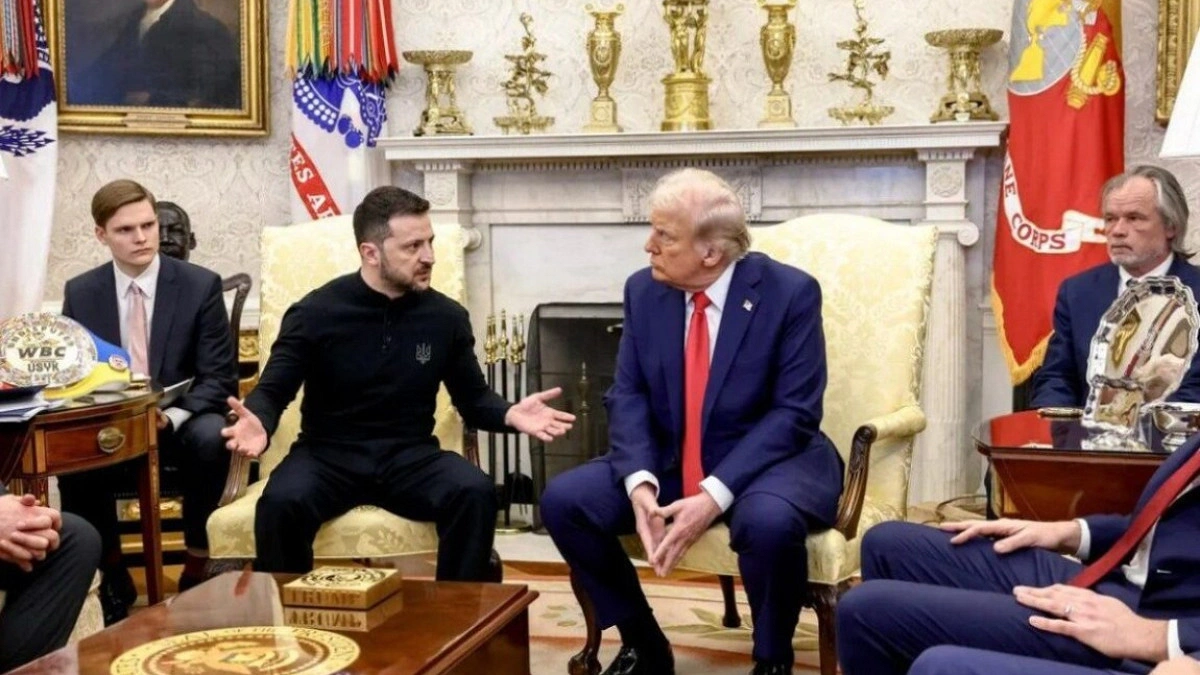
Representational image. Collected.
US President Donald Trump has signaled a major shift in foreign policy focus, turning his attention from Iran to the war in Ukraine—even as the deal with Tehran remains far from finalized.
During the G7 summit in France on Tuesday, Trump described his meeting with Ukrainian President Volodymyr Zelenskyy as "very good" and indicated that he now intends to push for an end to Russia's invasion. "Now that this is finished, we're going to be focusing on that," he said alongside French President Emmanuel Macron, suggesting that Iran would soon be "in the rearview mirror."
The comments are likely to reassure European allies, who have spent months urging Washington not to lose sight of the conflict, now in its fourth year. Meanwhile, Ukraine has demonstrated its growing capability to strike deep inside Russian territory with drones and missiles, while Moscow has responded with deadly attacks of its own, including a strike on a historic monastery in Kyiv.
British Prime Minister Keir Starmer noted that G7 leaders share a sense that "things are changing" and that Ukraine is regaining momentum. However, despite mounting domestic pressure on Russian President Vladimir Putin, there remains little sign of a diplomatic or military breakthrough.
Despite the complexities, Trump struck an optimistic tone. He told reporters he had "good conversations" with both Putin and Zelenskyy ahead of the summit and suggested that progress might be possible—a refrain familiar from his earlier push to end the conflict, which he had famously promised during his campaign to resolve within 24 hours.
Yet, for all the talk, no direct bilateral meeting with Zelenskyy was initially scheduled at the G7 summit in the French spa town of Evian-les-Bains. Before the official talks on Tuesday, Macron was heard asking Zelenskyy whether a meeting with Trump had been arranged, underscoring European concerns about keeping the U.S. president engaged. Ultimately, the three did meet together, according to a U.S. official, before a broader working session with other G7 leaders.
Zelenskyy confirmed the engagement on X, writing that "substantive meetings have already begun" and emphasizing the need to strengthen Ukraine's air defense and advance diplomacy. He later shared photos with Trump and Secretary of State Marco Rubio, noting the importance of coordinating positions.
Trump's previous diplomatic efforts had fizzled after he pushed Ukraine to make territorial concessions and appeared to lean toward Moscow's demands. But after Tuesday's meeting, he sounded more balanced, urging Russia to strike a deal and pointing to the heavy losses on both sides.
European leaders, largely excluded from negotiations last year, are now being pressed by Zelenskyy to have a seat at the table—a demand Russia strongly opposes and one complicated by U.S.-Europe tensions. Zelenskyy had earlier offered to meet Putin at the G7 or even in the U.S., but the Kremlin dismissed his public letter. Asked about an invitation, Kremlin spokesman Dmitry Peskov said there was "of course not," adding that no official communication channels exist between Moscow and Kyiv, though Putin remains open to meeting in Moscow—a venue Zelenskyy has rejected.
Peskov also noted that U.S. negotiators could visit Russia "soon," but said no dates had been set as Washington remained focused on finalizing its deal with Iran. (Source: NBC News)
