
Why Iran's New Governance System Is Different from Before

Collected Photo
Weakening Iran was the primary objective of the United States and Israel. But after the war, a different picture emerged. Although the old leadership fell, the Islamic Republic did not collapse. Instead, a new leadership has emerged. Many analysts believe that Iran is now more pragmatic, aggressive, and strategically active compared to the previous generation.
The question now arises: Is Iran's new governance system merely a change in leadership, or does it signal the beginning of a new era in Middle Eastern politics?
Last month, during a dinner at the Palace of Versailles in France, a ceasefire agreement was signed between USA and Iran. The event generated widespread discussion in the international arena.
The agreement was signed under the hospitality of French President Emmanuel Macron. Analysts suggest that Macron wanted to ensure the signing of the Memorandum of Understanding (MoU) before Trump changed his mind. At the same time, he believed the grandeur of Versailles' historic "Hall of Mirrors" would captivate the guests.
However, what drew the most attention was the signing location itself. Because in 1919, after the end of World War I, the historic Treaty of Versailles was signed in the very same palace. Many began drawing comparisons between that lengthy and influential treaty and the new, barely one-and-a-half-page MoU.
According to historians, that post-WWI treaty reshaped the political map of Europe. At the same time, by imposing harsh reparations on Germany, it also paved the way for World War II.
This is why questions have arisen: Will this US-Iran understanding one day be considered a treaty that changes the history of the Middle East? The contexts of the two agreements are entirely different. Nevertheless, according to analysts, its long-term impact could be far-reaching.
Nearly three weeks after the agreement, the ceasefire still holds. However, it remains fragile. In the meantime, several clashes have occurred in and around the Strait of Hormuz. No permanent solution has been reached for the root causes of the war either. As a result, the instability in the Middle East persists.
New Leadership, New Reality
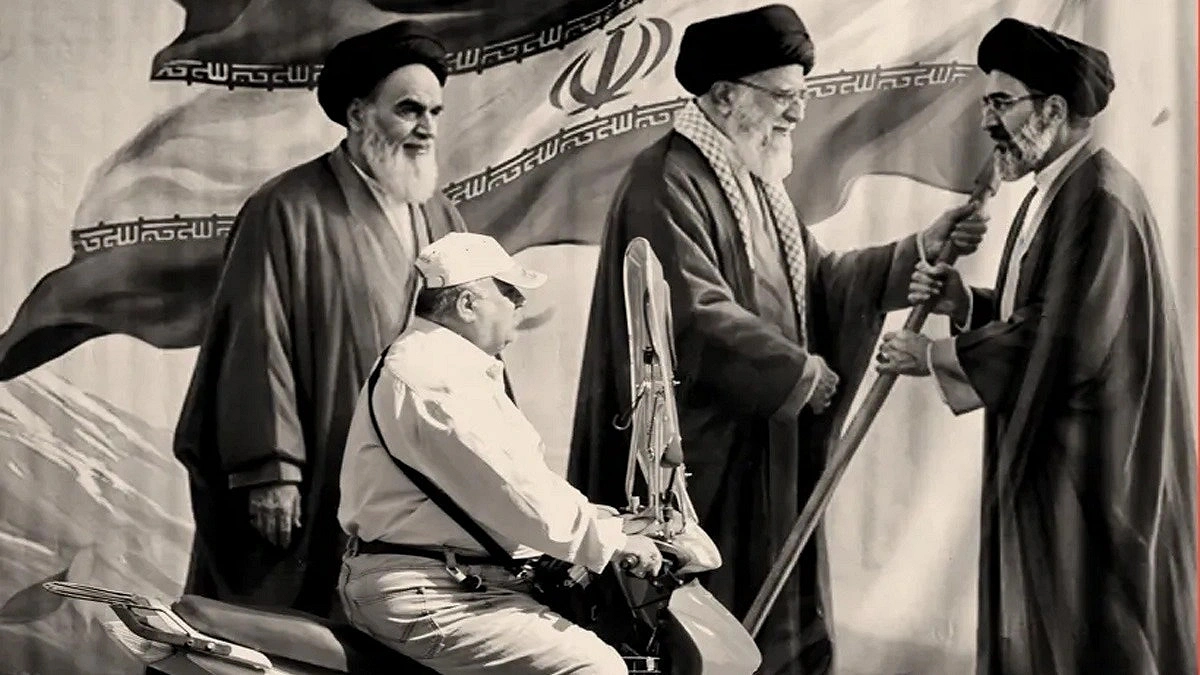
Meanwhile, major political changes are taking place inside Iran. New faces have come to the center of power. The old leadership has been replaced by a new generation.
The article claims that at the start of the war, Iran's Supreme Leader Ayatollah Ali Khamenei was killed in a joint US-Israeli strike. The same attack also killed many other top figures at the center of power in Tehran. This marked the end of the long-standing leadership.
According to many, this is the biggest turning point for Iran. The old generation has departed. The new leadership has emerged with new thinking and new strategies. Will this change remain limited to leadership, or will it alter the course of politics across the entire Middle East?—that is now the biggest question.
According to Vali Nasr, a professor at Johns Hopkins University in the US, major wars always create a new balance of power. In his words, this war could also rearrange the political chessboard of the Middle East.
Weak Iran, or a New Power?
Before the war, Iran's economy was crippled by long-standing international sanctions. The wounds of the 12-day war had not yet healed either. The nuclear program suffered a major blow. There was also uncertainty over the location of uranium stockpiles.
At the same time, Iran's regional allies faced one crisis after another. The government of Bashar al-Assad in Syria was overthrown. Hezbollah in Lebanon suffered major losses. Hamas in Gaza faced a massive military offensive. Multiple strikes were also conducted against the Houthis in Yemen.
Since the 1979 Islamic Revolution, Iran has reached its weakest point. But the outcome of the war did not fully match that perception. According to the article, Iran survived as a state. In particular, by using their strategic influence over the Strait of Hormuz, they demonstrated the ability to exert pressure on the global economy.
Why is the new leadership different?
According to Vali Nasr, Trump's talk of "regime change" ultimately worked in Tehran's favor—because the new leadership is far more pragmatic.
Their primary goal is not ideology, but keeping the state afloat. They make decisions quickly. They take a tough stance when necessary, but also sit down for negotiations when needed.
The new Supreme Leader, Mojtaba Khamenei, is much younger than the previous generation. Along with President Masoud Pezeshkian and Parliament Speaker Mohammad Bagher Ghalibaf, most of the new leadership represent the post-revolution generation.
According to Sanam Vakil of Chatham House, the end of Ali Khamenei's long leadership has created an opportunity for changing the state structure.
Strategy has changed.
The article states that during Ali Khamenei's time, Iran followed a strategy of "neither war nor peace." But the new leadership has adopted a comparatively more aggressive stance. On one hand, they have used military force; on the other, they have also participated in ceasefire negotiations—meaning they are simultaneously using both conflict and diplomacy.
According to Vali Nasr, the new leadership is far bolder and more willing to take risks than their predecessors.
New Equations in the Gulf
During the war, the article claims that multiple US military installations were attacked. At the same time, threats were made to close the Strait of Hormuz. As a result, Gulf countries have faced a new reality. Until now, they relied on the US security umbrella, but questions are now being raised over that strategy.
According to Ali Vaez of the International Crisis Group, Gulf countries are now attempting to improve relations with Iran. However, they will not completely abandon the US security system just yet—because in reality, they do not yet have an alternative to Washington.
What Will Change for Ordinary People?
During the war, Trump called on the Iranian people to take their government into their own hands. But no tangible reflection of that promise has been seen yet. Even with the new leadership in power, no clear roadmap for a freer or more prosperous future for ordinary people has emerged.
According to Chatham House analyst Aniseh Bassiri Tabrizi, the government's primary goal right now is to ensure its own survival. Therefore, a major shift in the policy of suppressing dissent is unlikely. However, signs of relaxation on some social issues are emerging—such as some flexibility in enforcing the hijab and a possible easing of certain social restrictions.
According to Vali Nasr, these decisions are not ideological; they have been taken out of the need to restore public trust in the state.
Which Path Lies Ahead for Iran?
The war has created deep uncertainty for ordinary Iranians. On one hand, government crackdowns; on the other, civilian casualties from foreign attacks—they have suffered on both fronts.
According to Ali Vaez, Iran now stands at a crossroads similar to post-Mao China. The entire state system is realizing that to adapt to the new reality, it must forge a new social contract with its people.
How feasible that will be remains unclear—because power is becoming increasingly concentrated in the hands of the IRGC. At the same time, many young people still feel they have no meaningful role in shaping the country's future.
Iran now stands at a pivotal moment of transformation. Old political realities are breaking down, and new equations are being formed. There is pressure for change from within the country, while new diplomatic opportunities have also emerged on the international stage. If these opportunities are seized, a new chapter in Middle Eastern politics could begin. If not, the region may once again slide back into prolonged conflict. (Source: BBC)
