
How much oil is passing through the Strait of Hormuz?

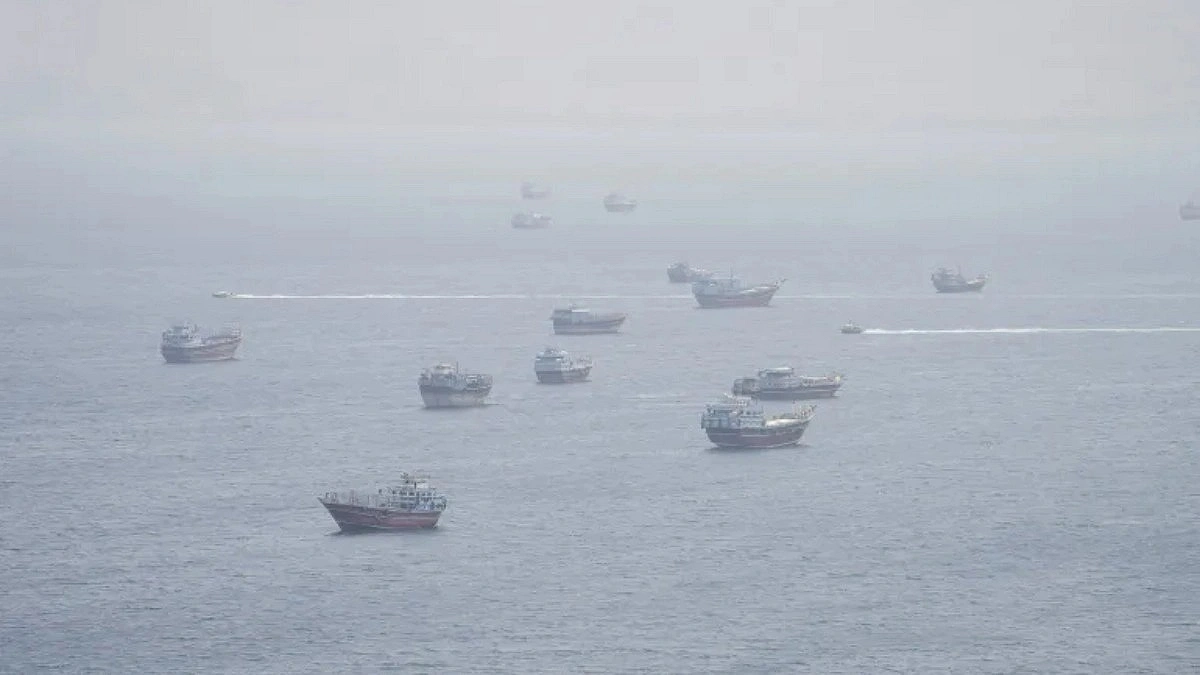
Collected Photo
The United States and Iran have been making conflicting claims over control of the Strait of Hormuz. Meanwhile, uncertainty has emerged over how much oil is actually passing through the strategic waterway.
The United States claims that the Strait of Hormuz remains open. Dozens of ships are crossing the waterway every day under the protection of the US military. These ships are transporting millions of barrels of oil each day.
Iran on the other hand claims that it still controls the strait. It says no ships other than those authorized by Iran are being allowed to pass through the waterway.
This has raised the question of how much oil is actually passing through the Strait of Hormuz.
US President Donald Trump claimed last month that the United States now controls the Strait of Hormuz. He said the US Navy was helping around 30 ships cross the strait every night.
Iran rejected the claim. The country said the strait remains under its control. Only certain authorized ships are being allowed to pass through using designated channels. Tehran also warned that any other ship attempting to enter the area could face the risk of attack.
Two US officials told CNN that around 40 commercial ships crossed the Strait of Hormuz under US military protection on Tuesday. The ships were carrying around 18 million barrels of oil. They described this as the highest number of ships to cross the strait in a single day since the war began.
US Treasury Secretary Scott Bessent also claimed that at least 10 million barrels of oil are passing through the Strait of Hormuz every day. On Monday the figure was between 15 million and 17 million barrels.
Earlier US Central Command (CENTCOM) Commander Brad Cooper claimed that the US military had cleared shipping routes by removing sea mines.
However, these claims do not match data from various international organizations.
Shipping data analysis firm Kpler reported that only six ships crossed the Strait of Hormuz last Wednesday. Eleven crossed on Tuesday and five on Monday. Over the past 10 days the average was around 13 ships per day.
Data from maritime intelligence firm Lloyd’s List Intelligence showed a similar picture. According to its figures an average of around 12 ships crossed the Strait of Hormuz each day from August 26 to September 1. However, the actual number could be somewhat higher because the locations of some ships could not be identified.
Under normal conditions before the war around 100 ships passed through the Strait of Hormuz every day. Those ships carried around 20 million barrels of oil. Compared with that level shipping traffic is now significantly lower.
Iran’s position is also the opposite of the US claim. Iranian Parliament Speaker Mohammad Bagher Ghalibaf said that Iran still controls the Strait of Hormuz. Tehran also warned that any ship traveling without authorization or outside designated routes could be targeted.
Iran’s Islamic Revolutionary Guard Corps also claimed that two oil tankers had been disabled after being damaged by mine explosions while traveling through unauthorized routes.
Meanwhile Saudi Arabia said an Iranian attack damaged a Saudi oil tanker. Two Filipino sailors were killed in the incident.
The Joint Maritime Information Center also said that commercial shipping through the Strait of Hormuz remains far below normal levels. Although traffic has increased slightly the risks remain high. There are particular concerns over floating mines and mines that have not been identified at sea.
Bridget Diakun the director of maritime intelligence and research said some information may be incomplete because some ships turn off their location tracking signals. As a result it takes time to identify their movements. From August 17 to 23 around 14 vessels per day that were not affiliated with Iran crossed the Strait of Hormuz.
Differences in the methods used to count ships may also explain the gap between US figures and those of international organizations. The US count may include smaller vessels tugboats naval support vessels and other watercraft. Lloyd’s figures on the other hand mainly focus on commercial vessels weighing more than 10,000 deadweight tons.
Another factor is that many ships have turned off their Automatic Identification Systems (AIS). As a result, it has become difficult to track their movements without satellite and aerial surveillance.
According to analysts both the United States and Iran are seeking to portray their influence over the Strait of Hormuz as greater. This has created a major difference between the two countries’ statements over who controls the waterway and to what extent.
Former US Ambassador Henry Ensher recently told Al Jazeera that he believes a new phase of the ongoing tensions between the United States and Iran began after US CENTCOM claimed to have removed mines from the Strait of Hormuz. In his view both sides should speak less about the issue in order to reduce tensions.
Source: Al Jazeera (Adapted)


