
Argentina and France are My Top Picks

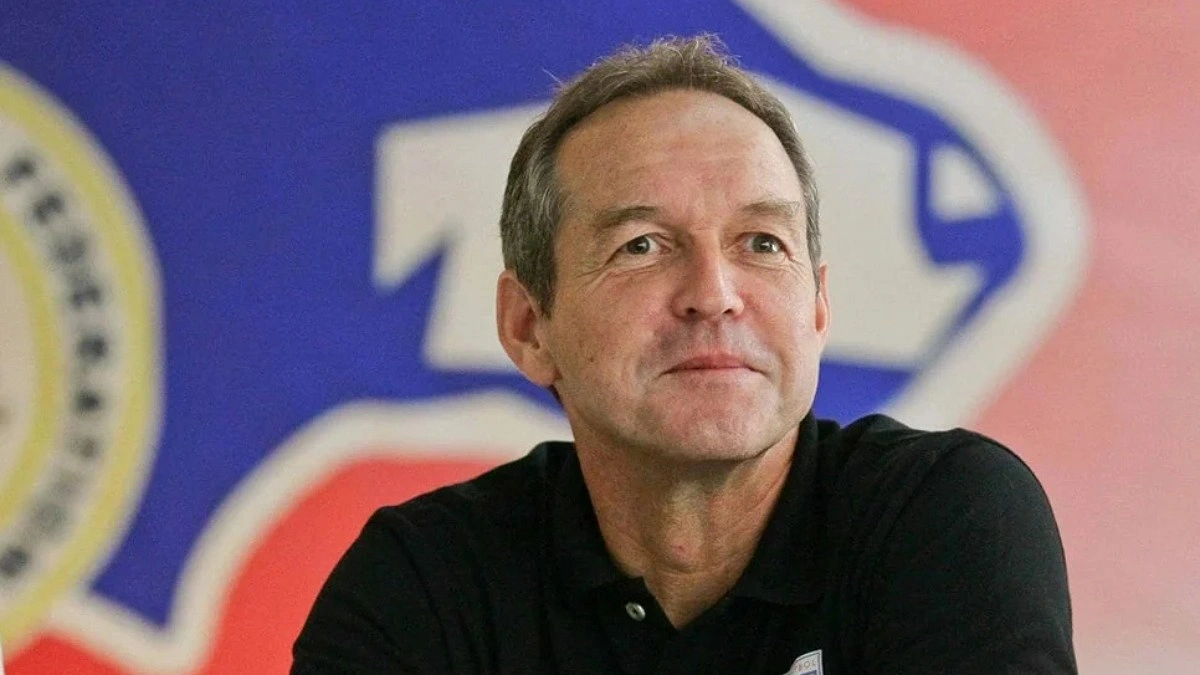
Picture: Thomas Dooley
Thomas Dooley's popularity has increased since Bangladesh defeated San Marino. The coach, who played in two World Cups for the United States, recently took charge of the Bangladesh team. Dooley, who showed flashes in his debut match, has provided various analyses on World Cup football. In addition to discussing the participating teams, he also shared his likes and dislikes and named the best footballer in an interview with Sudipta Ananda of Agamir Somoy.
Agamir Somoy: You played for the host nation, the USA, in the 1994 World Cup. Now, 32 years later, the World Cup is returning to your country. How do you think the USA will perform as hosts?
Thomas Dooley: Predicting performance is always tricky without insider knowledge, but based on what I see, the US national team is still not quite ready to go all the way. A realistic expectation is a strong tournament with a run into the knockout rounds. I’d place them around the quarterfinals as a likely ceiling this time.
Player development has improved significantly, but there remains an intangible factor: a deep, ingrained football culture that many top European and South American nations develop from childhood—daily family and community habits that shape decision-making under pressure.
Agamir Somoy: This time, it’s going to be a 48-team World Cup. Do you think the expansion might diminish the excitement or charm of the tournament? Overall, what kind of World Cup are you anticipating on home soil?
Thomas Dooley: I welcome more countries getting the chance to experience the World Cup. It helps grow the game and creates great stories. However, expansion also changes competitive balance and tournament dynamics; the group format with three teams increases drama and risk, and there are legitimate concerns about early matches being somewhat diluted.
Tri-nation hosting across the USA, Mexico, and Canada brings unique challenges: long travel distances, multiple time zones, and varied climates, all of which make logistics and player recovery harder. It is also not ideal for fans who want to follow multiple matches.
If FIFA prefers multi-country hosts, more compact regional groupings (e.g., within Southeast Asia or Central Europe) would be more fan-friendly and less disruptive. Ticket pricing is another major issue: while the fanbase is growing, many supporters may be priced out of attending multiple games.
Still, the World Cup remains a global spectacle on and off the pitch. I expect great atmospheres, massive public viewing events, and memories that last a lifetime—even for fans who cannot attend every match. It will be a historic and ambitious World Cup on home soil. Realistically, however, expectations for the US should focus on a deep knockout run; reaching the quarterfinals and beyond would be a major achievement, while acknowledging the structural and cultural gaps that still need to be closed.
Agamir Somoy: The USA is a proven global powerhouse in sports, yet it lags significantly behind in football. What do you think is the main reason behind this?
Thomas Dooley: Football is different from other US sports. We’ve closed many gaps—coaching, facilities, and analytics—but one key deficit remains: a consistent team identity and a deeply shared mentality.
Since 1994 and the 2002 team, I haven’t seen a US squad with the same unity and collective mindset. You can hire specialists and improve technology and tactics, but knockout tournaments are decided by teams that think, prepare, and sacrifice as one unit.
That cohesion—the ingrained football culture from youth levels upward—is still the missing link.
Agamir Somoy: In your opinion, who are the top contenders for the title this time?
Thomas Dooley: Argentina and France are my top picks.
Agamir Somoy: Why do you place them ahead of the rest?
Thomas Dooley: Argentina—because of their style, cohesion, and the world-class leadership of Messi. They have the tactical balance and winning mentality to go all the way.
France—because of their incredible individual quality across the pitch and squad depth. Even if I’m not a fan, their talent pool and experience make them perennial contenders.
Other teams to watch include England, who often struggle to win major tournaments despite strong balance and depth. But Argentina and France stand out for leadership, quality, and tournament know-how.
Agamir Somoy: You have strong roots and connections in Germany. Do you believe Germany is fully prepared to clinch their fifth World Cup title this time?
Thomas Dooley: No, I don’t think Germany are fully ready to win it this time. Recent major tournaments have shown that the problem is not talent, but cohesion and focus.
Germany’s exits in Russia and Qatar were driven more by internal issues than a lack of quality—mixed messages, political distractions, and inconsistent team unity undermined performance. Selection decisions have not always helped either; relying on established names instead of in-form younger players at key moments hurt momentum.
The goalkeeper situation is another example—form matters, and selecting based on reputation rather than current performance can disrupt the team.
What Germany needs is simple but not easy: a clear identity, trust in the best-performing players (even if they are young), consistency in coaching and selection, and a squad culture focused solely on football when it matters.
If they can restore that, they will be contenders. Until then, I am not convinced they will lift a fifth trophy.
Agamir Somoy: Leaving aside the USA and Germany, which team is your personal favorite, and who is your favorite player?
Thomas Dooley: Aside from the USA and Germany, my personal favorite is Argentina, and my favorite player is Lionel Messi.
Agamir Somoy: Who, in your eyes, is the Greatest of All Time (GOAT)? Is it Pelé, Maradona, Messi, or someone else?
Thomas Dooley: For me, the GOAT is Lionel Messi. His combination of innate skill, game intelligence, consistency, longevity, and ability to scan and read the field is unique.
He creates and exploits space, executes impossible actions regularly, and has maintained world-class performance across both club and international football.
I have enormous respect for Pelé and Maradona—each defined an era—but Messi’s sustained brilliance, adaptability, and overall impact make him, in my view, the greatest.
Agamir Somoy: Let’s shift the focus to Bangladesh. Qualifying for the World Cup is almost an impossible dream for this nation, yet the people here are deeply passionate about football. Based on your brief experience working here, why do you think Bangladesh is unable to carry that dream through to the World Cup? What are the key areas where the country is lagging behind?
Thomas Dooley: For now, World Cup qualification is very difficult for Bangladesh, but not impossible in the long term.
What is needed is a clear, long-term plan with short-term milestones:
- Climb the FIFA rankings strategically to secure better draws in qualifiers.
- Deliver consistent results with the senior team to attract sponsors and investment.
- Strengthen the domestic league and youth development system so more players reach professional standards.
- Implement the four pillars—technical, tactical, physical, and mental—across academies and clubs.
- Make the national program attractive so eligible diaspora players choose Bangladesh.
This takes time, patience, and sustained commitment. But with a focused roadmap and steady progress, the dream can become achievable.
