Eight years without elections, tea workers' union faces crisis

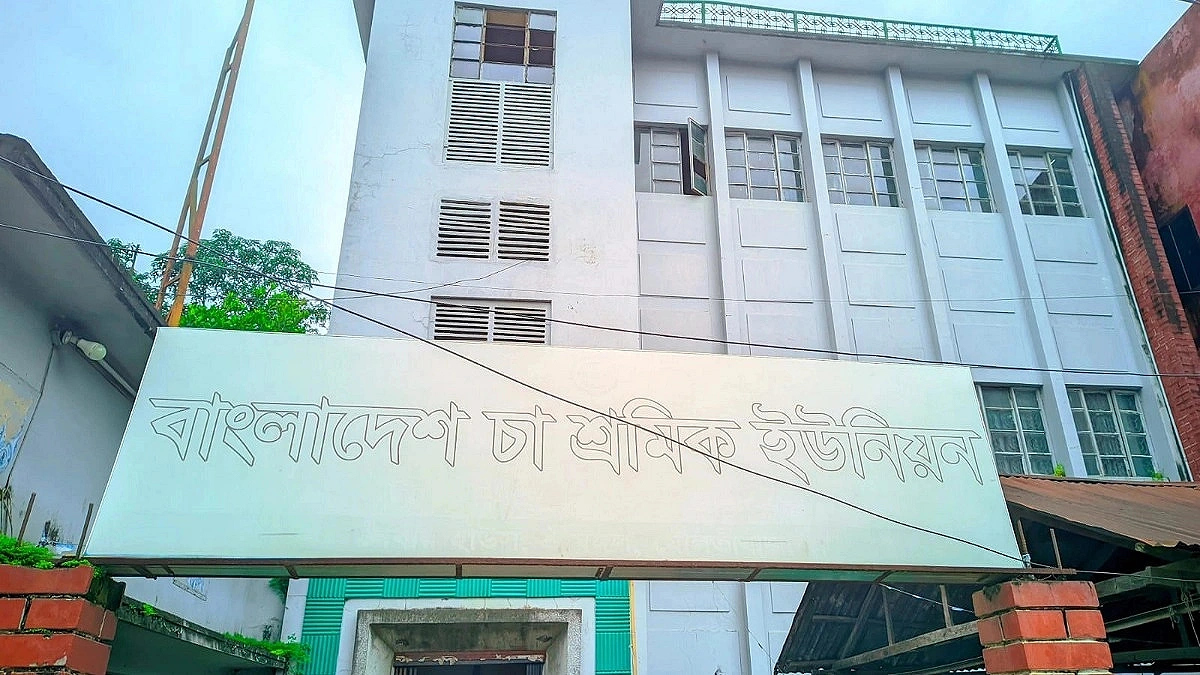
Collected Photo
The central election to the Bangladesh Tea Workers' Union, one of the most representative organizations for the hundreds of thousands of workers employed in the country's tea industry, has not been held for eight years.
The last election was held on June 24, 2018, but according to the constitution, elections are supposed to take place every three years. Accordingly, a new committee should have been elected in 2021, but due to various complications, the election has still not been taken place. As a result, the committee elected for a three-year term has been serving continuously for eight years now. This has led to growing dissatisfaction among tea workers creating a leadership crisis, and organizational stagnation.
According to the Bangladesh Tea Workers' Union, there are currently 178 tea gardens in the country. The union has over 96,000 registered voters. The provisions require that the Panchayat, Valley, and Central Committees be elected through direct voting by these voters. However, due to the prolonged absence of elections, questions have also been raised about the functionality of the elected Panchayat committees in many gardens. In some places, the old committees have been dissolved and ad-hoc committees formed to conduct activities.
In Srimangal Upazila of Moulvibazar, one of the largest tea-producing regions, there are 41 tea gardens. Due to the long delay in elections in various gardens in the upazila, the activities of the workers' organizations have weakened. Workers have said that this has created complications in articulating their demands, securing their rights, and conducting effective negotiations with the management.
Talking to workers during visits to various tea gardens in the upazila, including Jagchara, Rajghat, Kalighat, Mirzapur, Bolaichhara, Bilaschhara, Harinchhara, Khejuri, and Majdihi, it was learned that the lack of elections is increasing divisions and dissatisfaction within the organization. In the absence of elected representatives, issues related to workers' welfare—such as wages, housing, healthcare, education, and provident funds—are not being properly presented to the management or the relevant authorities.
Several workers' leaders, speaking on condition of anonymity, said that the prolonged lack of elections has increased factionalism and division within the organization. This is having a negative impact on movements for workers' rights, productivity, and the overall environment of the gardens.
Kalpana Banerjee, a female tea worker, said, "We regularly pay membership fees to run the union. But for a long time, we have not had the opportunity to elect our leadership through voting. Complications have also arisen regarding fair wages, attendance, various benefits, and the provident funds of retired workers. As wages have not been increased in line with market prices, the livelihoods of workers have become even more difficult."
Sudhir Rikiyashon, President of the Bhur Bhuria Tea Garden Panchayat Committee, commented that the last election was held nearly eight years ago. Since then, demands have been made many times, but no effective steps have been seen. Elections are the means through which workers' opinions are reflected and leadership accountability is ensured.
According to tea workers' leader Akash Doshader, the organization has effectively become unwell due to the long delay in elections. Workers lack an effective platform to voice their concerns. The same leadership has remained in place for years under various pretexts. In many gardens, the Panchayat committees elected in 2018 have been dissolved and replaced with ad-hoc committees. We want a neutral and acceptable election.
Abdus Sattar, a member of the Union Parishad (local council) in the Lakhaichhara tea garden area, said, "Due to the lack of leadership, discipline is breaking down. Divisions among workers are increasing, and they are being deprived of their rightful entitlements. If elections are held soon, this crisis will largely be resolved."
According to Ramvajan Koiri, former General Secretary of the Bangladesh Tea Workers' Union, one of the main reasons for the election delay is the amendment of the constitution. The fact that no central election has been held for eight years has increased anxiety and frustration among tea workers. In the past, elections were held in a fair, free, and impartial manner under government supervision. Therefore, we are now demanding that the election be organised under government supervision once again. The prolonged absence of elections has disrupted democratic practices in the tea gardens, eroded workers' trust in the leadership, and damaged the stable environment. It is urgent to announce an election schedule soon and arrange an acceptable election.
Pankaj Kanda, Vice-President of the Bangladesh Tea Workers' Union, said the delay is not only due to financial constraints but also administrative complications. In the past, neutral elections were held with government funding and supervision. This time too, we have requested the government to arrange the election in the same manner. The Ministry of Labour and Employment is considering the matter seriously and is taking steps to provide the necessary funding.
"We have spoken with the Minister for Labour Welfare, the Secretary, and other officials of the concerned ministry. They have informed us that the election schedule will be announced soon and arrangements will be made. We hope that all complications will be overcome and a schedule will be declared shortly. We want a democratic election," he added.
Bishu Prasad Goyala, Convener of the Reform Committee of the Bangladesh Tea Workers' Union, said that elections were not held on time due to organisational weaknesses, lack of planning, and the apathy of those responsible. As a result, tea workers are being deprived of the opportunity to exercise their voting rights. The absence of regular elections has called into question the democratic practice and accountability of the organisation. It is necessary to re-establish the democratic process by promptly holding elections at all levels of the union.
Maheshwar Das, President of the Khejuri Tea Garden Panchayat Committee, said that because the current committee's term has expired, effective negotiations with the management are not possible. This is creating problems in securing the workers' legitimate demands. The lack of elections is increasing crises in almost every garden and even raising the risk of conflict.
Md. Ziaur Rahman, Executive Officer (UNO) of Srimangal Upazila, told Agamir Somoy (a media outlet): "To maintain the democratic continuity of workers' organisations, it is important that elections are held on time. Regular elections allow workers to choose their representatives, which enhances the accountability and transparency of the organisation. I hope the concerned authorities will take initiative on this matter as soon as possible. The upazila administration will provide necessary assistance in this regard."
Industry insiders said the prolonged postponement of the workers' union elections has not only created an organisational crisis but has also weakened the process of securing workers' rights. Therefore, it is now time to resolve all complications quickly and ensure the democratic rights of tea workers by organising a participatory, impartial, and acceptable election.