

How West Bengal election ads ended up in Bangladesh

Collected Photo
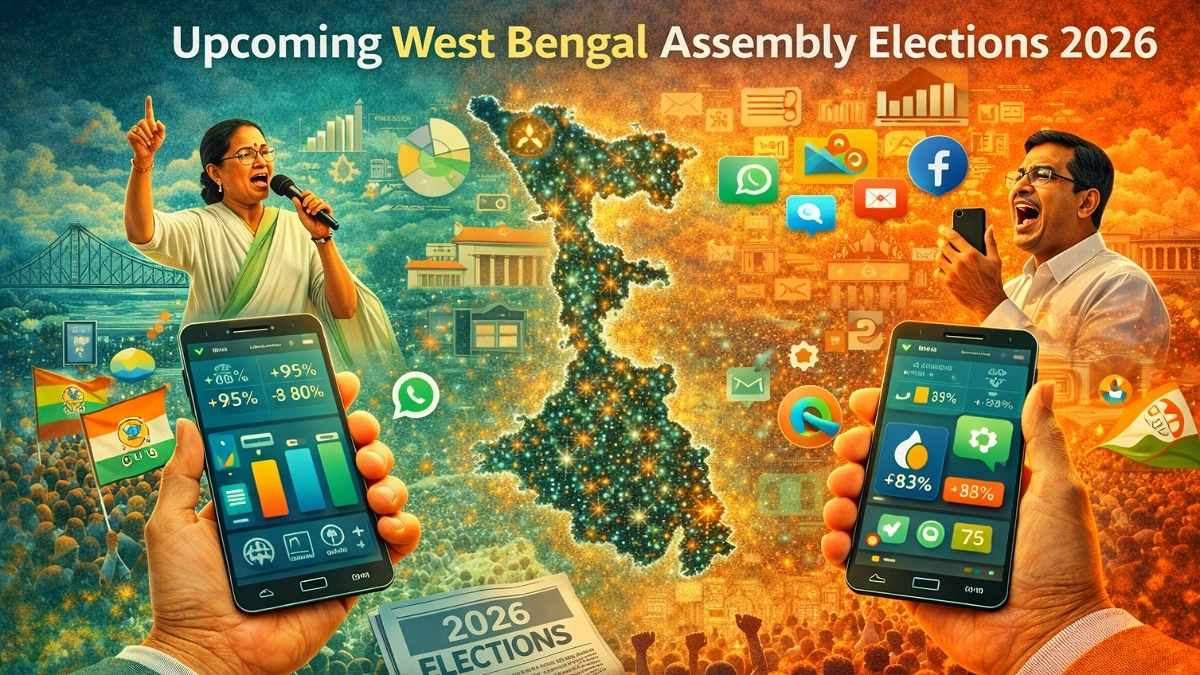
In recent days, many people in Bangladesh have reported seeing political advertisements related to the West Bengal Assembly elections on their social media feeds. The appearance of these ads, despite users being outside India, has raised questions about how digital political campaigning operates across borders.
At the heart of this overlap is the structure of global advertising networks run by platforms such as Meta Platforms, which operates Facebook and Instagram, and Google, which powers YouTube. These platforms do not think in terms of rigid national boundaries alone. Instead, they rely on language, interests, online behavior and demographic clusters to deliver political advertisements.
Because Bangladesh and India, particularly West Bengal, share the Bangla language and cultural similarities, advertisers frequently target ‘Bengali-speaking audiences’ rather than strictly limiting campaigns to Indian territory. As a result, users in Bangladesh may fall within the broader audience category selected by political campaigns.
Another key factor is the use of diaspora and cross-border audience targeting. Political parties in India sometimes aim to reach Bengali-speaking communities living outside West Bengal, including those in other countries. Although Bangladesh is not the intended electoral audience, its population naturally overlaps in language and content consumption patterns, making it more likely for such ads to appear.
Digital advertising tools also rely heavily on user data signals. If a user in Bangladesh follows Indian news, engages with West Bengal-related content, or watches videos about Indian politics, the algorithm may interpret this as interest and serve relevant advertisements. In many cases, the system prioritizes engagement potential over strict geographic boundaries.
Experts also point to the role of imperfect location targeting. While platforms allow advertisers to specify geographic limits, these systems are not always precise. Virtual private networks (VPNs), shared IP ranges, and cross-border internet routing can sometimes blur location data, causing ads to be delivered beyond their intended region.
Additionally, political content often spreads organically beyond paid campaigns. Even if an advertisement is initially targeted within India, users may share, repost, or amplify it, allowing it to reach audiences in Bangladesh without direct targeting.
The issue highlights a broader challenge in regulating digital political advertising. Unlike traditional media, where content is geographically confined, online platforms operate across borders with limited real-time oversight. This raises concerns about transparency, accountability, and the unintended exposure of foreign political messaging to audiences who are not part of the electoral process.
For now, the presence of West Bengal election ads in Bangladesh appears to be largely a byproduct of how global digital platforms function—driven by language, user behavior, and algorithmic reach rather than strict national boundaries.