

Over 100 wild animals killed on Dhaka-Sylhet Highway

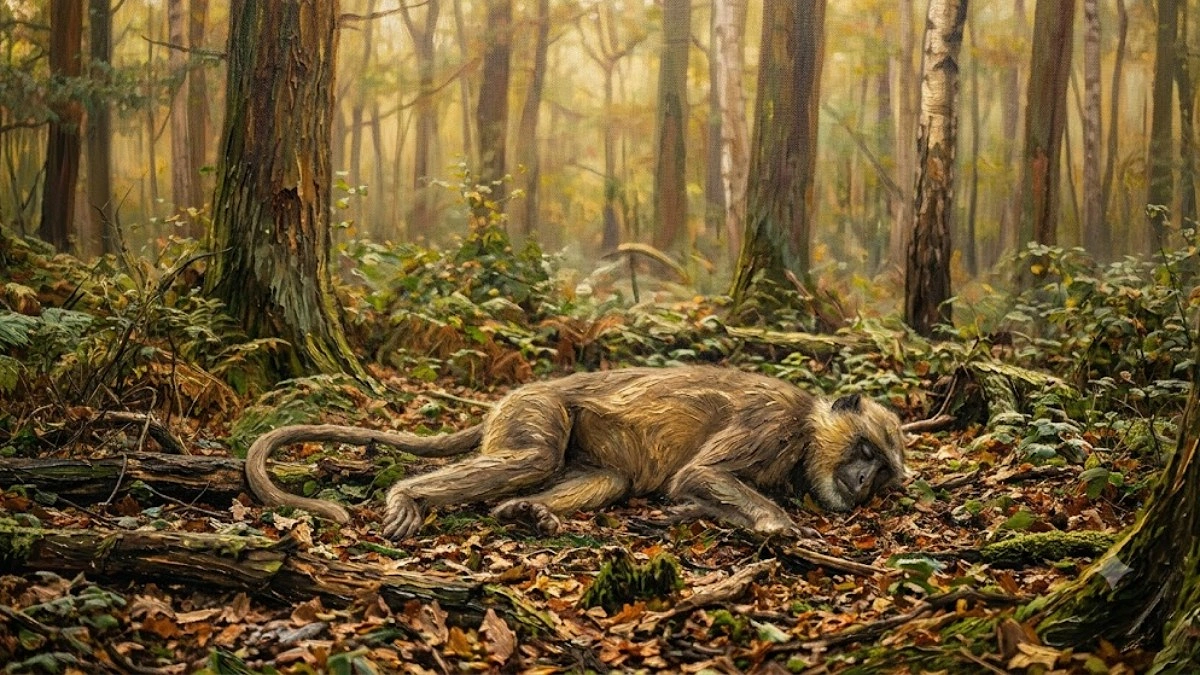
Graphics: Agamir Somoy
Forest Department said more than 100 wild animals have died under vehicles on old the Dhaka-Sylhet Highway in Chunarughat, Habiganj in the last five years.
However, the actual number could be even higher. This is because many animals die after moving away from the road or disappear into the forest after being injured. As a result, it is not possible to preserve information on all incidents.
Wildlife Management and Nature Conservation Division’s Divisional Forest Officer (DFO) Abul Kalam said, “There is no complete record of exactly how many animals have died. However, there is no denying that animals are dying under vehicles.”
He claimed, however, that the number of animal deaths has decreased slightly in recent times compared to the previous few years.
The death of rare and endangered animals is causing the most concern. The recently deceased baby capped langur is an example of this. Forest Department officials said only a few pairs of capped langurs survive in Satchari National Park.
Consequently, even the death of one baby has created new concerns about the future of this endangered species. It is not just capped langurs; the road is constantly claiming the lives of many other animals.
Mobashir Mia, a member of the National Park Management Committee, said last year alone, a king cobra about 12 feet long, leopard cat, banded krait, ornate flying snake, Phayre’s leaf monkey, capped langur, barking deer, and several monkeys were killed by vehicles.
Moreover, species like jungle fowl, porcupines, pangolins, fishing cats, and wild dogs are also regular victims of accidents. Locals added that monkeys die the most because they roam on both sides of the forest.
They lose their lives under vehicles while repeatedly trying to cross the road in search of food or while moving in groups.
More than 200 trucks travel through the Satchari protected forest every day. Besides, hundreds of CNG-run autorickshaws, buses, tractors, and other vehicles are also using this road. Although the maximum speed limit inside the forest area is set at 20 kilometers per hour, most vehicles do not follow it.
As a result, animals do not even get a chance to cross the road, according to locals.
Forest Department data showed that the Satchari National Park, spanning about 600 acres, is home to 197 species of wildlife. This includes 24 species of mammals, 18 species of reptiles, 6 species of amphibians, and about 200 species of birds.
Satchari is an important habitat for several rare animals, including the capped langur and Phayre’s leaf monkey, among only a few places in the country.
Environmentalists believe that the problem is not just the reckless speed of drivers; management weaknesses are equally responsible.
Samiul Mohsenin, coordinator of the Wildlife Conservation Society (WCS) said, “Even though a 20-kilometer speed limit is set for about a one-kilometer road inside the forest, there are not enough warning signs. Many drivers do not take the issue of animal movement seriously.”
As a result, accidents continue to increase. According to him, the situation will not improve without more road signs, strict speed control, and regular monitoring. International concern has also been raised regarding the crisis.
Samiul Mohsenin said, “A research institute in Germany is conducting research on the mortality rate of wildlife in road accidents in Satchari. Researchers view the matter as alarming.”

