
Locks on Ashrayan Homes, Yards Overrun by Weeds

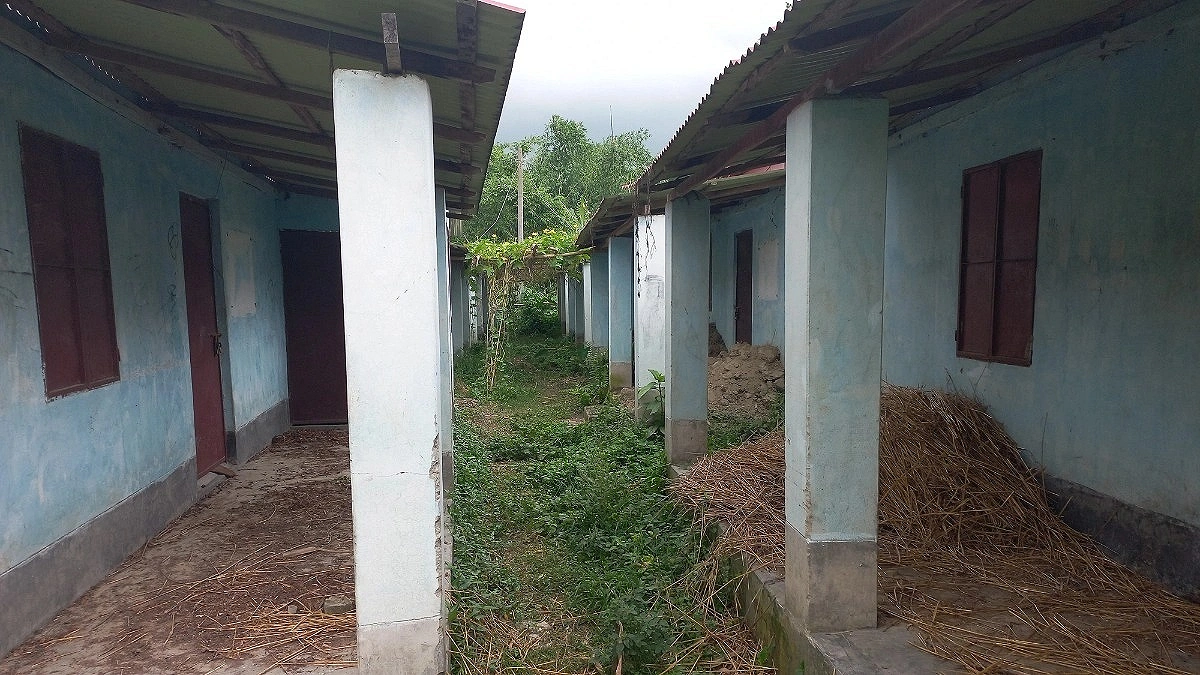
The Ashrayan Project in Khalishdohura area of Saturia Upazila, Manikganj. Photo: Agamir Somoy
Grass, weeds, and creeping plants have grown in front of every house. Locks hang from the doors. Some yards are piled with garbage, while others are being used to store cow dung. The houses under the Ashrayan Project in the Khalishdohura area of Saturia Upazila in Manikganj have remained in this condition for nearly two years. Although the government allocated these homes, no one lives in them.
Elderly resident Abdul Barek, whose home stands beside the project, said, “At first, people moved into one or two of the houses. But they left about a year ago. Now all the houses remain empty and locked. These beautiful homes are deteriorating. If other people were allowed to live in them, at least the houses would remain in good condition.”
Sources at the Saturia Upazila Project Implementation Office said that then-Prime Minister Sheikh Hasina launched the Ashrayan Project-2 program during the 2020–21 fiscal year to mark the Mujib Centenary. The project targeted landless and homeless people. Under the initiative, authorities built 17 houses in the Khalishdohura area and handed them over through registered deeds. The government allocated Tk 171,000 for each house.
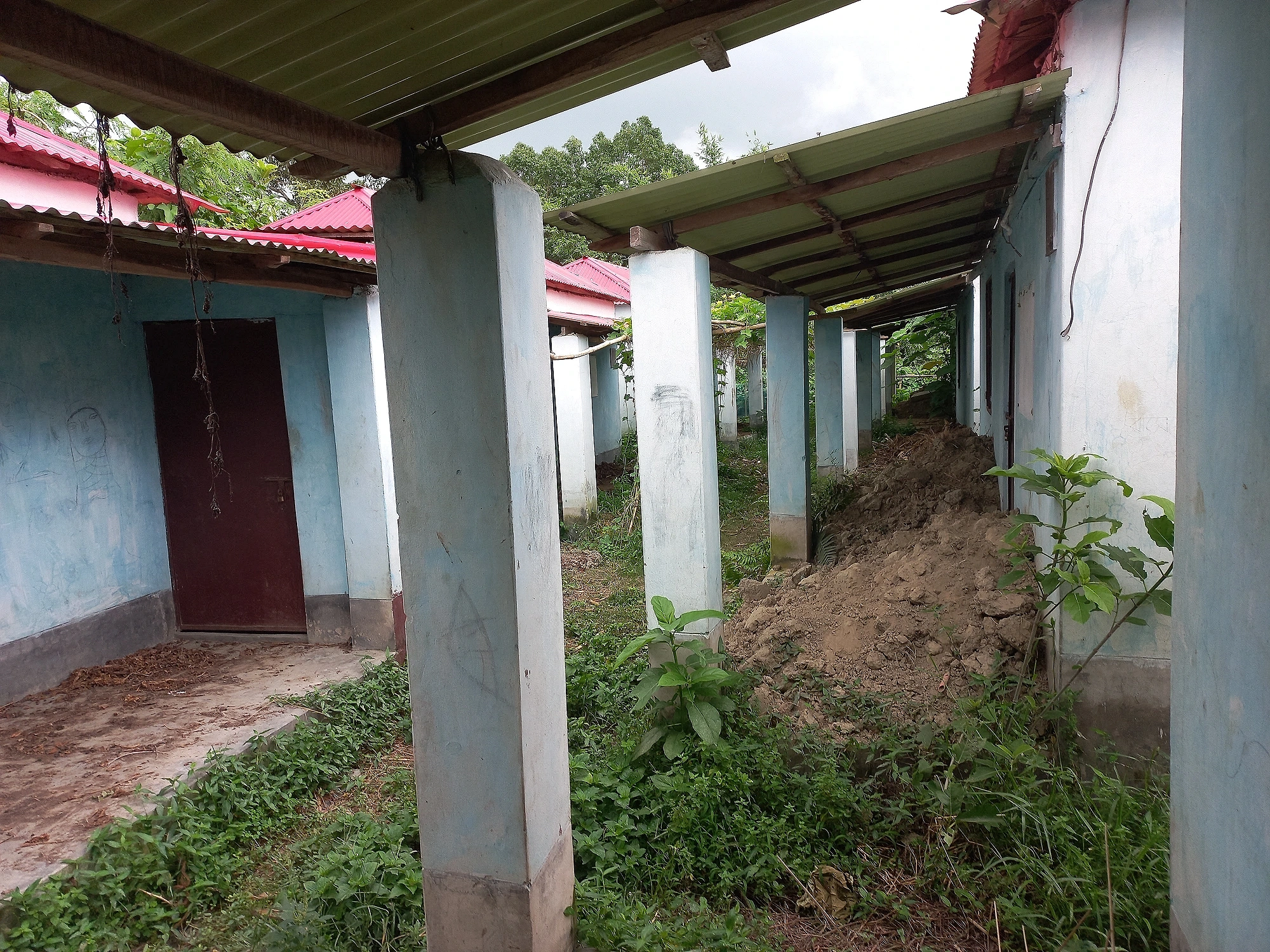
The Ashrayan Project is located in Baraid Union, about 15 kilometers from the Saturia Upazila headquarters. A visit to the project site found all 17 houses locked. Piles of soil sit in front of some homes, while local residents have placed cow dung in front of others. Bushes and undergrowth have surrounded the houses, and cracks have appeared in several walls.
Mst. Shahanaz of Khalishdohura said, “Since no one lives here, local people have stored tractors, soil, cow dung, and various other items on the verandas. The houses are deteriorating. At first, some of the allottees would come every few months to clean the homes. But they have not even done that for nearly the last two years.”
The correspondent collected the list of beneficiaries from the Upazila Project Implementation Office. It shows that the allottees live in Baliati, Hajipur, and Khalilabad villages of Baliati Union, about 13 to 14 kilometers away from the project site.
Papon Khan was among those who initially moved into one of the allocated homes. After a few months, he returned to his previous residence in Hajipur village, where he runs a business trading gold ash.
“If I stay at the Ashrayan Project and travel every day for my business, it costs me extra money. The commute also wastes time and causes considerable hardship. So, I locked the house and moved back,” he said.
Discussions with Papon revealed that other residents also abandoned the project homes because of the distance from their workplaces.
“Many people planned to sell these houses along with the land. But after receiving the allocations, they could not sell them and simply left the houses vacant. Many landless people in this area need housing. I submitted written applications to the UNO several times seeking allocation of these houses to them, but nothing happened,” alleged local Union Parishad member Md. Ramzan Ali.
Saturia Upazila Project Implementation Officer Khalilur Rahman Mollah said he recently visited the project. “No one lives in any of the 17 houses. I informed the UNO about the matter. He instructed us to identify people who may be interested in living there,” he said.
Saturia Upazila Nirbahi Officer (UNO) Kazi Mohammad Anik Islam said, “We cannot allocate the houses to others unless we cancel the deeds of those who received the allocations but are not living there. We will issue notices to the allottees asking why they are not residing in the houses. If any destitute people in the area need shelter, we can arrange temporary accommodation for them there.”
