


LNG shortage shuts down excelerate terminal, supply drops to 550 million cft

Collected Photo
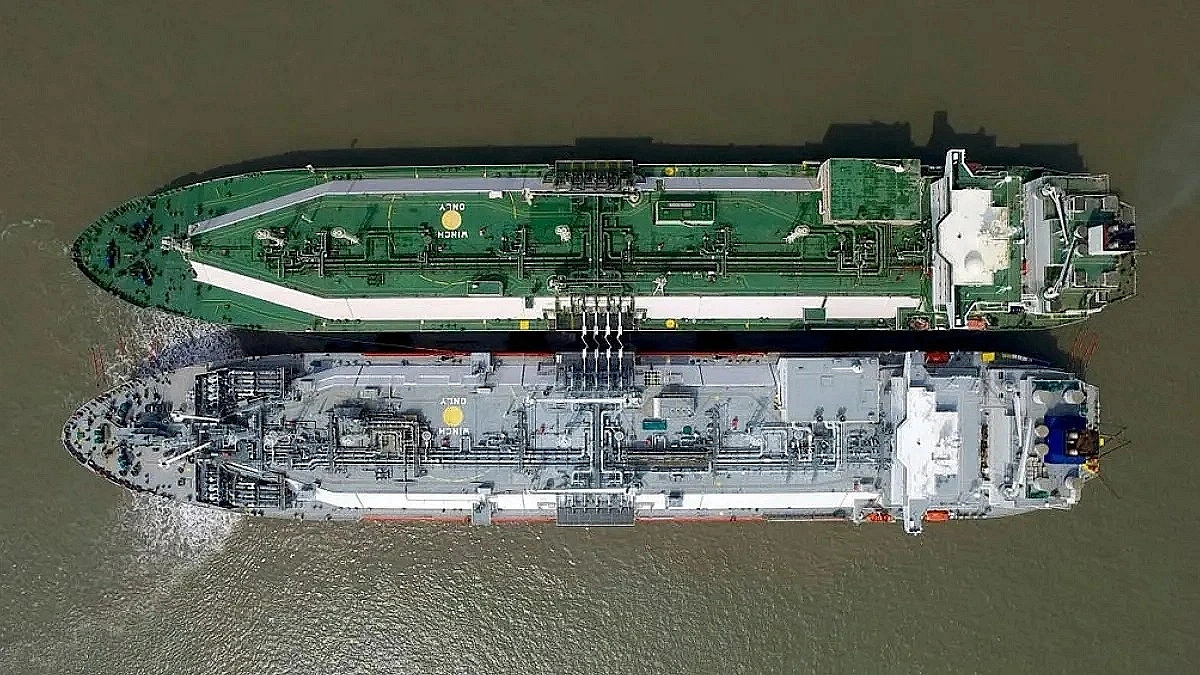
Gas supply has come to a cessation from the floating LNG terminal of Excelerate Energy in Maheshkhali, Cox's Bazar, as LNG-carrying vessels have not docked on schedule. The terminal's operations ceased around 2:45 PM on Wednesday. As a result, total LNG supply from both terminals has dropped from 650 million cubic feet to just 550 million cubic feet, now being supplied solely through Summit's terminal.
Since July 21, the country has been facing a crisis in gas supply. The situation has worsened due to a fire at an LNG terminal, prolonged repair work, and the failure of LNG vessels to arrive in Bangladesh as per schedule. LNG accounts for 30–37 percent of the country's total gas supply. Therefore, even a single terminal shutdown or reduced supply has a major impact on overall gas availability.
It is learned that the Excelerate Energy terminal remained closed from July 21 to August 6, causing severe gas shortages across the country. Later, Summit's terminal was also shut for a day due to the non-arrival of an LNG vessel. After Summit resumed operations, the Excelerate terminal has now shut down again, pushing the gas supply situation further into crisis.
State-owned Petrobangla and Rupantarita Prakritik Gas Company Limited (RPGCL) have not been able to confirm when a new LNG vessel will arrive. Attempts to reach senior officials of these two organizations by phone for comment went unanswered.
However, field-level officials have confirmed the shutdown of the Excelerate terminal. They claim that an LNG vessel was scheduled to depart from Singapore on August 23. But they have no specific information on when it will arrive in Bangladesh. Consequently, there is no relief in sight regarding the gas supply situation.
The Bangladesh government has separate long-term government-to-government (G2G) agreements with Oman and Qatar for annual LNG supplies. However, due to the closure of the Strait of Hormuz and attacks on LNG-supplying countries, the contracted LNG supply has completely halted. As an alternative, the government is purchasing LNG at high prices from the international spot market.
Allegations have emerged that even though the government is buying LNG at higher prices from the spot market to cope with the crisis, the expected shipments are not reaching the country on schedule. In this context, the Energy Minister and Foreign Minister are visiting the Middle East to ensure speedy LNG supply.
How the terminal works
There are two floating LNG terminals in Maheshkhali, Cox's Bazar, with a total capacity of 1,100 million cubic feet. The government buys LNG from the international market and supplies it to these terminals. The terminals themselves cannot purchase LNG. The primary function of the floating terminals is to convert imported LNG into gas and supply it to the national gas grid through pipelines.
A senior official of the state-owned Gas Transmission Company Limited (GTC) said that on Tuesday afternoon, 650 million cubic feet of gas was still being supplied from both floating terminals. From Wednesday morning, that figure began to decline. Around 2:45 PM, the Excelerate Energy terminal shut down. Currently, only Summit's terminal is supplying 550 million cubic feet of gas.
GTC reported that on Monday, total supply—including imported LNG and domestically produced gas—stood at 2,262 million cubic feet. By Tuesday afternoon, it had dropped to 2,075 million cubic feet. Following the shutdown of one LNG terminal, total gas supply is expected to fall further to around 1,800 million cubic feet after Wednesday afternoon.
Industrial production disrupted
Due to the reduced gas supply, production at factories and industries is being hampered. Gas-dependent steel mills and dyeing factories have virtually halted production. Residential consumers and CNG stations are also likely to face extended gas shortages.
Tapan Sen Gupta, Deputy Managing Director of BSRM Group, one of the country's leading industrial conglomerates, said: "To ensure delivery of scheduled products to buyers, we had kept production running by using light diesel. This fuel is four times more expensive than gas. If we have to produce rods by burning such costly fuel, the price will rise significantly. I am worried—what should I do, how will I manage?"

