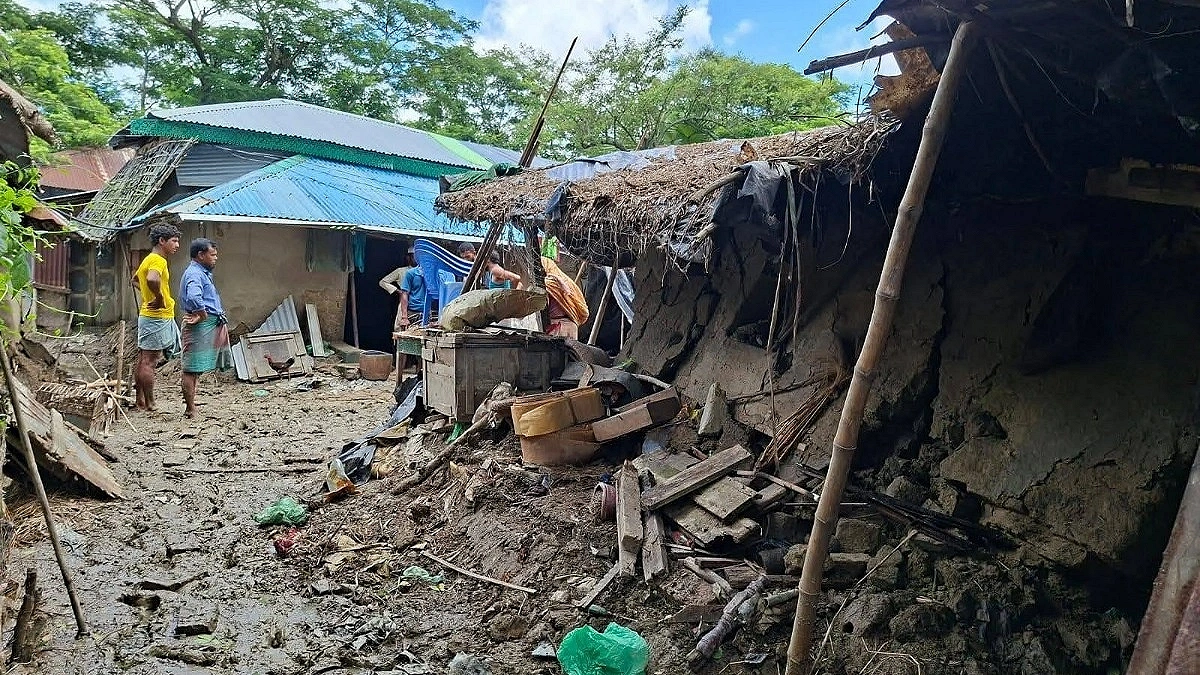
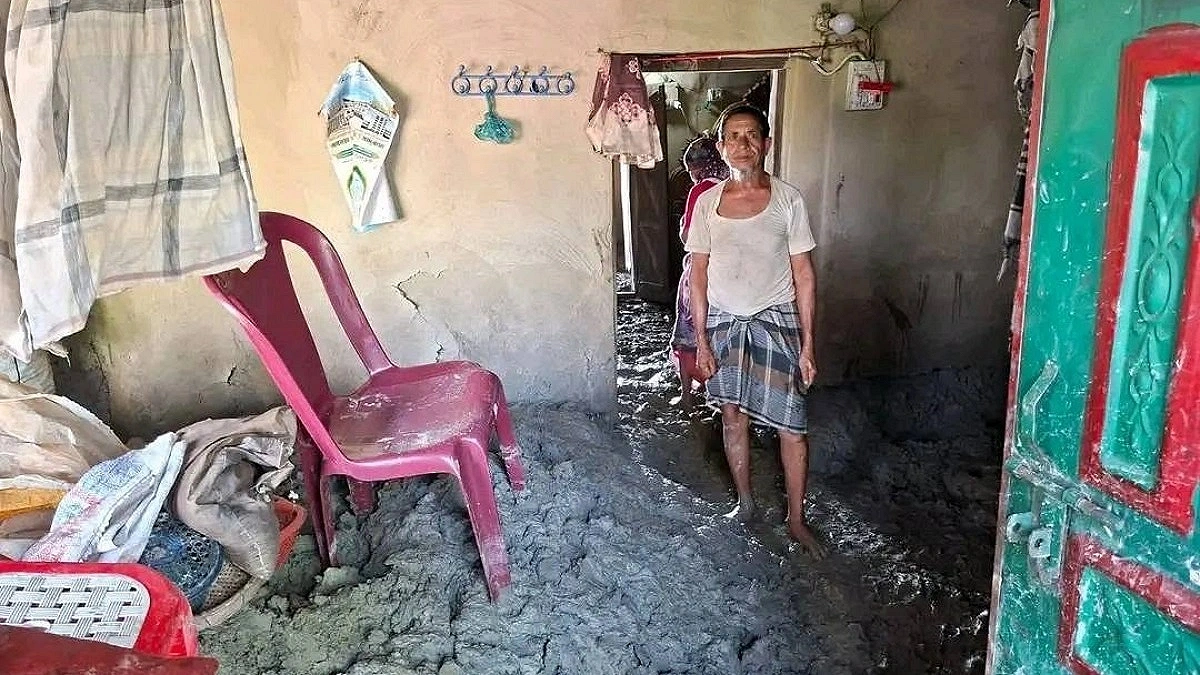
Flood survivors begin rebuilding as waters recede in Chattogram

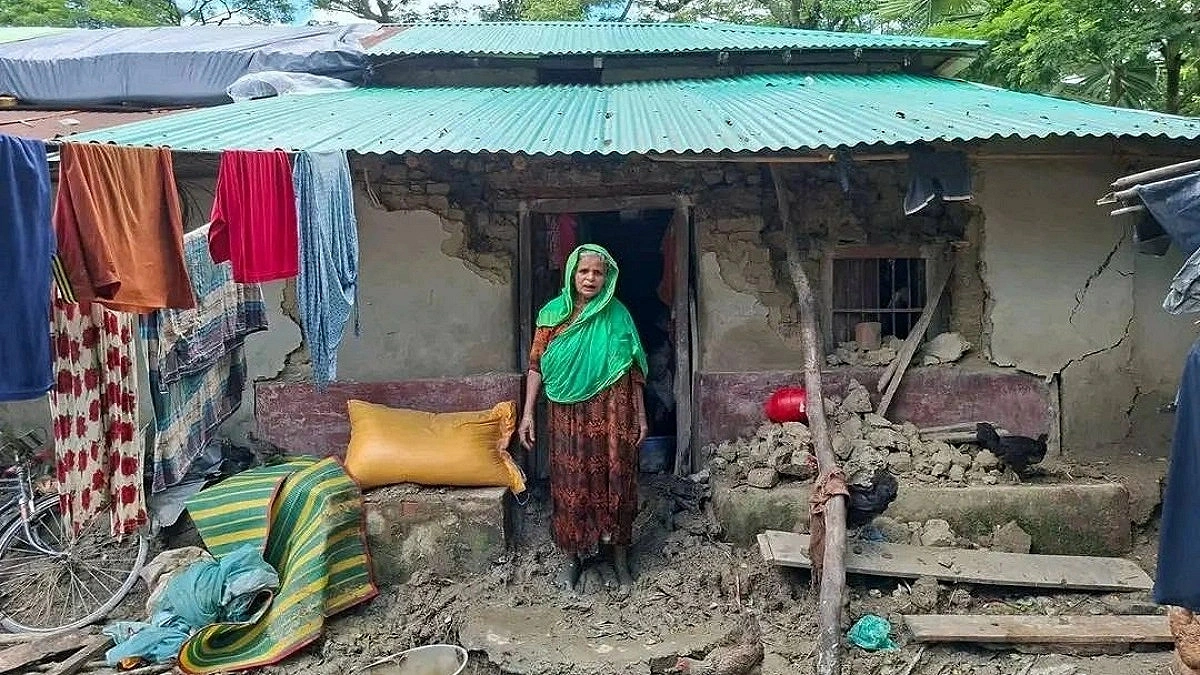
Photo: Agamir Somoy
Vast areas of Banshkhali and Satkania upazilas in Chattogram have been left devastated by flash floods and hill runoff, with residents beginning the difficult task of rebuilding their lives as floodwaters slowly recede.
After two consecutive days without rain, water has started draining from homes in many areas. However, coastal and low-lying communities remain scarred by widespread destruction.
On Wednesday, floodwater was still standing in the courtyards of many homes in villages across Baharchhara Union in Banshkhali. Families have begun returning from emergency shelters to find damaged homes, many of which have either partially collapsed or are filled with ankle- to knee-deep mud.
Many families remain stranded by floodwaters and continue to endure severe hardship. Most earthen houses in the affected areas have collapsed, forcing displaced residents to live under the open sky or seek shelter with relatives. Along with the loss of homes, residents are struggling with the lack of cooking facilities, acute shortages of safe drinking water and the breakdown of sanitation services.
Mohammad Solaiman, an elderly resident of Baharchhara, said water had receded from inside his house but remained in the yard.
"The water has gone down inside the house, but the courtyard is still flooded. We cannot cook, and the biggest problem is drinking water. All the tube wells are still submerged," he said.
As floodwaters continue to recede, the full scale of damage to rural infrastructure and the local economy is becoming increasingly clear. In addition to homes, floodwaters have washed away rural roads, vegetable fields, cropland, coastal salt fields and fish farms worth millions of taka.
Aman Ullah, a farmer from the coastal area, said he had taken loans from an NGO to invest in fish farming and vegetable cultivation.
"The floods have broken our backbone. I don't know how we will recover from these losses," he said.
Residents say that while emergency relief has reached many affected communities, their most urgent need now is long-term rehabilitation to rebuild their lives.
On Wednesday afternoon, Disaster Management and Relief Minister Asadul Habib Dulu visited Khankhanabad Union in Banshkhali, where he distributed relief supplies and took part in a canal excavation programme.
The minister said he had instructed senior officials to carry out an immediate assessment of the damage, including losses to fish farms and residential properties.
"Once we receive the assessment, we will allocate funds for rebuilding homes. Some affected families will also receive corrugated tin sheets for reconstruction," he said.
He also warned against any irregularities in relief distribution.
"We will not tolerate corruption or favouritism in relief distribution. There is no politics when it comes to helping flood victims. Everyone affected must receive assistance. If any allegations arise, immediate action will be taken," he said.
Like Banshkhali, floodwaters have also begun receding from most low-lying areas of neighbouring Satkania. As the water retreats, however, it is revealing extensive damage, including broken roads and collapsed homes across the upazila.