
Insurance companies have been plundered

Graphics: Agamir Somoy
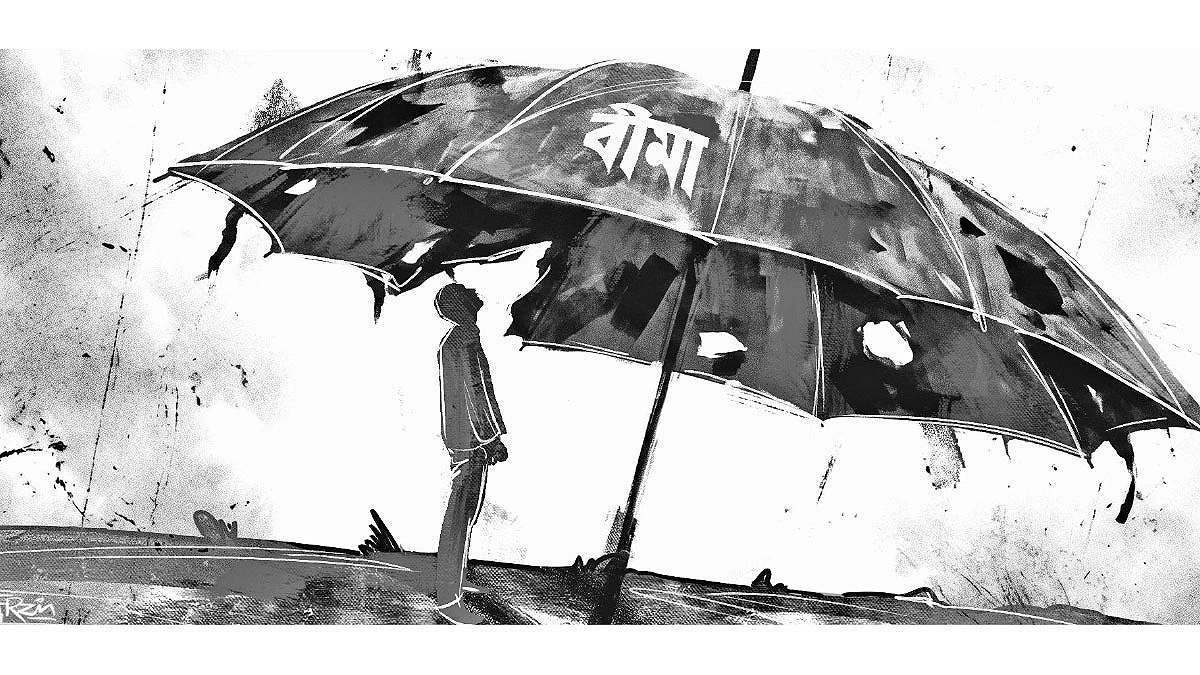
At present, insurance companies in Bangladesh have reached an extreme level of public distrust. The main reason behind this is the long-standing delay by insurance companies in settling claims. While foreign-owned companies have been comparatively able to pay policyholders’ claims, locally owned companies have failed to settle claims for months and even years.
This raises the question: when companies sell insurance policies and collect premiums against them, where have they been investing those premiums all this time? There has also been a weakness in oversight by the regulatory authorities, and questions can certainly be raised about this.
When insurance companies enter into contracts with policyholders to pay insurance claims and collect premiums in return, it is their moral responsibility to settle those claims without unnecessary delay.
At present, however, insurance companies’ reluctance to settle claims has created a highly negative public perception of the insurance industry. There have been embezzlement and financial irregularities in insurance companies. As a result, insurance claims worth thousands of crores of taka remain unpaid to customers. Their inability to settle these claims on time is now raising serious questions about the insurance business in Bangladesh.
Shahidul Zahid. Agamir Somoy graphics.
For an emerging and growing economy, building a sustainable financial infrastructure is essential. Given Bangladesh’s current development goals, the importance of the insurance sector is immense. In a modern and sustainable economy, insurance is a key instrument for managing risk. International experience shows that any developed or rapidly growing economy essentially rests on four strong financial pillars: the capital market, bond market, banking sector and insurance sector. Unfortunately, these four sectors have not developed in a balanced manner in Bangladesh. Despite its enormous potential, the insurance sector in particular remains largely neglected and underdeveloped.
Bangladesh is a huge market of nearly 200 million people. We have clear goals and a vision of transforming Bangladesh into a trillion-dollar economy by 2034 and a three-trillion-dollar economy by 2041–42. However, as the economy grows and the value of people’s personal and institutional assets increases, various types of risks also grow alongside them. Therefore, as living standards improve and infrastructure, vehicles and industrialisation expand, there is no alternative to effective insurance coverage and services to address the risks of potential losses and uncertainties. In the developed world, and even in many emerging economies, insurance services are not optional; in many cases, they are mandatory.
However, the current state of Bangladesh’s insurance sector is far from encouraging. It is difficult even to predict what the future holds. Not only does Bangladesh lag far behind global standards, its position is also among the lowest compared with other South Asian countries. In developed countries, the insurance sector contributes around 8 to 10 percent of GDP. Even in many neighbouring countries, its contribution is at a significant level. Yet, despite having more than 80 life and non-life insurance companies operating in Bangladesh, the sector’s total contribution to GDP is less than 0.4 percent. To realise the dream of building a trillion-dollar economy, it is essential to expand this sector by at least tenfold and raise its contribution to around 3 to 4 percent of GDP.
The question may arise: why is this highly promising sector lagging behind? A closer analysis reveals several reasons behind its underperformance.
First, the biggest challenge facing the insurance sector is the weakness of its institutional and policy framework. Although the Insurance Development and Regulatory Authority (IDRA) was established in 2010, it has yet to develop into the strong regulatory body that was envisioned. Due to a shortage of adequate and qualified personnel, limitations in its own permanent infrastructure or secretariat, and an insufficient annual budget, IDRA has in practice become an ineffective institution in many respects. In the absence of adequate legal protection and effective market oversight, a clear case of “market failure” has emerged in the sector.
Second, there is a severe shortage of skilled professionals, compounded by social attitudes toward the sector. Sustainable development of any sector requires specialised education and a workforce trained in modern practices. However, opportunities for higher education and research in insurance are extremely limited in Bangladesh. Even though the University of Dhaka, one of the country’s leading institutions, has a Department of Banking and Insurance, student interest in the specialised insurance stream at the postgraduate level is alarmingly low. A major reason is the sector’s less attractive salary structure and lack of social prestige. For example, after graduating from university, a new graduate entering the banking sector typically receives a starting salary and benefits that are more than twice what is offered in the insurance sector. As a result, talented and skilled young people are reluctant to choose insurance as a career.
To overcome the current crisis in the insurance sector and build a sustainable economic system, the government must immediately adopt a long-term strategic roadmap for the insurance industry. This process should not involve the government alone; insurance companies and academic institutions such as the Department of Banking and Insurance at the University of Dhaka must also be brought together in a coordinated effort.
Universities can contribute to restoring confidence in the insurance sector by conducting specialised research, developing skilled professionals and providing policy advice. If this can lead to effective legal reforms, stronger market oversight, greater use of information technology and the introduction of insurance services tailored to the needs of marginalised communities, the insurance sector in Bangladesh can realise its true potential and become a key driver of the country’s desired economic growth.
Author: Chairman, Department of Banking and Insurance, University of Dhaka
