
BFIU Report
Tk80,000 crore laundering ring found, 400 individuals, institutions under intelligence radar
- Seven government agencies, including the CID, ACC, and NBR, are involved in the investigation

Graphics: Agamir Somoy
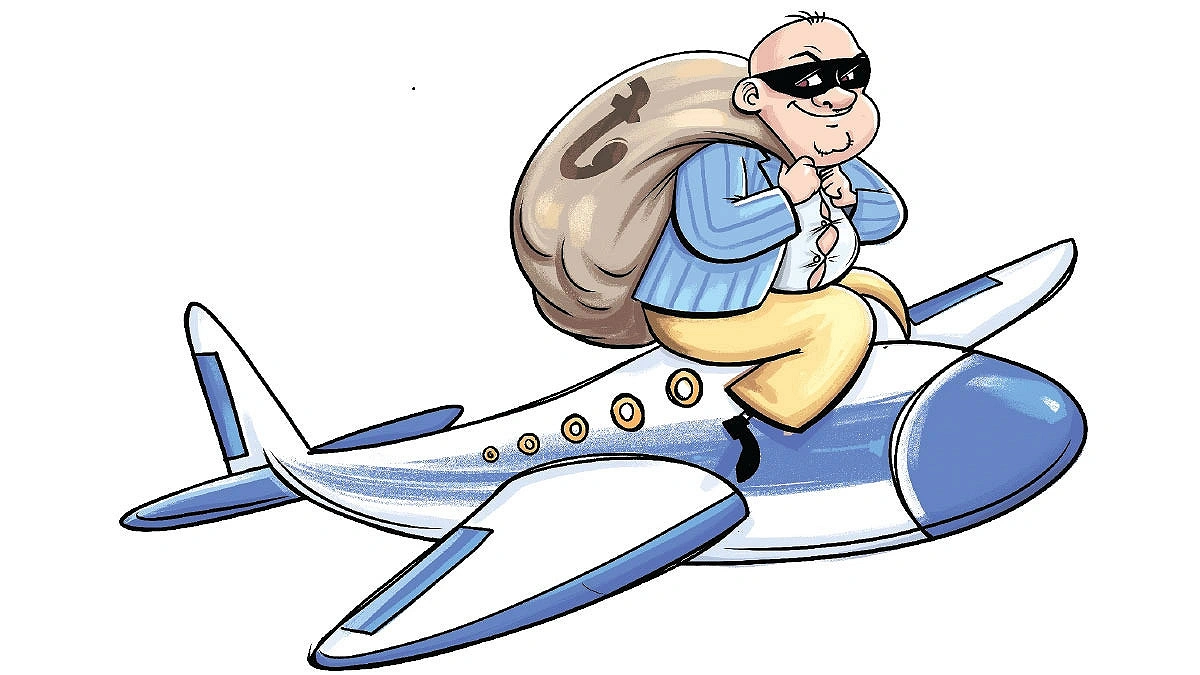
Money laundering operations involving Tk80,000 crore have come under intelligence surveillance, leading to the identification of 400 involved individuals and institutions. The Bangladesh Financial Intelligence Unit (BFIU) has completed its preliminary investigation to recover these funds. Concurrently, seven government agencies—including the Criminal Investigation Department (CID), the Anti-Corruption Commission (ACC), and the National Board of Revenue (NBR)—have launched formal inquiries. These details were disclosed in the BFIU's latest report covering data through last June.
This follows an earlier phase of investigations where final inquiries were concluded regarding Tk76,000 crore laundered by 10 major industrial groups along with Sheikh Hasina and her family members, with case preparations currently underway. Additionally, primary inquiries have wrapped up for nearly Tk32,000 crore laundered by 42 defaulting institutions, paving the way for further detailed investigations.
Sources indicate that the majority of the Tk80,000 crore was siphoned off to the UK, Germany, Switzerland, Sweden, Australia, Canada, San Francisco, Panama, and Papua New Guinea. Formal requests for cooperation have already been dispatched to these jurisdictions. A portion of the illicit funds remains within Bangladesh, where involved bank accounts have been frozen. Although these local funds were not successfully remitted abroad, the BFIU categorized them as laundered assets in its report due to suspicious transaction patterns.
Coordinated joint task force officials said that agencies are operating at full capacity to retrieve the assets tied to the 400 individuals and institutionsd. Preliminary evidence confirms the Tk80,000 crore figure, and numerous accounts have been blocked or frozen, with freezing orders repeatedly extended to facilitate investigation. Inquiries into at least 100 individuals and organizations are near completion. The individuals targeted consist largely of leaders and activists of the banned Awami League, former ministers, MPs, advisors, former bureaucrats, advisors to the former interim government, and prominent business figures.
BFIU Chief Ikhtiar Uddin Mohammad Mamun said that cases against the 10 major groups and the Hasina family will be filed swiftly. International firms have been engaged to assist in recovering funds from the 42 defaulted groups, while hundreds of additional entities remain under active surveillance for phased legal action.
Dr. Iftekharuzzaman, Executive Director of Transparency International Bangladesh (TIB), said that developing nations historically recover only about 1 percent of funds laundered to developed countries, a process taking seven to eight years or longer. Bangladesh previously recovered laundered funds only once, from Singapore, which took exactly seven years. He emphasized that recovery remains a complex challenge, as recipient nations often protect incoming capital, making countries like Canada, Malaysia, Dubai, and Singapore reluctant to engage on money laundering issues.
He further remarked, "The fact that money was siphoned out of our country is ultimately our fault, but we must speak out against the recipient countries that provide safe havens for these illicit funds. We need to convince them to stop offering protection. International law firms often guide laundered money into legitimate overseas investments, and ironically, those very same firms are now being hired to help recover the funds."
Investigations by the National Board of Revenue's Central Intelligence Cell (CIC) revealed that between January and August 2025, nearly BFIU Chief Ikhtiar Uddin Mohammad Mamun Tk40,000 crore in laundered assets was identified across Antigua and Barbuda, Austria, Dominica, Grenada, Saint Kitts and Nevis, North Macedonia, Malta, Saint Lucia, and seven cities in Turkey. Official records indicate that following the regime change, the scope of frozen accounts expanded to cover over 600 individuals and institutions, resulting in the freezing of more than 9,000 bank accounts.
Key Figures Behind the Tk80,000 Crore Laundering Scheme
Prominent individuals implicated include leaders of the banned Awami League: Amir Hossain Amu, Dipu Moni, Asaduzzaman Khan Kamal, Nasrul Hamid Bipu, Mohibul Hassan Chowdhoury Nowfel, Shamim Osman, Sayedur Rahman, Liakat Sikdar, Hasan Mahmud, Asaduzzaman Noor, Saifuzzaman Chowdhury Javed, Rukhmila Zaman, AHM Mustafa Kamal, Tipu Munshi, Zunaid Ahmed Palak, Mohammad Ali Arafat, Gazi Md. Mozammel Haque, Md. Tajul Islam, AFM Ruhal Haque, Muhiuddin Khan Alamgir, AKM Bahauddin Bahar, Momtaz Begum, and Biplob Kumar Sarkar. Other prime names include former military officer Ziaul Ahsan, former BSEC Chairman Shibli Rubayat-Ul-Islam, former Rupali Bank MD Obaidullah Al Masud, Chowdhury Nafeez Sarafat, Parvez Tamal, Mohammad Adnan Imam, and cricket franchise owner Nafisa Kamal.
Prominent organizations involved include Asiatic Talking Point Communications Limited, Optimum Service Limited, Universal Financial Solutions, Asiatic TMS, Blackboard Strategies, Cookie Jar, Stencil Bangladesh, e-commerce platforms SPC World Express, 24ticket, Akash Neel, E-orange, Alisha Mart, Alif World Marketing Limited, Dalal Plus Dot Com, Dhamaka, Anander Bazar, Amass BD, Walmart, Ring ID BD Limited, and Thole Dot Com.
