
How Nuclear Electricity Will Be Produced at Rooppur

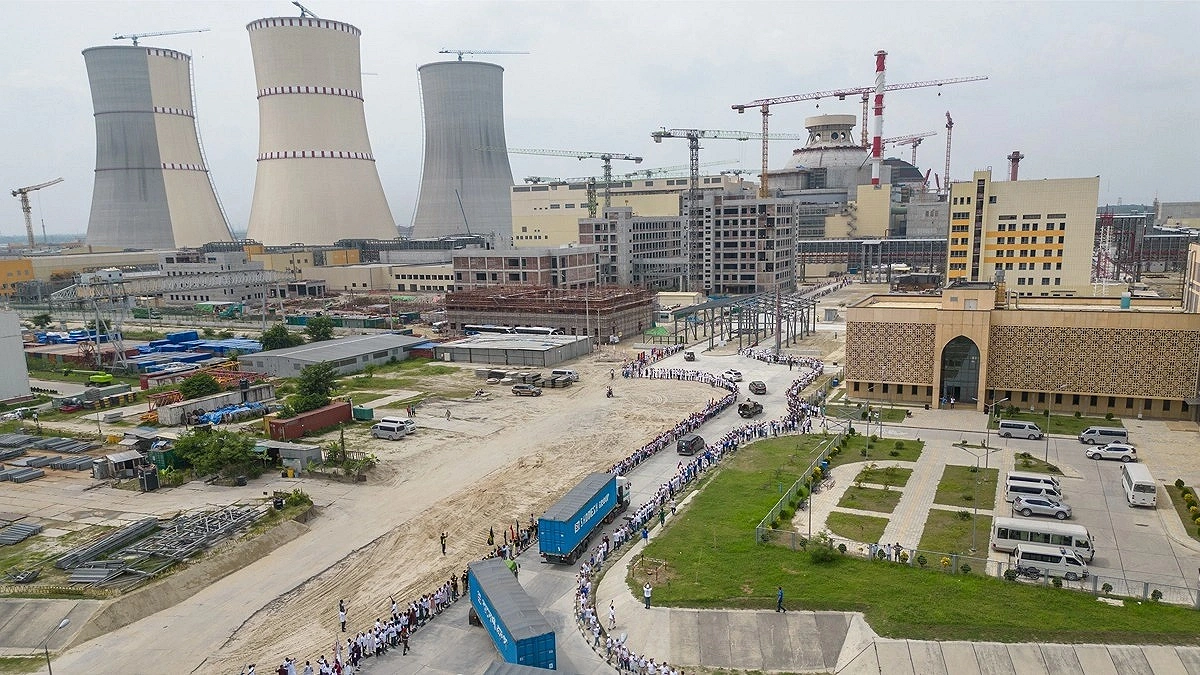
Photo: Rosatom
Today marked as a very special day for Bangladesh as the country entered the nuclear energy club of the world.
Fuel loading has begun in the first unit of Bangladesh’s first nuclear power plant at Rooppur Nuclear Power Plant today, Tuesday, in Pabna. The focus now shifts to when Bangladesh will receive its long-awaited nuclear electricity.
If everything goes as planned, the plant will begin supplying limited electricity to the national grid in August. However, full capacity output of 1,100 megawatts will take until January 2027. During this period, fuel loading and safety assurance will continue alongside various tests and inspections.
The key question is how this electricity will be produced. Is the process similar to coal, gas, or oil-based power plants? The answer is no.
At Rooppur, installing 163 uranium fuel assemblies in the reactor core will take around 30 days.
After that, the physical startup phase will begin. During this stage, nuclear fission reactions will be initiated according to design, followed by necessary tests, which will take about 34 days. Once testing is complete, reactor power will gradually increase in phases, like 3%, 5%, 10%, 20%, and 30%, over a period of around 40 days. Electricity supply to the national grid will begin once the reactor reaches 3% power. After that, output will increase step by step while further safety tests continue. In total, reaching full capacity for the national grid will take around 10 months.
The plant will operate based on nuclear fission, a process in which the nucleus of uranium atoms splits to produce a large amount of heat.
This heat will warm water in the reactor’s primary circuit. The heated water will then flow into a steam generator, where heat exchange tubes convert water in the secondary circuit into steam, which then returns to the system. Extensive testing of both the primary and secondary circuits will take place during this phase.
After these tests, reactor power will be increased to around 40%, and the generated steam will be directed to turbines to begin electricity production. The steam exiting the turbine will enter a condenser, where water from a third cooling circuit, cooled through cooling towers, will convert the steam back into liquid form through heat exchange tubes. The cycle will then repeat continuously: water turns into steam to generate electricity, and then returns to water for reuse via cooling towers.
After the turbine starts operating, technicians will test both the turbine and generator performance. The generator will then be synchronized with the national grid, completing the process of nuclear electricity generation.
To avoid radiation risks, the entire system will operate through an automated and controlled chain reaction process.
How long will electricity be produced?
The plant has a normal operational lifespan of 60 years, during which it will supply uninterrupted electricity. With maintenance and repairs, its life can be extended by another 30 years.
Once fuel is loaded, it can operate continuously for about one and a half years, eliminating the need for frequent fuel procurement like oil, gas, or coal plants. After 18 months, one-third of the fuel must be replaced.
Under the construction agreement, Russia will supply fuel for three years, meaning there is no immediate concern over fuel imports. After that, Bangladesh will need to import uranium itself, although it will only need to be replaced every two years.
Fuel loading for the second unit of equal capacity is expected to begin in June 2027. By September of that year, both units of Rooppur are expected to contribute a total of 2,200 megawatts to the national grid.
