
Misconceptions Persist
ICUs Seen as ‘Death Zones’

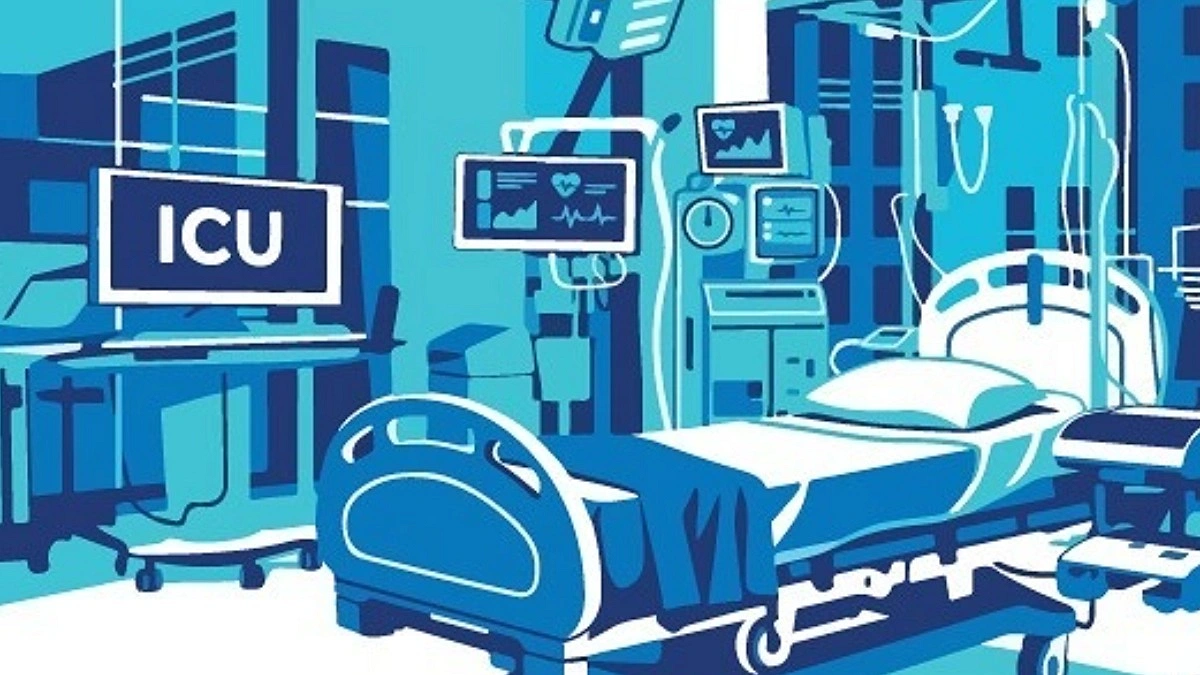
Photo: Agamir Somoy
A negative perception about Intensive Care Units (ICU) persists among patients and their families in hospitals across the country. For many, ICU represents the final stage of life, where no real treatment takes place. Others believe that admitting a patient to the ICU only unnecessarily increases medical expenses. These misconceptions sometimes delay the start of treatment and, in some cases, put patients’ lives at greater risk.
Health experts say an ICU, or intensive care unit, is a specialized facility where critically ill patients receive advanced, life-saving treatment using sophisticated medical equipment. They note that public awareness about ICU care remains limited. Limited communication between doctors and patients, along with social rumors, has also contributed to widespread misunderstandings.
According to them, these challenges can be significantly reduced if relatives of patients are regularly briefed, treatment plans are clearly explained, and potential risks and outcomes are communicated openly.
The number of ICU beds in the country remains far below demand. According to the Directorate General of Health Services, there are 1,372 ICU beds nationwide. Although there is no single global standard for ICU capacity, developed countries typically have around 17 ICU beds per 100,000 people. In Bangladesh’s public healthcare sector, the number is less than one bed per 100,000 people. Outside the capital, many districts lack adequate ICU facilities, and even major divisional hospitals often do not have ICU services.
Mohammad Rashed spent 17 days in the ICU of a government hospital. During his stay, he observed that most of the patients in the unit died. “Every day I saw a patient in the next bed die. I assumed I would also die. At one point, I thought if proper treatment were being provided, so many patients would not be dying,” he said.
His nephew, Jewel Rana, took care of his treatment arrangements. Jewel Rana said, “My uncle’s lungs were severely damaged after he contracted COVID-19. While he was in the ICU, doctors updated us about the patient at specific times, but not in detail. When we tried to ask for updates, we often faced rude behavior from doctors and nurses. We were left confused about whether he was receiving proper treatment or was being kept in the ICU unnecessarily. During that time, we relied on a distant relative who is a doctor at another hospital to keep track of his condition.”
The lack of trust in ICU care is not limited to this family. To understand public perception of ICU treatment, this reporter interviewed at least 30 patients and their relatives. Many of them had personal experience of treating themselves or family members in ICUs.
They said that after admission to the ICU, they often could not get regular updates on the patient’s condition. In many cases, they were not informed in detail about the exact complications the patient was suffering from, nor were they given clear information about potential costs. However, their most serious complaint was that they often did not know under what specific conditions a patient needed to be admitted to the ICU. One patient also said that he was kept in the ICU for an extra day without necessity, for which he had to pay an additional Tk 42,000. He later took discharge on his own initiative after receiving advice from a familiar doctor at the hospital, who was his brother’s classmate.
Professor Sanjoy Kumar De of the Neonatal Department at Bangladesh Medical University said he is aware of these complaints. He said, “We doctors often forget that healthcare is a patient’s right. Anxiety among patients and their relatives increases significantly in the ICU, which we often fail to understand.”
He further said that due to a lack of effective communication between service providers and recipients, the trust deficit has deepened to a point where patients can no longer rely on doctors. He added that doctors, due to time constraints, often do not get the opportunity to clarify misunderstandings, and many also do not feel the need to do so. He stressed that this situation needs to be addressed.
The country’s largest pediatric hospital, Bangladesh Shishu Hospital and Institute in the capital’s Shyamoli area, has seven ICUs dedicated to children’s care. At the Pediatric Intensive Care Unit (PICU) on the second floor of the hospital, this reporter observed medical staff becoming busy as a critically ill pneumonia patient was brought in. The doctor explained everything clearly, while nurses took action accordingly.
Severe Staff Shortage in PICU Adds to ICU Care Concerns
Speaking on condition of anonymity, the registrar of the Pediatric Intensive Care Unit (PICU) said that treatment is provided to patients in 16 beds at the unit. Only seven doctors are assigned to care for these critically ill patients. Of them, only one doctor remains on duty from 2 pm to 8 am the next day. He added that while the doctor tries to manage one patient, delays occur in attending to others. Meanwhile, family members wait outside for updates on their loved ones, but in reality, the doctor often does not have time to provide updates on patient conditions.
The registrar also said that the situation of nurses is even more challenging. Doctors only issue instructions on what needs to be done, while nurses are responsible for implementing them. According to international standards, one nurse should be assigned to each ICU patient. However, with 16 patients to manage, nurses face an excessive workload. As a result, patients often do not receive adequate care, and family members sometimes report experiencing rude behavior.
After speaking with the registrar, conversations with patient attendants outside the ICU revealed widespread complaints. Their most common grievance was that they were not consistently informed about the condition of their patients.
Mohammad Azharul Islam, the deputy director of the hospital, said that ICU beds remain limited compared to the country’s population. As a result, patient transfers, bed shortages, and treatment costs increase pressure on families. He added that this reality also contributes to the negative perception surrounding ICUs.
Public health expert Mushtaq Hossain said that misconceptions about ICUs are not only a social issue but also a public health challenge. He noted that misinformation and fear can prevent patients from receiving necessary treatment. He stressed that the ICU should be presented to the public not as a ‘death chamber’, but as a ‘life-saving specialized treatment unit’. To achieve this, he called for public awareness campaigns, hospital-based information services, and improved doctor-patient communication.
