Argentina's First World Cup Win Controversy
Argentina's Fearsome Dictator in Peru's Dressing Room Before 1978 Match

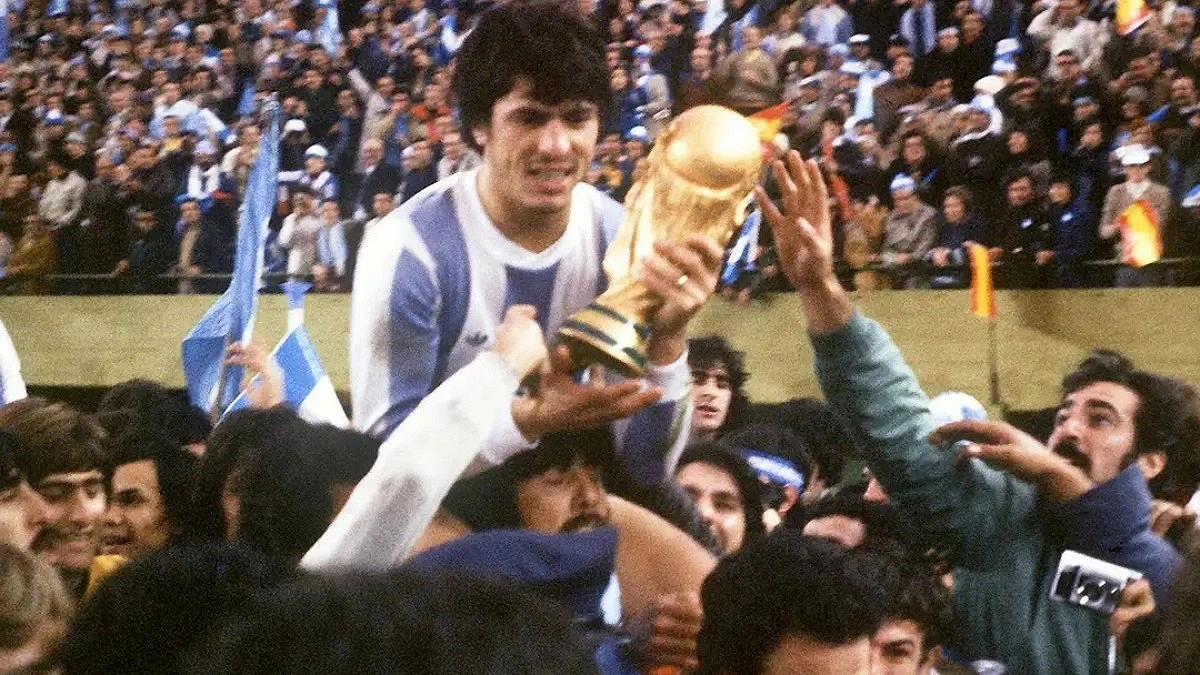
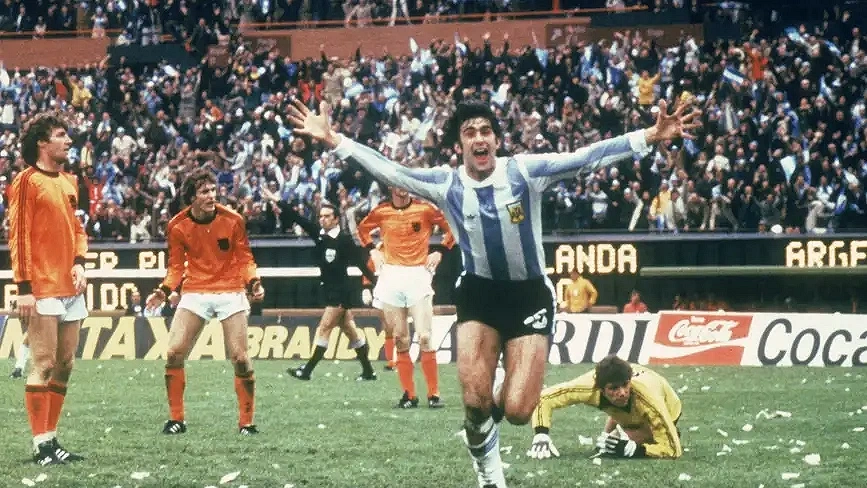
Argentina won its first World Cup by defeating the Netherlands 3-1 in 1978.
In football history, Argentina has won three World Cups so far, none of which are beyond controversy. However, there has been intense debate surrounding their first two World Cup victories. One is the match against Peru in the 1978 World Cup, and the other is Diego Maradona's 'Hand of God' in the '86 World Cup. Particularly behind Argentina's 1978 World Cup win lies a dark chapter.
In the Núñez neighborhood of Buenos Aires, two different structures stand just 10 blocks apart. One is the Monumental Stadium, the home ground of River Plate. It was here that Argentina, on June 25, 1978, beat the Netherlands 3-1 and reveled in their first World Cup victory. Right next to it stands another infamous building, the 'Navy Mechanics School' or ESMA. While Daniel Passarella was lifting the World Cup trophy, the ESMA building was essentially a prison and torture cell. During the most brutal military dictatorship in South American history, thousands of political prisoners were held there and subjected to cruel torture.
Between 1976 and 1983, during the rule of the military junta led by General Jorge Rafael Videla, an estimated 30,000 people disappeared. Videla and his associates chose the 1978 World Cup on home soil as a perfect stage to erase the traces of torture and killings. They promoted the tournament as a 'party for everyone'. To maintain the World Cup's luster, dictator Videla bulldozed the slums around the stadium and sent millions of people packed onto trains out of the city.
The main objective behind this act was to ensure that poverty and unrest in the country would not be seen by foreign journalists or guests. With the help of the then-football coach Cesar Luis Menotti, the transfers of the country's top 66 players to Europe were blocked to field the best possible team. Mario Kempes of Valencia was the only expatriate footballer in the entire squad. Ubaldo Fillol, the goalkeeper and one of the heroes of the World Cup win, later spoke about the horrors of that time in an interview, saying, "We can only ask for forgiveness. We can now realize how much pain of death of our countrymen was hidden behind the joy of victory."
Goalkeeper Ubaldo Fillol himself later fell victim to the military junta's violence. In 1979, when he decided to leave River Plate, Carlos Lacoste, a top navy official, summoned Fillol, placed a pistol on the table, and threatened him, saying, "If I wanted, I could make you disappear right now, and no one would ever know."
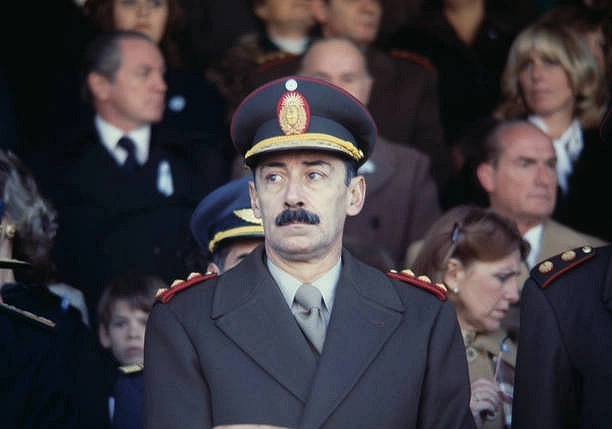
Argentine dictator General Jorge Rafael Videla in mid 70s. Graciela Luis, the wife of a disappeared political prisoner, recalling that tragedy, said, "My father wouldn't miss a single World Cup match. But I couldn't keep my eyes on the TV because I could only think of my missing husband. We knew many things were being covered up behind the World Cup. Sadly, no one listened to our voices back then. My husband was held captive in that very ESMA building, from where the shouts and roars of the spectators from the Monumental Stadium could be heard clearly."
The biggest international resistance against Argentina's World Cup arose in France. This was because the list of disappeared included over 20 French citizens. Among them, the most notorious incident was the kidnapping of two French nuns named Léonie Duquet and Alice Domon. They used to care for the disabled son of dictator Videla. Yet, after being tortured at ESMA, they were drugged and thrown from an aircraft into the Río de la Plata river, a practice infamously known as the 'Death Flights' in contemporary history.
Following this incident, an armed French leftist group attempted to kidnap France's coach Michel Hidalgo to prevent the French team from going to Argentina. However, he managed to escape. Subsequently, France participated in the World Cup but was eliminated in the first round.
A long-held belief in football history was that Dutch legend Johan Cruyff boycotted the 1978 World Cup in protest against the Argentine dictatorship. However, in a 2008 interview with Radio Catalunya, Cruyff himself corrected this misconception. He revealed that a year before the World Cup, an attempt was made to kidnap his family at gunpoint in Barcelona. Due to that trauma, he was unwilling to leave his family alone and travel to a distant country to play.
However, the biggest controversy of that World Cup was Argentina's 6-0 victory against Peru. To reach the final, Argentina needed to win by a margin of at least 4 goals. Years later, it was revealed that dictator Videla himself appeared in Peru's dressing room just before the match. Former Peruvian defender Héctor Chumpitaz said in a 1988 interview, "He came before us and gave a speech about Latin American brotherhood and wished us well. Videla was a very fearsome man."
Whether the Peruvian footballers lost to Argentina out of fear of the dictator or if there was any financial transaction remains an unresolved mystery to this day. Ultimately, the glory of the World Cup could not protect the military junta. Videla lost power in 1981 due to an internal power struggle, and democracy returned to the country in 1983. In 2013, while serving his sentence for kidnapping, murder, and crimes against humanity, this dictator died in prison. Yet that blood-soaked World Cup remains a controversial chapter in Argentine football.
Based on Goal.com