
LNG supply reaches nearly 1,000 million cubic feet after six weeks

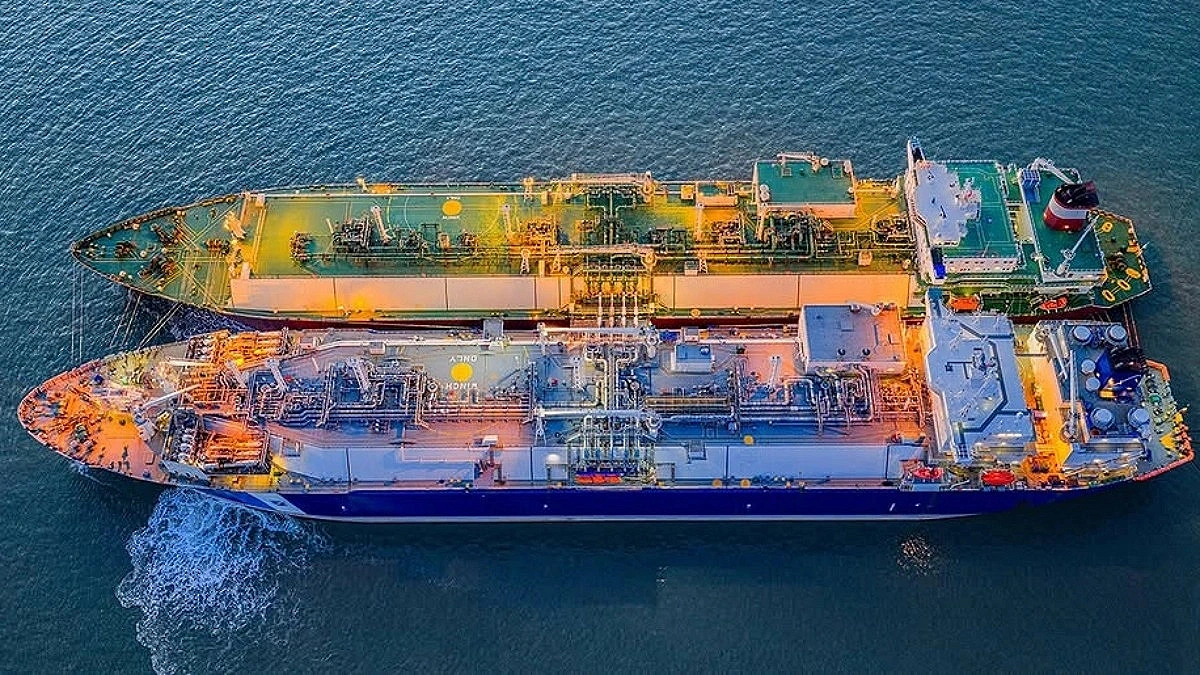
Photo: Agamir Somoy
Rupantarita Prakritik Gas Company Limited (RPGCL) has resumed supplying nearly 1,000 million cubic feet per day (MMCFD) of liquefied natural gas (LNG) after a six-week disruption. LNG supply reached 900 MMCFD starting midnight on Monday and surpassed 980 MMCFD by Tuesday morning.
This development fulfills a commitment made by Prime Minister Tariq Rahman during a meeting with business leaders and industrialists in Dhaka on Monday, where he assured a return to prior gas supply levels. The increase brings relief to a nationwide shortage that persisted for six weeks, though sustained stability will depend on maintaining adequate LNG imports to meet demand.
National Supply Structure and Demand Deficit
The national gas grid relies on a combination of domestic production and imported LNG. Domestic fields contribute 62 percent of total supply, while imported LNG covers the remaining 38 percent. A reduction of even 100 MMCFD from either source disrupts the entire distribution network.
Total Daily Demand: 3,800 MMCFD
Pre-Crisis Average Supply: 2,600 MMCFD
Domestic Production (Monday): 1,620 MMCFD
Current Rebound Supply: 2,600 MMCFD (Domestic production plus 980 MMCFD LNG)
If LNG supply increases by an additional 100 MMCFD, total availability from domestic and import sources combined will approach 2,700 MMCFD.
Import Logistics and Technical Factors
RPGCL officials indicated that LNG ship arrivals are secured through September, maintaining supply near 1,000 MMCFD, while procurement for October remains in progress. Operating the two floating storage and regasification units (FSRUs) in Moheshkhali at their full capacity of 1,100 MMCFD requires 33,000 million cubic feet of LNG monthly, equivalent to 11 or 12 cargo deliveries per month. From late July through September 14, supply remained constrained between 550 and 700 MMCFD, causing severe disruptions to industrial output and power generation.
The supply crisis began on July 22 following a boiler fire at the Excelerate Energy terminal in Moheshkhali. Subsequent technical issues at the Summit FSRU further limited capacity. Once both terminals were repaired, shipping shortages prolonged the deficit, largely due to contract reliance on spot suppliers. To bridge the gap, LNG is currently being procured through short-term arrangements at nearly three times the normal market prices.
