Varendra University
Academician finds areas of focus for executing SDGs, FDI and Tourism

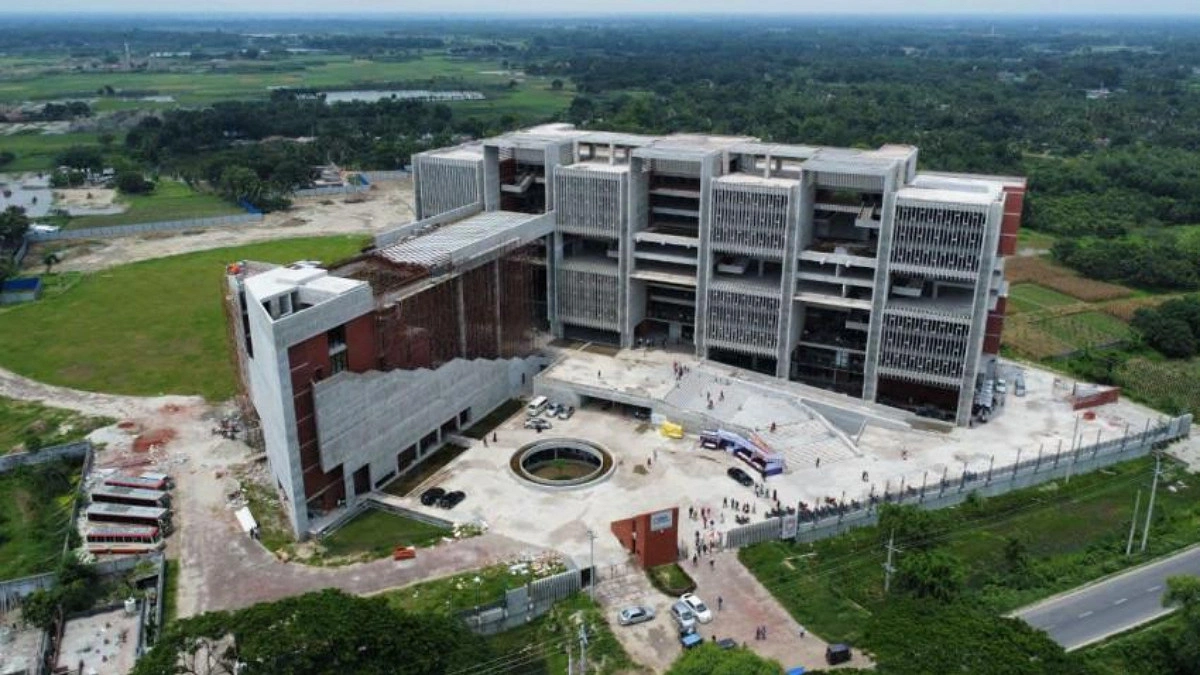
Collected Photo
A Bangladesh academician has drawn substantial international reputation through her research works on sustainable development goals (SDGs), tourism growth, and foreign direct investment (FDI) policy.
A series of recent research publications by Prof. Dr. Kaniz Habiba Afrin, Head of the Department of Business Administration and Dean of the Faculty of Business and Law at Varendra University, Rajshahi, have also been supoortive to the policymakers of the country.
The three studies, published between 2024 and 2025 in internationally peer-reviewed journals including Wiley and Nature/Springer, address questions that sit at the heart of Bangladesh's Vision 2041 and its 8th Five-Year Plan.
Prof. Dr. Kaniz Habiba Afrin. Photo: Collected.
CSR and the SDGs — Where Bangladesh's Banks Are Falling Short
The first study, "Does Corporate Social Responsibility Support Progress Toward Achieving Sustainable Development Goals in Bangladesh?", published in the Journal of Public Affairs (Wiley, 2025), analyzed five years of CSR data from 32 scheduled banks in Bangladesh. The research found that while banks have contributed meaningfully to education and disaster relief, investment in environmental SDGs — including climate action, clean energy, and sustainable consumption — remains critically low.
The study recommends that Bangladesh Bank strengthen its Green Finance Policy Guidelines to require more targeted CSR allocations toward climate-related and environmental SDG targets — a recommendation directly relevant to the government's National SDG Action Plan and its Voluntary National Review commitments to the United Nations.
Tourism as an Engine of Growth — What Policy Must Do
The second study, "Exploring the Nexus Between Economic Growth and Tourism Demand: The Role of Sustainable Development Goals", published in Humanities and Social Sciences Communications (Nature/Springer, 2025), used econometric analysis to identify the macroeconomic and governance conditions under which tourism development can make the greatest contribution to sustainable growth in Bangladesh.
The findings have direct implications for the Ministry of Civil Aviation and Tourism and the Bangladesh Tourism Board, both of which are currently working to update the national tourism policy. The study provides an evidence-based foundation for identifying the institutional and investment priorities that will determine whether Bangladesh can realise its substantial but largely untapped tourism potential.
FDI Is Not Enough — Institutions Must Come First
The third study, "The Conditional Promise of FDI: New Insights from South Asia's Growth Experience", published in the International Journal of Economics, Finance and Management Sciences (2025), challenges the widely held assumption that attracting FDI is sufficient to drive economic growth. The study demonstrates — using data from South Asian economies including Bangladesh — that the growth benefits of FDI are conditional on institutional quality, human capital development, and trade openness.
This finding carries direct implications for the Bangladesh Investment Development Authority (BIDA) and the Ministry of Finance, both of which have placed FDI attraction at the center of their development strategies. The research suggests that without parallel investment in institutional reform, FDI inflows may fail to deliver their expected developmental returns.
All three studies were produced at the Department of Business Administration, Varendra University, Rajshahi — demonstrating the growing capacity of regional universities in Bangladesh to produce internationally recognized, policy-relevant research. The research contributes to a growing body of evidence-based knowledge that can support Bangladesh's transition to a sustainable, inclusive, and resilient economy.