
Iran-US peace hopes fade as talks stall in Islamabad

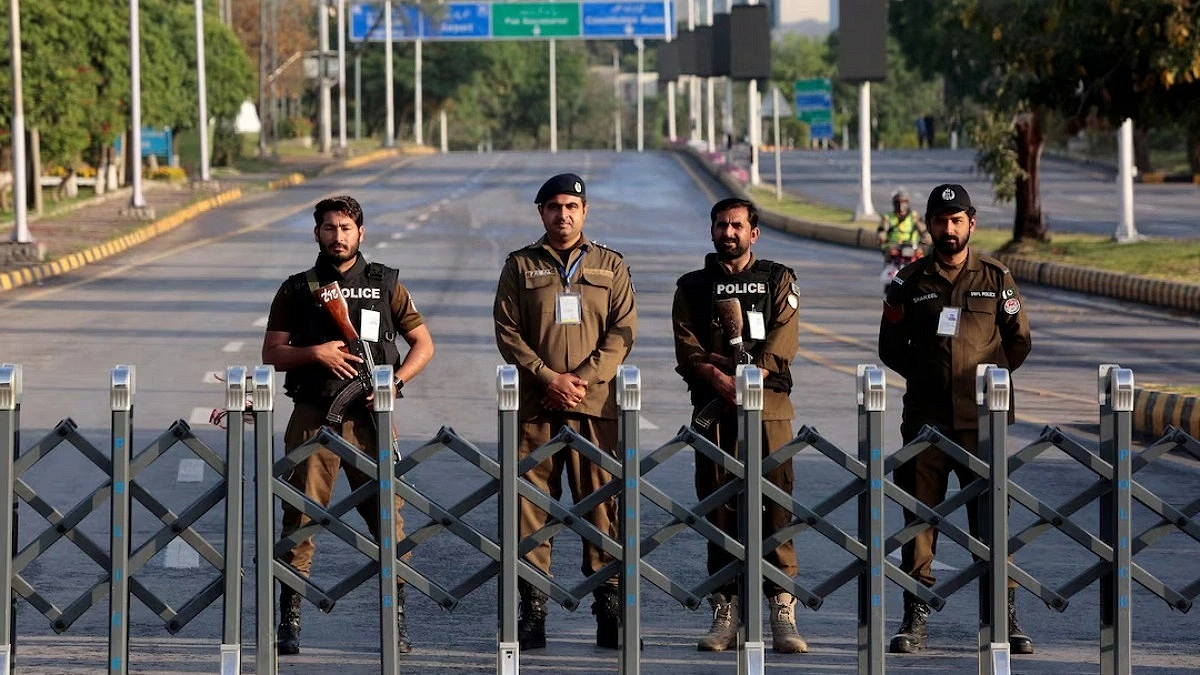
Four Pakistani security personnel in Islamabad’s Red Zone. Photo: Reuters
Hopes for a peaceful resolution between Iran and the United States are gradually fading, as diplomatic efforts to halt the conflict involving Tehran, Washington, and Israel continue to stall. A second round of talks in Islamabad has failed to produce any breakthrough, with both sides showing little willingness to ease their conditions.
Following 40 days of intense fighting, the two sides agreed to a temporary ceasefire on April 8 through Pakistan’s mediation. In an effort to make it permanent, the United States and Iran held 21 hours of marathon negotiations on April 11 and 12, but no resolution was reached. Later, both parties signalled readiness to return to the negotiating table under renewed diplomatic efforts by Pakistan.
However, by the end of this week, Iran’s Foreign Minister Abbas Araghchi sent the mediators back empty-handed. In response, US President Donald Trump withdrew his envoys Steve Witkoff and Jared Kushner from Islamabad.
According to a statement from the Iranian government, President Masoud Pezeshkian told Pakistan’s Prime Minister Shehbaz Sharif over the phone that Tehran would not participate in peace talks imposed under threats or blockades. He stressed that for any meaningful dialogue, the United States must first remove effective barriers, including blockades on Iran’s ports.
An Iranian diplomatic source in Islamabad said Tehran has made it clear it will not accept what it considers unjust demands from Washington.
Meanwhile, speaking to reporters in Florida, Trump said he had cancelled his envoys’ visit to Islamabad, describing Iran’s proposal as not worth considering. After calling off the diplomatic trip, he claimed Tehran had put forward multiple proposals, but none were sufficient. He also alleged that internal divisions and confusion within Iran’s leadership were preventing it from making decisions.
Tehran has rejected these claims, with senior officials including the Speaker and the Foreign Minister asserting that there is no division between hardliners and moderates, and that the country remains united behind its Supreme Leader.
The conflict between the world’s largest economy and a major oil-exporting power has heightened global economic uncertainty. Oil prices have already surged to multi-year highs, fuelling inflation and dampening prospects for global growth.
