


US Reaper drone losses surpass $1.3b in Iran war

Collected Photo
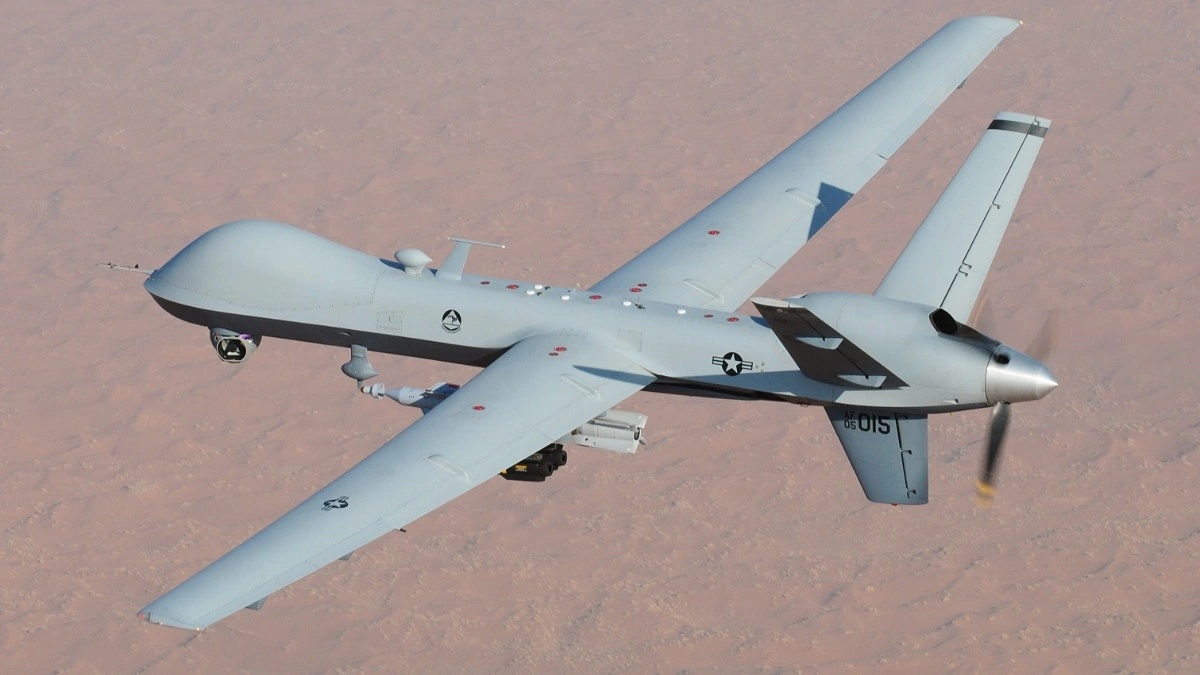
US military faces a significant depletion of its aerial arsenal, having lost at least 45 MQ-9 Reaper drones during the ongoing war with Iran.
According to three US officials familiar with the data, this loss represents around 25 percent of the military’s total Reaper fleet. These advanced aircraft, which the Air Force utilizes for high-stakes surveillance and targeted strikes, carry a hefty price tag ranging from $30 million to $50 million each.
The cost fluctuations depend heavily on the specific sensors and weapons integrated into each unit. As a result, the taxpayer cost for these recent losses has already surpassed $1.3 billion for this single weapon system alone.
Much of this attrition has occurred near the Strait of Hormuz, a critical shipping route that serves as a volatile flash point in the war. This geographic location also presents a significant hurdle for negotiators seeking a permanent peace deal.
Despite their technical capabilities, Reaper drones fly at low altitudes and slow speeds, which transforms them into relatively vulnerable targets for Iran’s military and its various regional proxies operating in Yemen and Iraq.
A fourth US official, speaking on the condition of anonymity to discuss Pentagon data, clarified that combat action did not account for every loss. While many drones fell to enemy fire, an unspecified number crashed following a complete failure of the communications link between the aircraft and their ground operators.
Reaper now sits atop an expanding list of American weapons and munitions that the Iran war, combined with years of military aid to Ukraine, has severely drained. These mounting shortages have created tangible obstacles for President Donald Trump, limiting his available military options while tensions with Tehran remain dangerously high.
Although the Pentagon officially declined to comment and has repeatedly denied that stockpiles are reaching critical lows, the Trump administration is simultaneously pressuring Congress for tens of billions of dollars to replenish supplies and cover costs stemming from the Iran conflict.
Tensions within the administration became apparent on 31 July, when Trump reportedly confronted Defense Secretary Pete Hegseth regarding the state of the national stockpile. This encounter took place at Camp David, the presidential retreat in Maryland, during a break in a Cabinet meeting.
These visible shortages seem to have emboldened the Iranian government, which has increased its demands for total control of the Strait of Hormuz. Additionally, Iran is seeking reparations for damages sustained since Trump initiated hostilities on February 28.
Prior to the outbreak of this conflict, the US military fleet consisted of around 185 Reapers, with 165 assigned to the Air Force and 20 to the Marine Corps.
These figures do not account for drones maintained by various intelligence agencies. Lt Col Joshua Benson, a spokesman for the Marines, confirmed that their specific units have suffered no losses thus far, primarily because they operate in the Asia-Pacific region. However, the Air Force situation is more dire.
In May, Lt Gen David Tabor, a senior officer at the Pentagon, informed the Senate that the count of active drones had plummeted to roughly 135. During his testimony, Tabor said he was “concerned” about these losses and noted that the Air Force is searching for ways to quickly replenish the fleet.
In response to these challenges, the Pentagon has begun a plan to phase out the General Atomics-produced Reaper. Military leaders envision a future replacement fleet comprised of more affordable armed surveillance drones designed to swarm their objectives.
To fund this transition and restock the broader arsenal, the Trump administration is lobbying for a $67 billion Iran war supplemental budget. Officials maintain that this funding is vital for the Pentagon, though experts warn that even with immediate congressional approval, it will take years to fully reconstitute stockpiles depleted by the wars in Iran and Ukraine.
Secretary Hegseth reiterated this urgency to the Senate in July, warning that the Pentagon might have to cancel or curtail military trainings without a rapid cash infusion as the conflict strains the defense budget.
He estimated that the Iran war will cost around $37.5 billion by the end of September. Notably, this estimate excludes the massive expenses required to rebuild US bases in the Middle East that have been leveled or damaged by Iranian strikes.
Despite these warnings, Republicans in Congress remain deeply divided on the most effective strategy for securing the war-related funding and have departed for their August recess.
Further complicating the situation, a report from the American Enterprise Institute (AEI) examined the struggle to boost munitions production. The think tank discovered that the Pentagon’s strategy relies on a massive expansion of factory output within the defense industry.
For instance, replacing Terminal High Altitude Area Defense (THAAD) interceptors - which are used to stop ballistic missiles - could take several years. US forces have fired hundreds of these during the conflict.
Missile Defense Agency produces only 96 interceptors annually, yet the Pentagon has requested 857 for the upcoming defense budget, with a total goal of 2,600 over five years. At current production speeds, fulfilling this request would take “around 27 years”.
Todd Harrison, a senior fellow at AEI, pointed out that manufacturing a single THAAD interceptor requires nearly three years. Harrison remarked, “Even if you ordered them today, delivery wouldn’t be until President Trump leaves office.”
Other types of munitions reviewed by the think tank face similar, long-term production timelines. While Hegseth has met with several defense companies and established framework agreements to ramp up output, the Pentagon has yet to finalize contracts or secure the funding necessary for these firms to move forward.
Source: The Washington Post (adapted)

