
15th death anniversary of Tareque Masud today

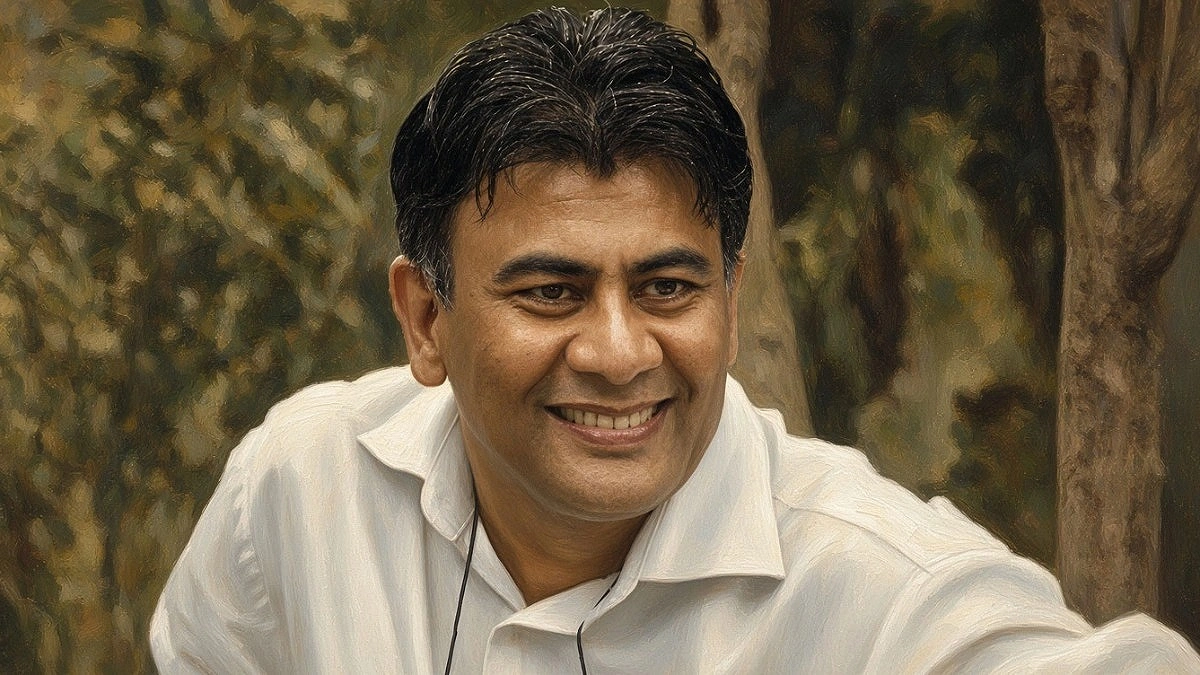
Tareque Masud. Photo: Collected
Today marks the death anniversary of renowned Bangladeshi filmmaker Tareque Masud. On this day in 2011, he died in a tragic road accident in Ghior, Manikganj, while returning after selecting a shooting location for his upcoming film The Paper Flower. Prominent journalist and cinematographer Mishuk Munier and three others also died in the same accident.
He was born on December 6, 1956, in Nurpur village of Bhanga upazila in Faridpur. He began his education at a madrasa. After the 1971 Liberation War, he pursued general education. Later, he completed his honors degree and master’s course in history at the University of Dhaka.
From his university days, he was involved in politics, arts and culture, and philosophy. As an active member of the film society movement, he played an active role in the independent film movement that began in the mid 1980s.
As part of making the documentary Adam Surat, based on the life of painter S M Sultan, he spent nearly seven years in the artist’s company. It was during this period that the foundation of his cultural and political philosophy was established. However, Tareque Masud had been involved in politics, arts and culture, and philosophy since his university days. His journey as a filmmaker began with Adam Surat, released in 1989.
Tareque Masud became widely known as a filmmaker in Bangladesh through the documentary Songs of Freedom. While staying in the United States, he discovered footage recorded in 1971 by American filmmaker Lear Levin, which changed the course of his life and work. Later, combining that footage with scenes collected from different parts of the world, he and his wife Catherine Masud jointly made Songs of Freedom.
The film is considered one of the most important documentary records of the Liberation War after Zahir Raihan’s Stop Genocide and received a special recognition from Film South Asia. The film was shown to ordinary people in different parts of the country through alternative means. Based on the reactions and opinions of the viewers, The Story of Freedom was later made, presenting a new and different account of the Liberation War from the perspective of ordinary people beyond the middle class understanding.
The documentary Songs of Freedom established Tareque Masud as a successful filmmaker in the country. However, his first full length feature film, The Clay Bird, brought him international recognition. In 2002, the film won the prestigious FIPRESCI Prize at the Cannes Film Festival, taking Bangladeshi cinema to a new height on the global stage.
The film received widespread attention in the Western world amid the global situation that emerged following the September 11, 2001 attacks. Set against the backdrop of the Liberation War, this autobiographical film portrays the events of the war and the traditional folk culture and philosophy of Bengal through the eyes of a madrasa educated boy. The Clay Bird was commercially screened in theaters in Europe and the United States, and its DVD was also released.
Other notable films by Tareque Masud include The Intimate Journey, The Barber and Runway. The Intimate Journey tells the story of Bangladeshi expatriates in the United Kingdom searching for their identity and repeatedly returning to their homeland because of their attachment to their roots.
On the other hand, the short film The Barber presents a new interpretation of the conventional understanding of the Liberation War. In the film, Bihari barbers save the life of a freedom fighter who is being pursued by Pakistani forces and Razakars, although Biharis were generally viewed as opponents of the Liberation War.
Meanwhile, the film Runway portrays various social problems in contemporary Bangladesh, particularly the rise and crisis of militancy in 2004 and 2005.
National identity and the folk religion and culture of Bengal are prominently reflected in Tareque Masud’s films. This was primarily why the Liberation War of Bangladesh was the central subject of several of his works, through which the nation’s identity was defined.
Before his death, he was working on a film titled The Paper Flower, based on the partition of India in 1947. He introduced several new trends to the country’s film industry. These included the first video film Golden Chain, the first animated film Unison and the first digital film The Intimate Journey.
Alongside these works, his wife Catherine Masud played an important role as co-director and editor in many of his films. In total, Tareque Masud made 16 films, including short films, full length films, documentaries and animation.
In recognition of his contribution to cinema, the Government of Bangladesh awarded him the Ekushey Padak posthumously in 2012.
