China’s Alibaba added to US blacklist

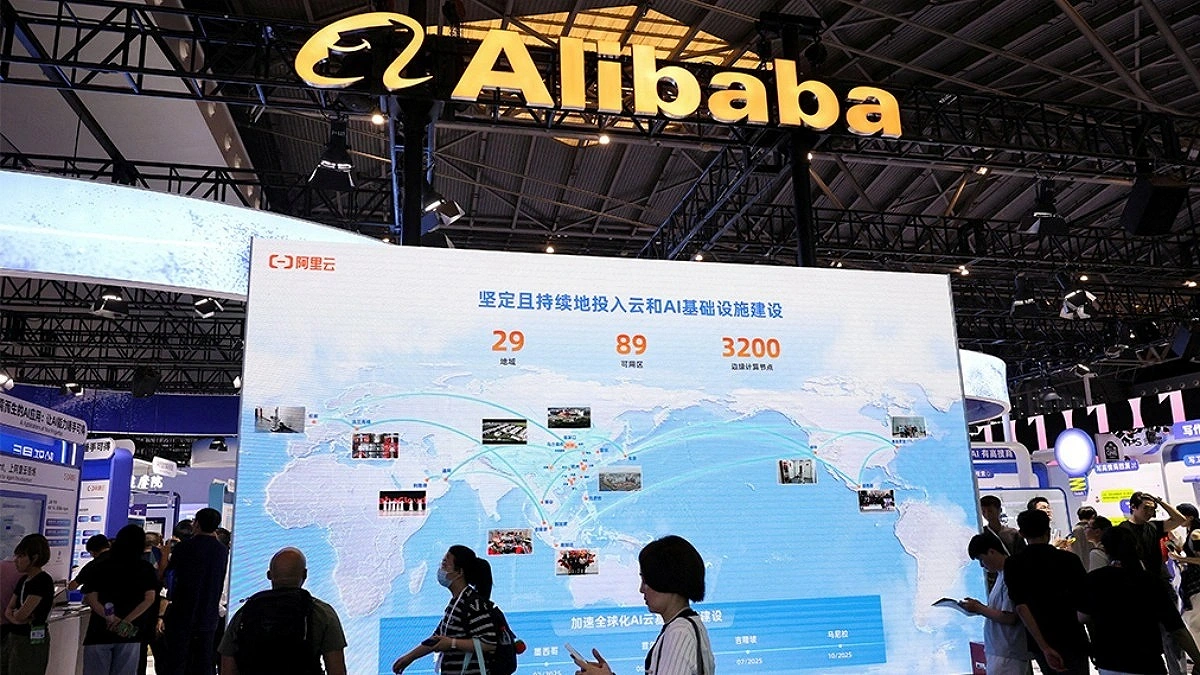
Visitors attend Alibaba’s booth at the World Artificial Intelligence Conference held in Shanghai, China. Photo: Reuters
The United States has added three major Chinese companies—Alibaba, Baidu, and BYD—to a list of firms allegedly assisting the Chinese military. Beijing has strongly criticized the decision, which adds a new layer of tension to ongoing competition between the world’s two largest economies.
The US Department of Defense updated its “Chinese Military Companies” list on Monday, including the names of these firms.
Analysts say the move could further complicate recent efforts by Washington and Beijing to normalize relations.
The Chinese embassy in Washington strongly condemned the decision, calling it discriminatory. A spokesperson said the US is “unreasonably expanding the concept of national security.”
According to the embassy, Chinese companies operating abroad strictly comply with the laws and regulations of host countries. It urged the US to end what it called a misguided policy and ensure a fair and non-discriminatory business environment for Chinese firms.
Alibaba rejected its inclusion on the list. A company spokesperson said there is no basis for the designation.
He stated, “Alibaba is not a military company and is not part of China’s military-civil fusion strategy. We will take legal action against any attempt to misrepresent the company.”
However, BYD and Baidu did not immediately respond.
The Pentagon updates the list annually. In 2025, it included 134 companies. With the new additions, the total has risen to 188.
Companies on the list, along with their subsidiaries, will be considered ineligible for US defense contracts starting later this month.
According to the Pentagon’s definition, companies are classified as Chinese military companies if they are owned or controlled by the Chinese military or contribute to China’s “military-civil fusion” strategy. This strategy integrates civilian and military research and innovation.
In its updated list, the Pentagon claimed that through links with the State-owned Assets Supervision and Administration Commission and the Ministry of Industry and Information Technology, Alibaba, BYD, and Baidu are contributing to the strengthening of China’s military capabilities.
John Moolenaar, Republican chairman of the US House Select Committee on Strategic Competition between the United States and the Chinese Communist Party, said the list serves as a warning about Chinese companies involved in activities against US national interests.
In a statement, he said US-listed companies should be rapidly delisted from American stock exchanges. He also called for removing their products from supply chains the US depends on.
He further stated that American companies should end business relationships with firms considered a national security threat, arguing that otherwise they would be supporting China’s military rise.
The decision comes at a time when US President Donald Trump and Chinese President Xi Jinping recently held a two-day meeting in Beijing aimed at easing long-standing trade tensions and technological rivalry.
Alibaba, Baidu, and BYD are among China’s most recognized brands in e-commerce, internet search, and electric vehicles respectively.
It is not new for the Pentagon to include major consumer-facing companies without direct defense ties on such lists. Last year, it added Tencent, the owner of WeChat.
The updated list also includes Shenzhen-based AI and robotics company RoboSense Technology and Hangzhou-based Unitree Robotics.
However, national security analyst Dennis Wilder, who previously worked at the CIA and the White House National Security Council on China policy, questioned the effectiveness of such broad blacklists.
He noted that many US companies have deep business ties with the listed firms, and they are unlikely to sever them unless stricter punitive measures are imposed.
Speaking to Al Jazeera, Wilder said: “Such broad restrictions are usually not effective. Unless the US is prepared to fully decouple from China’s economy, these measures will remain largely symbolic.”