
Rain Here, Sunshine There: A Reversal in April Weather
- This April is hotter than usual
- Rainfall is higher than usual
- A change in nature visible decennially
- Exceptional heat waves during April in 2024

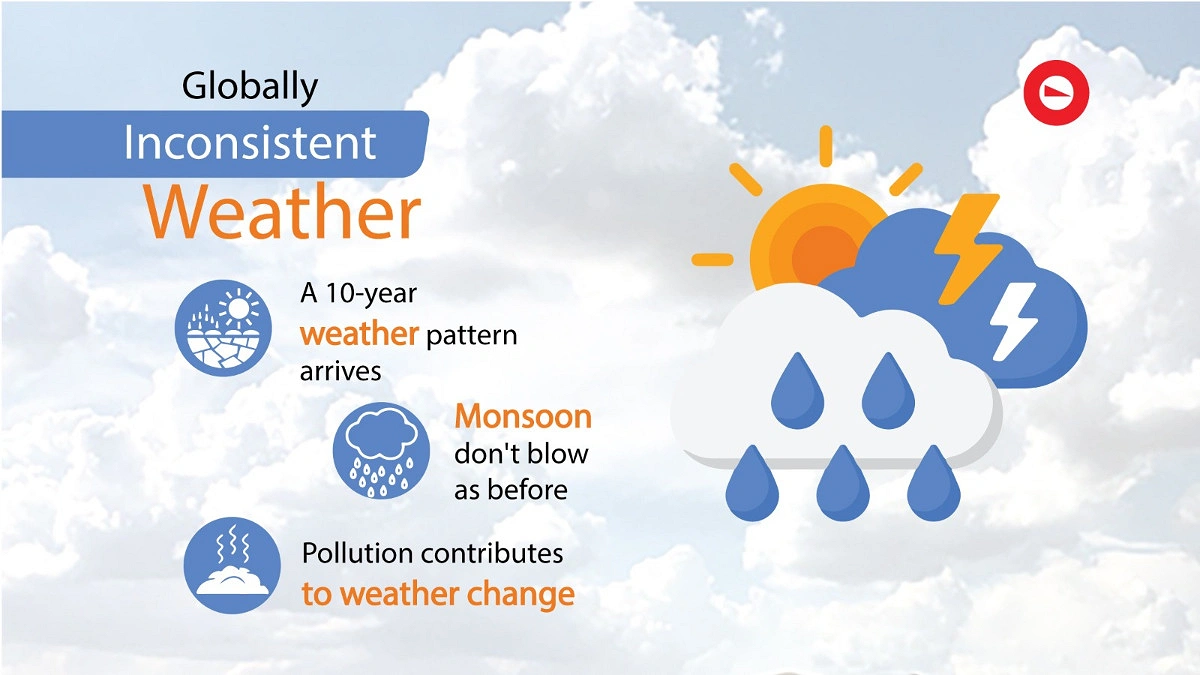
Photo collected.
In Bangladesh, April is traditionally known as the hottest month of the year, with average temperatures exceeding those of any other month. However, last year's April deviated from its usual character, and a similar pattern is being noticed this year. Bangladesh is witnessing a mix of heavy monsoon-like rains in some places, clear autumn-like skies in others, and scorching heat elsewhere. This stands in stark contrast to April 2024, when a month-long heatwave left people longing for a single drop of rain.
Meteorologists attribute this shift to changing weather patterns. Increased rainfall during this period has made the heat more bearable compared to previous years. However, experts warn that this trend of shifting weather behavior is a sign of extreme weather. While recent years saw intense heatwaves starting early in April, this year began with several rounds of rain, leading to a cooler summer due to higher-than-average precipitation.
According to meteorologist Muhammad Abul Kalam Mallik, thunderstorms can temporarily lower temperatures by 2 to 8 degrees Celsius. He explained that cloud cover reduces incoming solar radiation while rainwater cools the surface. This has made nights more comfortable, with temperatures in many places dropping between 21 and 26 degrees Celsius. However, he noted that such fluctuations in April and May are part of the season's characteristics—alternating between intense heat and sudden rain. After the rain subsides, temperatures gradually begin to rise again.
Meteorologist Bazlur Rashid mentioned that these variations are not necessarily abnormal, as nature often undergoes such pattern shifts every 10 years. He recalled that April 2024 was one of the hottest on record, not just in Bangladesh but globally, with South and Southeast Asia experiencing a persistent heatwave lasting 30 to 35 days.
Rashid explained that both global and local factors are at play. A lack of significant rainfall from November to early March created dry conditions that amplified the heat. Regarding the current situation, he indicated that the rain might last a few more days before the weather turns dry and temperatures rise again.
He further noted that the monsoon no longer arrives on a fixed schedule and is often delayed. Rainfall patterns have also changed, characterized by heavy downpours over short durations. A major concern for meteorologists is that heatwaves are now appearing even during the monsoon season, a phenomenon that was rare in the past. When there is no rain, temperatures spike rapidly, yet when it does rain, it often results in extreme precipitation.
Explaining the causes of these natural variations, Rashid pointed toward a combination of global and local factors. For instance, reduced sunlight and increased fog during winter are linked to pollution levels. He emphasized that these changes cannot be judged on a year-to-year basis but, when viewed long-term, it clearly indicates a significant shift in climatic patterns.
