


Why Elephants Migrate from the Himalayas to Bangladesh Each Year

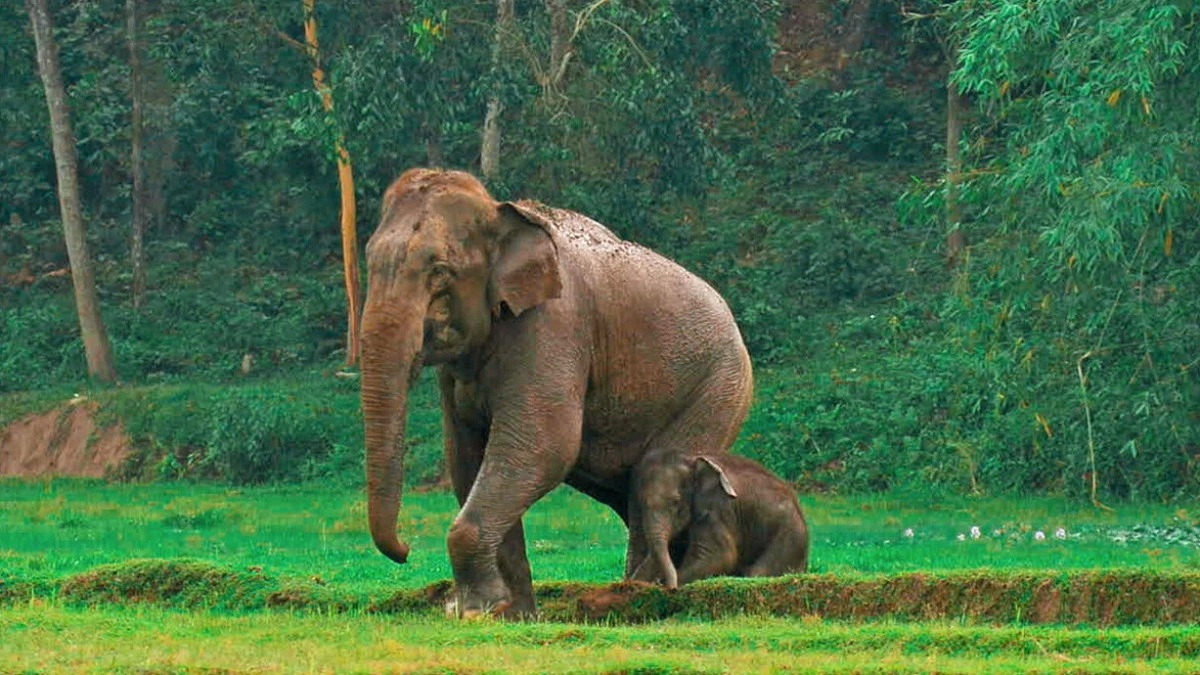
Collected Photo
Human beings, bound by borders, documents and the machinery of civilization, need passports to cross countries. Wild animals like elephants do not recognize such lines. For generations stretching back likely thousands of years, elephant herds have followed an ancient ecological rhythm; moving from the Himalayan foothills through India’s northeastern forests, including Assam and Meghalaya, before entering Bangladesh’s forested belts and plain landscapes such as Sylhet and the Chittagong Hill Tracts. Their movement predates modern borders, tracing pathways carved not by politics, but by instinct and survival.
These journeys are driven by the changing pulse of nature itself. As winter deepens and the dry season takes hold, water sources in the higher forests begin to shrink. Streams weaken, ponds recede, and vegetation slowly thins. In response, elephant herds descend towards the warmer, wetter plains where water is more abundant and grazing becomes easier. When the monsoon returns and the hills recover their moisture and greenery, the same herds gradually move back uphill, retracing routes that have been passed down across generations—silent, instinctive maps etched into their memory.
In many ways, elephants resemble migratory birds that visit Bangladesh during winter. Like them, they follow predictable seasonal cycles, return to familiar habitats year after year, and depend on ecological continuity rather than human-defined boundaries. Their movement is not random; it is rhythmic, almost ritualistic—an annual passage shaped by survival and the deep logic of nature.
Yet this ancient route is increasingly fractured by human infrastructure. Along international borders, cattle fences, border installations and expanding settlements now cut across traditional elephant corridors. What was once an uninterrupted green passage is increasingly segmented, forcing herds into unfamiliar terrain, agricultural fields, or dangerous crossings. In many places, the forest edge no longer flows smoothly—it collides abruptly with human presence.
This disruption has led to repeated tragedies along their path. Elephants attempting to cross fragmented landscapes have been killed in train collisions, electrocuted by illegal or poorly managed fencing, or shot during encounters with frightened or unprepared communities when they enter villages in search of food. Each incident reflects not just a conflict, but a breakdown of an ancient coexistence.
Conservationists argue that the solution lies not in restricting movement, but in restoring it. Protecting and reconnecting migratory corridors, removing hazardous barriers, and establishing safe passage zones across borders are seen as critical steps. Equally important is cross-border coordination between neighboring countries to ensure that these ancient travelers can continue their journey without turning it into a fatal encounter with modernity.


