
Rain Brings Return of Boirali to the Teesta

Graphics: Agamir Somoy
Heavy rainfall has slightly raised water levels in the once-dry Teesta River, bringing shoals of boirali fish upstream with the fresh seasonal flow. Although the fish usually retreat to deeper waters during the day, they come closer to the riverbanks from afternoon into the night, moving in groups near the surface. Fishermen are now catching them using small hand-pulled nets, sparking a surge of activity along the river among young and old alike.
The fish, known for its popularity and taste, is selling well due to high demand. Along the riverbanks, it is priced at Tk 500–600 per kilogram, while in urban markets it sells for Tk 700–800. The silver-colored fish has small scales, a slightly greyish back, and a yellowish underside. Though it contains bones, they are relatively soft.
Its speed and behavioral traits resemble hilsa, leading many to jokingly call it the “hilsa of the Teesta.”
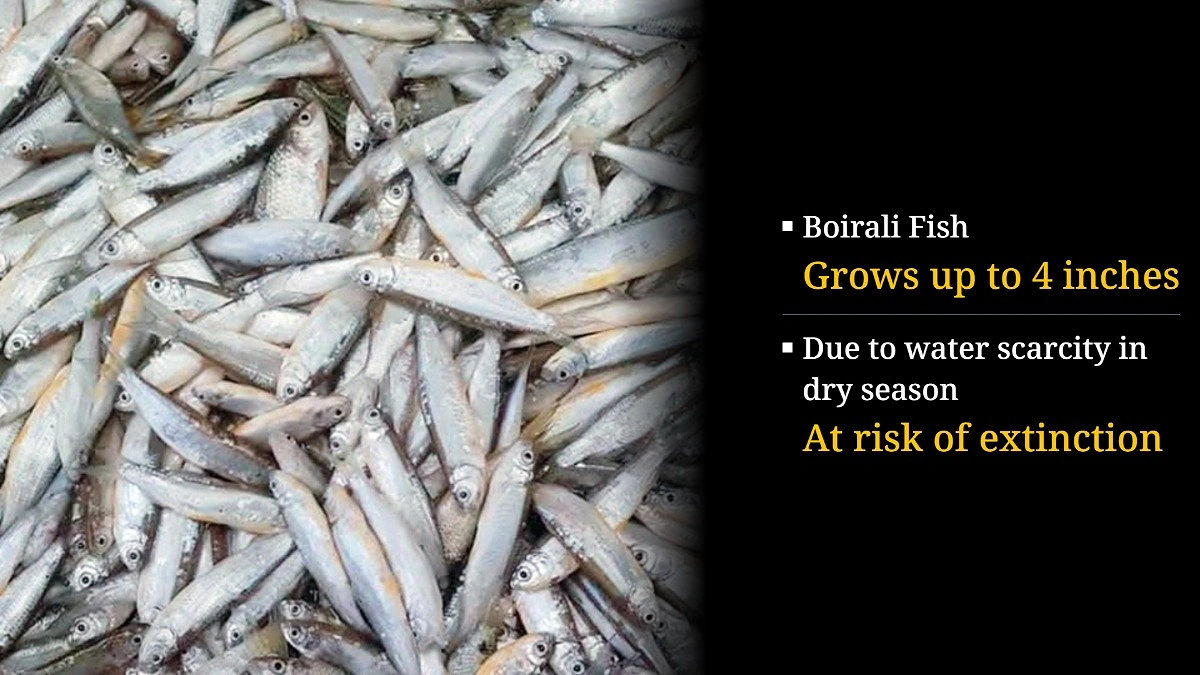
Fishermen along the river say boirali is native to the Teesta. However, during the dry season, the lack of water has pushed the species close to disappearance. Over the past four years in particular, the fish has rarely appeared in nets. Reduced water flow has disrupted its breeding, while murky water conditions often drive it into deeper areas. Recent days of heavy rainfall in Rangpur have brought the fish back into view.
At the Mahipur Bridge area in Rangpur, many fishermen were seen along the riverbanks, pulling in nets filled with small and large silver boirali. Buyers also gathered nearby. Jobed Ali, a fisherman from Joyram Ojha Char, said, “I have been fishing in the Teesta since childhood. We used to catch plenty of boirali. Now, even catching two kilograms is difficult. But due to the sudden heavy rain, we are getting a good catch.”
He said he sold two kilograms of fish on Saturday morning at Tk 500 per kilogram. Another fisherman, Nayan Mia from Char Salapak, said traders buy boirali from the river and sell it in Rangpur city and other areas at Tk 700–800 per kilogram.
Lokman Hossain, who came from Kakina to buy fish, said, “Boirali is rarely seen in markets now. Even when available, prices are high. It has become unaffordable for ordinary people. I came to the riverbank after hearing the news.”
Near Mahipur High School on the Lalmonirhat-Rangpur road, Aminul Islam was selling freshly caught boirali laid out on polythene sheets. Passersby stopped their vehicles to buy. He said he sells fish there regularly, but fishermen had not been able to supply boirali for a long time. For the past two days, some have started appearing in nets, and he is selling them at Tk 500–600 per kilogram depending on size.
According to the Department of Fisheries, boirali is a freshwater fish found in clear rivers and is highly popular in the Rangpur region. Its breeding and growth season runs from January to March. It grows up to about four inches in length and weighs between 40 and 50 grams. The fish is mainly found in rivers like the Teesta and Dharla that originate from the hills, as well as in parts of the Brahmaputra. It is commonly seen around the Teesta Barrage area, Gangachara, and Kaunia in Rangpur. However, insufficient water during the dry season and the catching of juveniles have significantly reduced its population.
Although the recent catch has brought some relief to fishermen, Rangpur District Fisheries Officer Badruzzaman Manik has issued a warning. He said this is currently the breeding period for boirali, yet fishermen are catching juveniles daily from the river. These juveniles are being sold in local markets at Tk 350–400 per kilogram. He noted that the fish would grow larger in April and gain more weight by May–June, allowing fishermen to earn higher returns if left undisturbed.
He added that awareness campaigns are being conducted among fishermen to discourage catching juvenile boirali during the breeding season.
