
Potato Day: Relief for Consumers, Sighs of Farmers

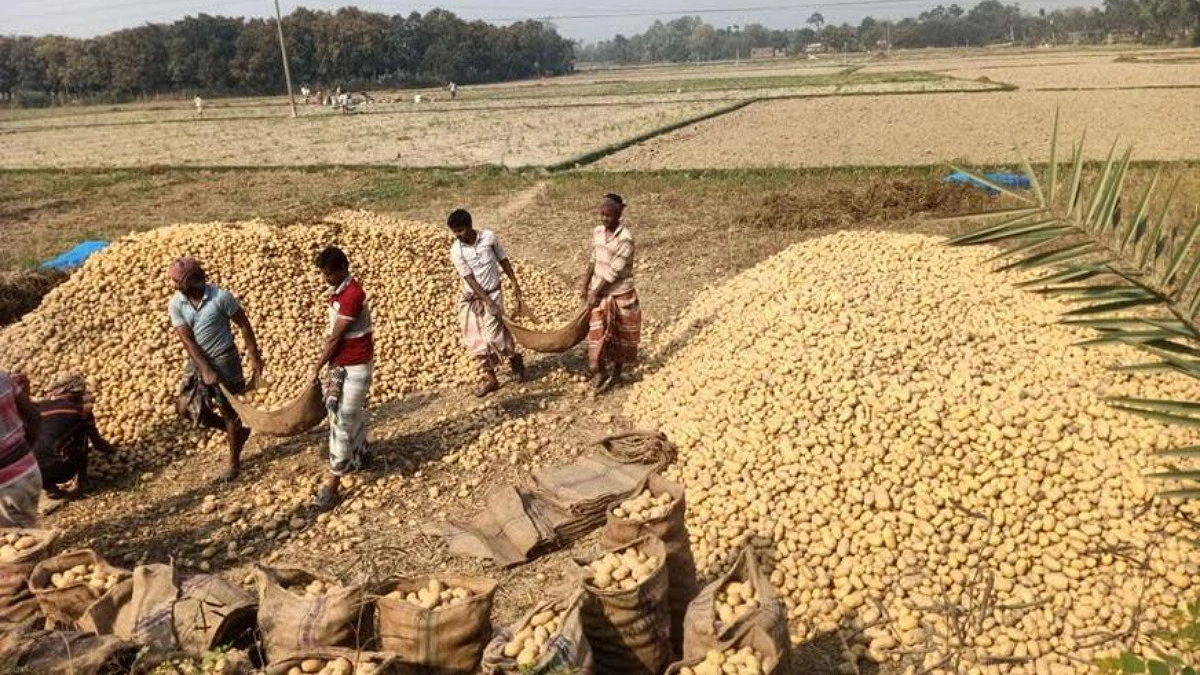
Photo Courtesy: BSS.
The potato fries you enjoy at your breakfast table are costing farmers an average loss of 5 taka per kilogram to produce. While consumers feel relieved by low market prices, hidden behind that relief are the deep sighs of the farmers. Producing one kilogram of potatoes costs between 15 and 25 taka, including seed, fertilizer, irrigation, and labor, yet farmers are receiving only 8 to 12 taka per kilogram. Due to the lack of fair prices, potato cultivation is becoming increasingly unbearable. Weak policies in production, storage, and market management have created a complex crisis around potatoes.
According to sources, the country’s annual demand is about 10 million tons, while production stands at around 11.5 million tons. This leaves a handsome amount of surplus, pushing farmers into heavy losses. In Rangpur’s Gangachara area, farmer Mizanur Rahman said with tears in his voice that he is dumping sacks of potatoes by the roadside as those stored at home are rotting and becoming unusable. He is not alone—more than 200 farmers in the area are facing the same problem, with stored potatoes turning into a burden. Continuous rainfall and adverse weather have worsened the situation, causing potatoes kept at home to rot.
Describing a similar situation, farmer Hanif Mia from Gazaria in Munshiganj said that last season he produced 21,230 kilograms of potatoes on two acres of land. Including cold storage rent, his total cost was 350,000 taka. However, due to a market price crash, he earned only 27,000 taka from selling all his potatoes. That means he sold potatoes at just 1 taka 27 paisa per kilogram.
Hit by such losses and burdened with bank loans, he did not dare to cultivate potatoes this year. Like him, many farmers are now selling land to repay debts, while others are changing professions altogether.
The same picture is seen across almost all regions of the country—Munshiganj, Rangpur, Bogura, Rajshahi, and Cumilla. Nuruddin, a farmer from Rajshahi, said, “Potato farming has become a gamble. There’s no way to know in advance whether there will be profit or loss. But the production costs still have to be borrowed.”
Cold Storage Shortage and High Costs
Although there are around 400 cold storage facilities in the country, their total capacity is insufficient compared to production levels. When production rises, many farmers fail to find storage space. Increased cold storage rents have also become a major problem. Storing one sack of potatoes now costs 350 taka or more, in addition to transportation and labor expenses. As a result, storing potatoes has become unprofitable for many farmers. In some areas, power shortages and mismanagement have also led to potatoes spoiling inside cold storage facilities.
Syndicates and Middlemen Dominate the Market
Potatoes are bought from farmers at low prices and sold at much higher rates in wholesale and retail markets. Due to the presence of multiple middlemen between producers and consumers, farmers are deprived of fair prices, while consumers are forced to buy at higher costs.
Impact on the Economy
Potatoes are one of the most widely produced food crops in Bangladesh after rice. The agricultural economy of many districts—especially in the northern region—has developed around potato cultivation. As a result, when potato prices fall, the rural economy is directly affected. When farmers incur losses, they are unable to repay loans, reduce cultivation in the following season, and in many cases abandon agriculture altogether in favor of other professions. This puts both food security and the continuity of agricultural production at risk.
Economist Mahbub Ahmed said that if farmers do not receive fair prices, they will turn away from production. To prevent this, the government must provide policy support. In particular, potato-processing industries need to be developed. If processing facilities are established to produce a variety of potato-based products, demand for potatoes will increase. He also emphasized the need to support private entrepreneurs in building adequate cold-chain and frozen storage industries.
Government Measures and Limitations
Although the government occasionally allows potato exports, traders believe these measures are insufficient. Since exports remain very low compared to total production, the pressure of surplus potatoes continues to weigh on the domestic market. Experts say that developing processing industries—such as chips, starch, and frozen French fries—would increase the utilization of surplus potatoes. At the same time, expanding exports in international markets will require improved quality control, modern storage facilities, and upgraded transportation systems.
Risks Ahead
Many farmers who were forced to sell potatoes at low prices this season are considering reducing cultivation next year. This could lead to lower production and higher prices in the future. In other words, the potato market remains trapped in an unstable cycle—overproduction one year followed by shortages the next. Agricultural analysts argue that without long-term planning, modern storage systems, guaranteed fair prices for farmers, and increased export capacity, this crisis cannot be resolved.
Declining Potato Cultivation
Due to the lack of fair prices, farmers’ interest in potato farming is declining rapidly. According to data from the Department of Agricultural Extension, potatoes were cultivated on about 494,000 hectares of land in the previous season. This year, the figure has dropped to around 467,000 hectares—meaning cultivation has decreased by nearly 24,000 hectares in just one year. This decline has also affected production targets, which have been set lower this season compared to last year.
