
With Fuel Storage at Bottom, Short-haul Trains Dry Up

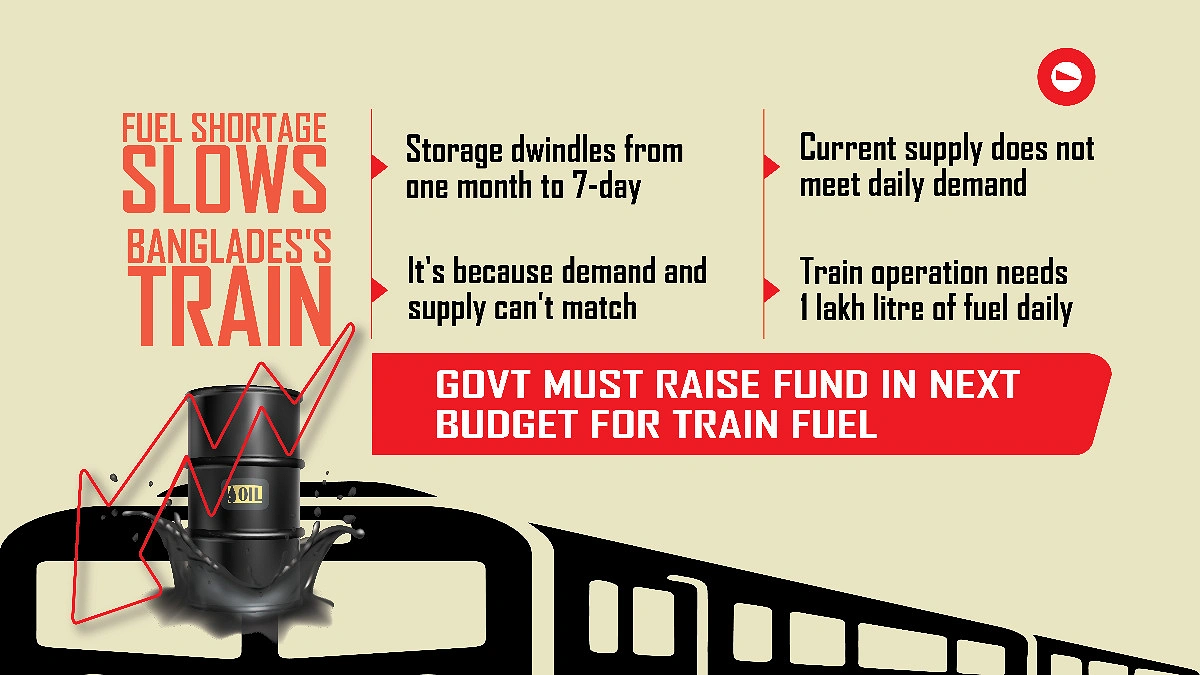
Representational Image. Collected.
The fuel crisis is now drying up railway tracks. Bangladesh Railway is suffering from a severe oil shortage, with regular supply deficits depleting the country's fuel storage. Bangladesh's monthly stockpiles have plummeted to a mere seven-day supply, pushing the country’s largest public transport system toward a potential shutdown.
The conflict involving Iran, the U.S. and Israel, has plunged the entire world into an oil and gas crisis. In response, countries like Australia and Pakistan have taken bold steps, making public transport free in their capitals and densely populated regions to reduce individual fuel consumption. However, the situation in Bangladesh appears to be the polar opposite.
From political rallies to Parliament, government officials continue to claim that there is no fuel crisis in the country. In reality, long queues of customers at fuel pumps remain prominent. Despite hikes in oil prices, supply has not improved. Now, the crisis has hit the wheels of the railway; if this continues, rail services may be shut down one by one. Officials from the Ministry of Railways and various departments spoke candidly with Agamir Shomoy regarding the current demand, supply, and reserve situation.
The Bangladesh Petroleum Corporation (BPC) supplies oil to the railway based on daily consumption. Typically, various depots in Dhaka, Chittagong, Rajshahi, and Khulna maintain a one-month fuel reserve. Due to supply shortages, this has dropped to seven or ten days in some depots. BPC usually provides 1.2 million liters of oil per week, sent directly to the Eastern and Western zones for storage. On average, the railway requires 100,000 liters of oil daily to keep trains running across the country, with a train traveling approximately 3.16 kilometers per liter of fuel.
Since the crisis began, supply has been decreasing by 10% periodically. Having dropped by more than 20% over the last two weeks, the supply is now far below daily requirements. This has forced the railway to dip into its "capital" reserves, which are now hitting rock bottom. Under these circumstances, authorities are considering suspending train services, starting with "less important, small" trains.
Director General of Railways, Afzal Hossain, told Agamir Shomoy: "If the oil supply remains like this, trains will run for a maximum of 15 days. After that, all wheels will gradually stop. Initially, trains on shorter routes will be suspended."
When asked if a priority list for train cancellations had been prepared, his answer was a simple "No." Lowering his voice, he added, "But there will be no other choice but to stop the trains. It is crucial to increase the oil supply to the railway as a priority."
Highlighting the efficiency of public transport, Afzal Hossain noted, "If a vehicle needs 100 liters of oil to go from Dhaka to Chittagong, it carries only a few people. In contrast, a train can carry thousands of people simultaneously."
Meanwhile, the railway typically owes BPC an average of 100 crore BDT in unpaid fuel bills. That debt has suddenly surged to 300 crore BDT. The railway will be unable to clear these arrears in the current fiscal year and must wait for additional allocations in the next budget.
