

Tk 134 Crore Project to Restore Madhyapara Rail Link for Cheaper Stone Transport

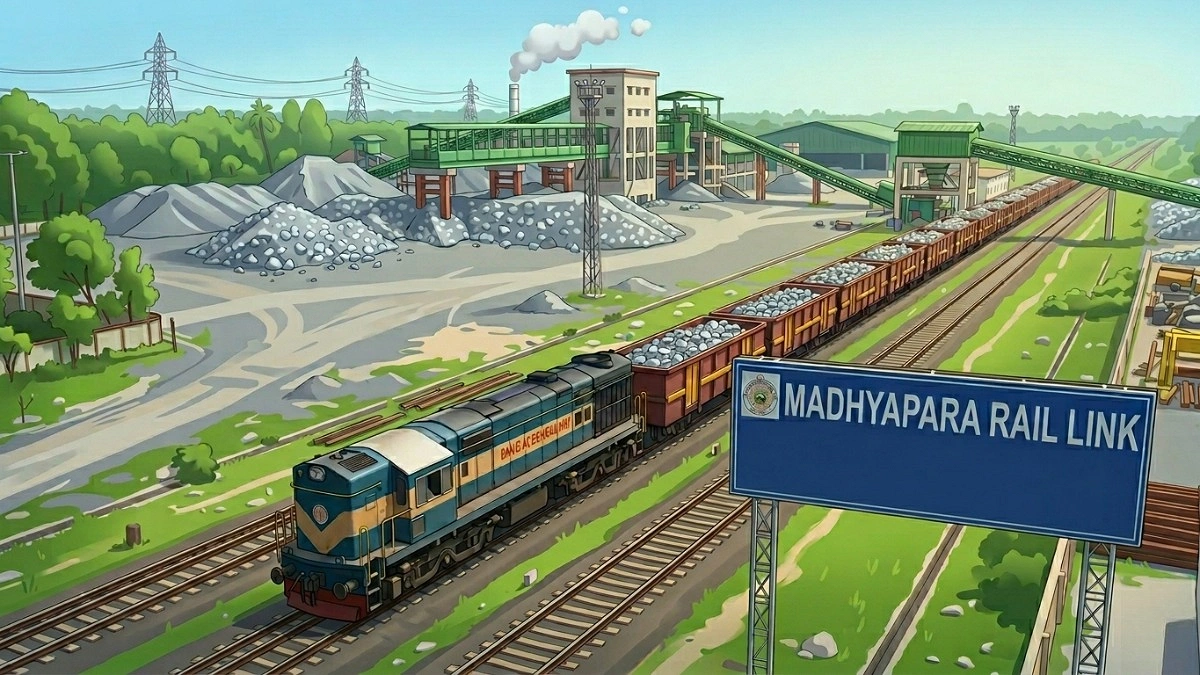
Generated by AI
The government has approved Tk 134 crore to restore the long-dormant railway line used for transporting stone from the Madhyapara Hard Rock Mine in Parbatipur, aiming to revive cost-efficient rail logistics and reduce dependence on road transport.
Officials from the Parbatipur Railway Division confirmed that the project will rehabilitate the 14-kilometre rail link between Bhawanipur and the Madhyapara quarry, which has remained largely non-operational for around 15 years. The restoration work will be carried out under the supervision of Bangladesh Railway following tendering and contractor selection procedures.
The decision comes after high-level discussions involving the Ministry of Power, Energy and Mineral Resources, where authorities emphasised the need to prioritise rail transport for stone movement from the mine. The rehabilitation project will include replacing stolen sleepers, repairing damaged tracks, and restoring critical rail infrastructure along the route.
Railway officials said the line became inoperative due to repeated theft and infrastructure damage, including the loss of around 70 sleepers and partial dismantling of track sections. Since its closure, stone transport has been shifted to roads, significantly increasing logistics costs.
Transporting one tonne of stone by rail from Madhyapara to Dhaka currently costs about Tk 700–800, while road transport via Bhawanipur and Bhairab costs Tk 1,600–1,700 per tonne—more than double the rail cost. This disparity has raised operational expenses for the mining company and weakened market competitiveness.
The Madhyapara Granite Mining Company Limited, under Petrobangla, reportedly holds around 14.67 million tonnes of stone stockpiles valued at over Tk 427 crore. Officials noted that inefficient transport has contributed to rising costs and slower sales.
Company representatives said restoring the rail link will significantly reduce transportation expenses, improve supply efficiency, and support national infrastructure projects dependent on stone aggregates. With Bangladesh’s annual stone demand exceeding 21 million tonnes, much of which is imported, authorities believe the revived rail route will help reduce foreign currency outflow.
Officials expect that once the project is completed, at least 80 percent of stone output will be transported via rail, in line with government policy, improving both economic efficiency and infrastructure resilience.

