
Can ‘Prince’ Abhishek Banerjee Become a ‘Warrior’?

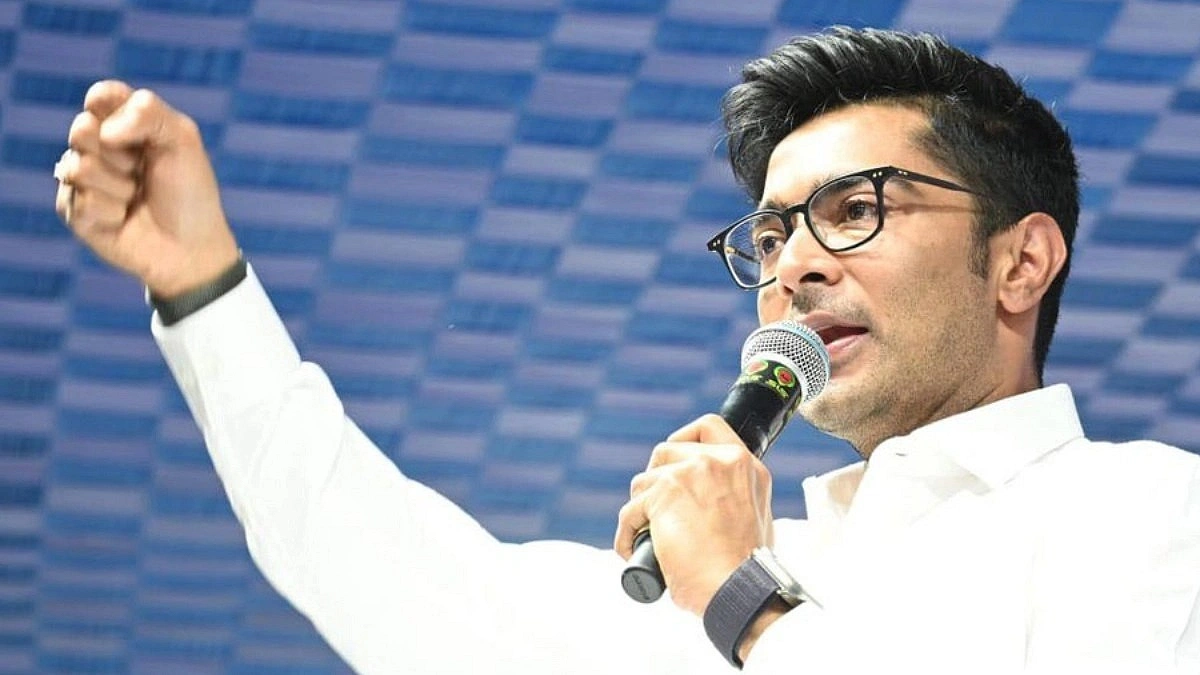
Abhishek Banerjee
When winds of political change sweep through, they do not only replace governments; they also shift the center of leadership. After the end of more than a decade and a half of Trinamool Congress (TMC) rule, West Bengal is now witnessing a strong surge of saffron politics. Against this backdrop, one name dominates discussions within the TMC - Abhishek Banerjee.
To understand Abhishek Banerjee’s rise, one must look back to around 2011. When the TMC came to power, the party began planning to promote a new generation of leaders. It was in this context that Abhishek Banerjee entered politics. His early work focused on organization’s youth leadership, direct engagement with party workers, and building his position within the party structure.
In 2014, his victory in the Lok Sabha election from Diamond Harbour marked a turning point in his political career. Alongside his entry into national politics, he emerged as a trusted face within the party. His responsibilities gradually expanded. He led the youth organization, shaped electoral strategies, and eventually established himself as the party’s national general secretary.
After the 2021 West Bengal Assembly elections, his political position grew stronger, and control over organizational affairs increasingly concentrated in his hands. A parallel power center effectively emerged within the TMC; on one side, the traditional leadership; on the other, Abhishek Banerjee’s emerging organizational network.
During this period, he attempted to introduce a new political style. Rapid decision-making, data-driven electoral strategy, and the promotion of young leadership became the core elements of his approach. Many viewed this as modernization. Critics, however, argued that it marginalized senior and experienced leaders within the party. This tension gradually created an invisible rift within the TMC, which remained less visible during its time in power but has become more apparent after its electoral defeat.
However, Abhishek Banerjee’s rise has never been free from controversy. Allegations of “dynasty politics” have long been associated with him. Opponents have repeatedly referred to him as a “prince.” His supporters, however, argue that his organizational skills, direct engagement with workers, and active role in election campaigns have earned him his position.
The real test in politics, however, begins after the loss of power. The results of the 2026 Assembly election have opened that test. Along with the TMC’s defeat, Abhishek Banerjee’s position has also undergone a significant shift. Until now, he operated within power politics, where administrative support, organizational strength, and electoral success worked together. Now, he faces the harsh reality of opposition politics, where every move encounter obstacle and every decision carry uncertainty. With Mamata Banerjee no longer in a position of dominance above him, the political landscape has changed dramatically. The election outcome has clearly shown how quickly political standing can shift once power structures collapse. At the same time, voices of introspection are emerging within the party.
Questions are being raised over candidate selection, organizational changes, and the tendency toward rapid decision-making.
Yet another reality remains. In discussions about the TMC’s future leadership, Abhishek Banerjee remains the strongest name. However, carrying forward Mamata Banerjee’s legacy, built on long struggle, mass outreach, and political experience, is not easy. This challenge becomes even more difficult from outside power.
At this moment, Abhishek Banerjee faces three major challenges: first, rebuilding the party from within; second, establishing credibility in opposition politics; and third, shaping an independent political identity that moves beyond the label of inheritance. Political history has repeatedly shown that while gaining power is easier, sustaining relevance after losing it is far more difficult. Abhishek Banerjee now walks that difficult path. Will he learn the politics of struggle on the ground? Will he be able to repair internal divisions and build new unity within the party? The answers remain uncertain. But one thing is clear, he is no longer just someone’s shadow.
Abhishek Banerjee is now a political test in himself. The outcome of this test will determine whether he remains merely the heir of an era or emerges as the architect of a new one.
