
Why Iran is Framing the Agreement with the U.S. as a Victory

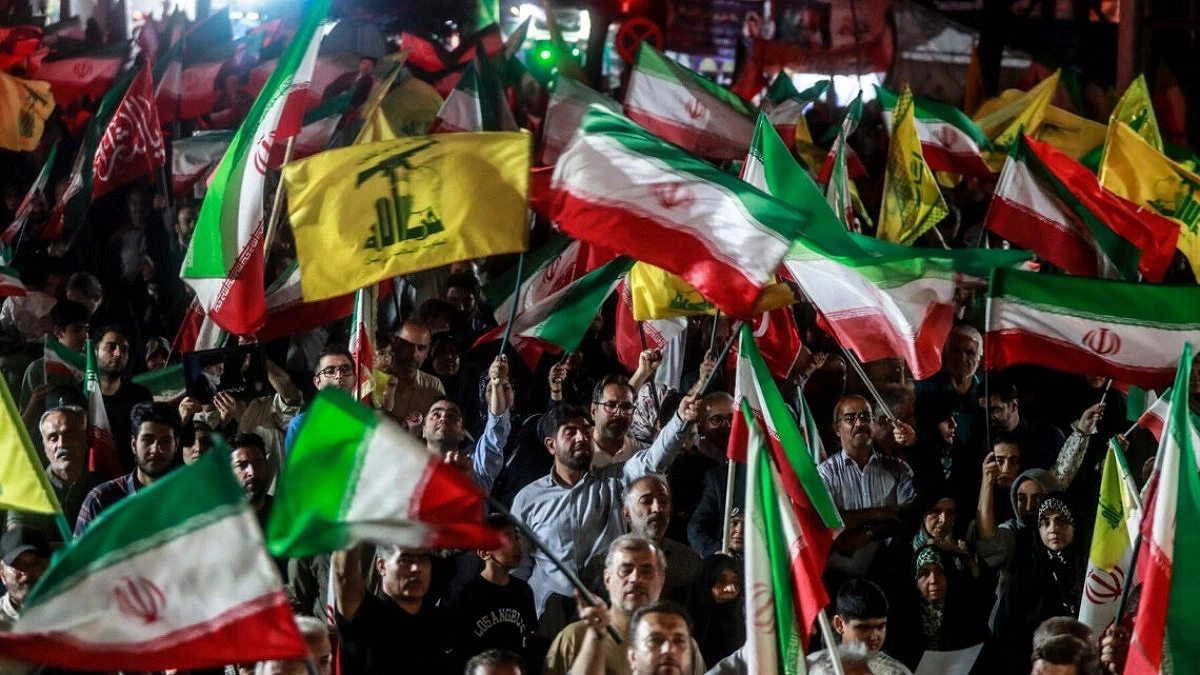
Iranians celebrate on the streets of Tehran after the agreement. Photo: Collected
Iran's leadership is attempting to frame the impending memorandum of understanding with the United States not as a retreat, but as a result of resistance and victory. However, constructing this argument is no easy task.
The country has recently emerged from a war that caused widespread destruction, its economy remains under severe strain, and a segment of the Islamic Republic's own support base has been speaking out against any rapprochement with Washington for months.
There are also Iranians both inside and outside the country who view this crisis not as a moment for diplomacy, but as an opportunity for regime change.
Amidst this polarized political reality, Tehran is now striving to make this agreement acceptable.
Senior Iranian officials have portrayed the deal as a success. Parliament Speaker and a key figure in the negotiations, Mohammad Bagher Ghalibaf, described it as a step on the path to ultimate victory.
President Masoud Pezeshkian called the understanding a "potential game-changer," stating that if fully implemented, it could resolve many of Iran's problems and create a different world for Iran and the Middle East.
Ghalibaf's role is significant because he is not seen as aligned with Pezeshkian's moderate camp; his public endorsement signals that there is support for the agreement within the more powerful parts of the Islamic Republic, including the Islamic Revolutionary Guard Corps.
Tehran's leadership is also presenting this agreement as a victory for another reason. Their argument is that the United States and Israel failed to achieve their primary objectives.
They could not force Iran to surrender, they could not remove the Islamic Republic from power, they could not halt Iran's nuclear program through military action, and they could not sever Iran's ties with Hezbollah.
Instead, Iran remains at the negotiating table, Lebanon has been incorporated into the framework, and the issue of sanctions relief is on the agenda.
However, this official narrative has faced controversy even within Iran itself.
A hardline member of parliament, who serves as the deputy chairman of Iran's National Security Committee, has reportedly referred to the draft agreement as a document that would turn Iran into a U.S. "colony."
This criticism is significant because it does not come from an external source, but from within the very institution responsible for overseeing national security.
Over the past several months, hardline parliamentarians, state-affiliated media, and pro-government regular rallies have repeatedly emphasized that the United States cannot be trusted.
Their argument is that diplomatic negotiations were ongoing until shortly before the war began, and that the Trump administration used talks as a cover to mask military preparations by Israel and the United States. In their view, any agreement with Washington could be seen as a sign of compromise.
However, these hardline voices now appear to have fallen somewhat silent. This suggests that the decision to move forward with the agreement has been approved at the highest levels of the state. That does not mean there is complete unity.
Iran's leadership could frame the agreement as the result of military pressure—such as pressure around the Strait of Hormuz or attacks on U.S. and regional energy interests.
But economic factors have also compelled Tehran. War, sanctions, shipping restrictions, limited access to oil markets and foreign currency, and extremely high inflation—all of these have placed immense pressure on the country and its ordinary citizens.
For many Iranian families, the question is not whether the agreement sounds like a victory; rather, it is whether it will lower prices and reduce the fear of another round of war.
U.S. Vice President JD Vance has said that Iran will not directly receive taxpayer money, but if it fulfills its commitments and sanctions are eased, it could gain access to billions and billions of dollars.
This allows Tehran to present the agreement not as dependence on America, but as a path toward investment and reconstruction.
Nevertheless, the risks are clear. The details of the memorandum of understanding have not yet been fully disclosed. Negotiations are scheduled to begin this coming Friday in Switzerland.
The most difficult issues—the future of Iran's enriched uranium, the permitted level of enrichment, verification, sanctions relief, the Strait of Hormuz, and Lebanon—are still pending discussion. Uncertainty surrounding Israel also remains.
Israeli Prime Minister Benjamin Netanyahu has opposed reports that Israel would withdraw from southern Lebanon, stating that Israeli forces will remain there as long as necessary.
Meanwhile, Donald Trump has publicly criticized Israel's activities in Lebanon, saying that many people have been killed there.
He also stated that he was displeased with the Israeli strike in Beirut just before the Iran-U.S. agreement was finalized, though he claimed his relationship with Netanyahu is "excellent."
For Tehran, this visible tension between Washington and Israel is advantageous.
It can be presented as evidence that Iran's pressure has complicated Israel's freedom of action. However, it also makes the agreement fragile.
If Israel continues its operations in Lebanon, Iran will face pressure to respond. And if Washington is unable to restrain Israel, Tehran's claim that Lebanon is covered under this understanding could quickly be put to the test.
Reactions from BBC Persian's readers and viewers suggest that the government's narrative of "victory" has not been universally accepted.
One individual said they were deeply worried about the prospect of another Israeli attack, but even after hearing about the agreement, they have no confidence in it and are concerned about whether the country will be properly managed if the deal holds.
Another anti-government Iranian, who initially supported U.S. military action, asked: if this does not lead to political change in Iran, then what was the point of the U.S. strikes?
"His comment was: 'We had hoped the system would change. But aside from hardship, inflation, and further damage to the economy, what benefit has come to the people?'"
However, many others were more sympathetic to the government's position.
One viewer declared Iran the victor, saying that this war has shown that sanctions can be lifted not through begging, but through the application of force.
Another more cautiously welcomed the agreement, saying it would allow people to return to work and normal life with some relief.
He said: "I think it is temporary. But we needed a chance to catch our breath and have some peace for a few months. Perhaps that is the most realistic assessment."
The Islamic Republic is framing the agreement as a victory because it cannot easily be presented as a mere necessity. But for many Iranians, its success will not be determined by slogans.
Rather, it will be measured by whether the war stops, whether prices come down, whether sanctions are eased, and whether the leadership can manage the next phase without triggering another round of sudden tensions.
