

IMED Exposes Corruption but Previous Govts Ignore Findings

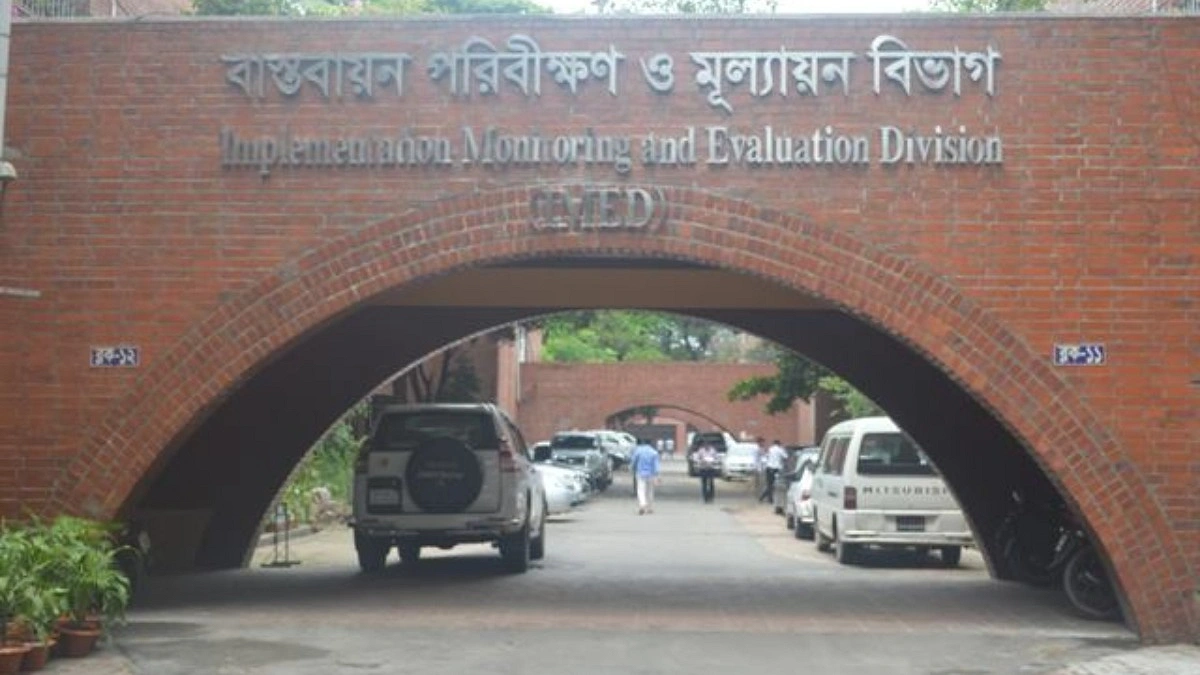
Photo: IMED
Implementation Monitoring and Evaluation Division (IMED) serves as the primary watchdog for government development projects, tasked with overseeing work from inception to completion.
Its investigations frequently expose irregularities, corruption, and negligence, resulting in exhaustive reports and specific recommendations. However, despite the significant expenditure of public funds and man-hours of around 350 employees, these efforts remain largely fruitless.
The entire effort amounts to labour in vain because no previous government has acted upon the vast majority of the recommendations. No disciplinary measures are taken, leaving the responsible parties beyond reach.
Insiders describe a “culture of silence” where authorities ignore findings, allowing the responsible parties to remain beyond the reach of the law. Experts warn that without exemplary punishment, corruption will continue to drain the national exchequer and damage the country’s reputation with development partners.
An investigation by Agamir Somoy into five completed IMED evaluation projects uncovered 18 distinct forms of corruption. These include the appointment of contractors without tenders, the use of low-quality materials in road reconstruction, the manipulation of project packages to favour specific contractors, and unauthorised changes to the nature of work.
The findings also revealed the payment of interest against government funding, arbitrary changes to building “plinth areas,” and the procurement of equipment at inflated prices. In some instances, funds were reportedly spent on “repairing” brand-new furniture.
Moreover, reports sent to relevant ministries years ago detailed cases where bills were paid for low-capacity machinery without imposing fines, and farmers were overcharged.
Former IMED Secretary Abul Kashem Md Mohiuddin expressed frustration over the ignored recommendations.
He said, “This is the greatest tragedy. Public money is spent to identify corruption and irregularities through evaluations, yet there is no punishment. During my tenure, I sent recommendations to relevant ministries and divisions via separate letters and presented them at various inter-ministerial meetings, but nothing happened.
“Now, no one takes IMED seriously. Had the initiative I took to introduce the ‘Evaluation Act’ been implemented, the situation might have been different today. IMED could have taken action itself, but the proposal never saw the light of day after being sent to the Cabinet Division. It is now time to make the institution truly effective.”
State Minister for Planning Zonayed Abdur Rahim Saki maintained that the government is taking action.
He said, “I will not speak on what the previous government did, but we have already begun taking action. Under the Prime Minister’s direction, IMED investigated three projects, and letters have been sent to initiate action against those identified as responsible in the report.
“Beyond IMED, we will monitor projects by installing dashboards in every ministry and the Prime Minister’s Office. This will ensure oversight from all quarters, leaving no choice but to take action.”
The five projects where IMED identified the 18 types of corruption - costing over Tk 1,000 crore - are:
Dhaka Metropolitan Waterlogging Removal (Phase-1): A Tk 169.28 crore project (2010-2014) where IMED found excessive billing, lack of tenders, and the use of over 200 packages instead of the approved 11 to favour certain contractors.
Hybrid System for Wind and Solar Power Plants in Hatiya Island: Irregularities included changing the scope of work without revising the Development Project Proposal (DPP).
The findings also detailed the expenditure of funds without turn-key contracts (responsibility from start to finish), agreements exceeding allocated budgets, and the conclusion of projects without building the core power plant.
Moreover, higher costs were recorded for fewer poles, unauthorised spending occurred beyond the allocation, and money was spent as interest against government funding.
Rehabilitation and Augmentation of Distribution Network of DPCD (Revised): This project faced similar issues, including completing the project without building the core power plant and overcharging for fewer poles.
Establishment of Kushtia Medical College and Hospital: IMED found the project was launched without a feasibility study and suffered from violations of financial and planning discipline. Former IMED Secretary Pradip Ranjan Chakraborty told Agamir Somoy, “I submitted a very thorough report, but nothing happened except for the suspension of one engineer.”
Agricultural Mechanisation: A 2023 evaluation revealed equipment purchased at various inflated prices, the exclusion of eligible contractors and genuine farmers, and the payment of bills for low-power machinery without penalty.
Centre for Policy Dialogue (CPD) Fellow Debapriya Bhattacharya emphasised the need for “value-based assessment”.
He said, “There must be a value-based assessment - meaning, how have the public benefited from the project? You must check if the intended recipients actually received the benefit for which the money was allocated. If they have not, we must assume half the money was stolen and take action. However, administrative reform is essential for IMED.”
Transparency International Bangladesh (TIB) Executive Director Iftekharuzzaman told Agamir Somoy that the situation reflects the “extreme failure” of the involved ministries.
He added, “IMED has performed its duties correctly, but the question remains: why has no action been taken? The government should monitor the extent to which IMED’s recommendations are being implemented.
“Those responsible must be held accountable. For corruption or irregularities, departmental action alone is not enough; the cases must also be referred to the Anti-Corruption Commission (ACC).”

