
Nepal’s hydropower bet exposed by deadly floods

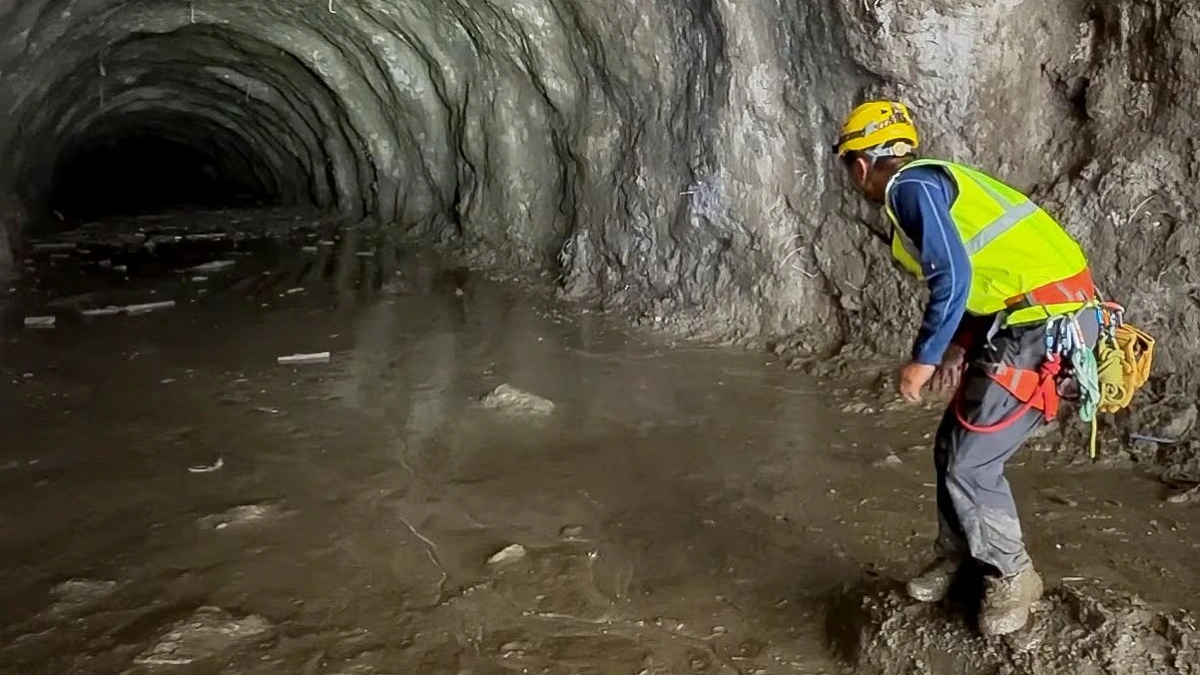
Photo: REUTERS
A violent flash flood, triggered by a collapsed glacier and its bedrock high in the Himalayas, has devastated Nepal. This disaster has exposed the extreme dangers of the country’s near-total reliance on water power.
The deluge has claimed an immense human toll, as officials confirm that the disaster killed more than 1,300 people, while thousands remain missing in the aftermath of 26 August’s catastrophic events.
Almost 100 percent of Nepal’s electricity comes from hydropower. This massive natural advantage allows the country to export its excess electricity to neighboring India and Bangladesh, generating nearly $200 million (£147 million) in crucial foreign revenue every year.
However, global warming is rapidly melting the very glaciers and towering mountain ranges that provide Nepal with this competitive edge, turning its greatest asset into a major threat.
A devastated power grid and urgent policy rethink
The violent floods completely wiped out entire villages located near the border of Nepal and Tibet. The high-volume torrents severely damaged 12 critical hydropower installations situated within the Trishuli River basin, immediately knocking out more than 10 percent of Nepal’s total power generation capacity.
Plant operators now face a grim reality, admitting that they do not yet know if they can ever bring any of these severely damaged facilities back into active operation.
The state-owned Nepal Electricity Authority, which owns six of the 12 crippled facilities, quickly issued public assurances that domestic electricity supplies remain adequate for Nepalese households.
Nonetheless, the scale of the damage has forced senior officials to acknowledge that the country must reform its long-term strategy. The authority’s spokesman, Rajan Dhakal, openly admitted that with climate-related catastrophes occurring at a higher frequency, “the time has come for a rethink of our hydropower policy.”
The disaster also triggered an immediate humanitarian crisis at the plant sites, trapping potentially hundreds of laborers, engineers, and local residents inside the mud-filled tunnels of these stations.
To prevent such vulnerabilities in the future, Dhakal suggested that a comprehensive policy overhaul could involve transitioning toward reservoir-based power plants. Unlike standard high-altitude plants, operators do not need to build reservoir facilities in volatile mountain areas.
These reservoirs would allow operators to store water and release it as needed, though they would also demand significant economic and environmental costs.
Former Energy Minister Kulman Ghising described the catastrophic deluge as a “once-in-a-century” event. He emphasized that the disaster offers hard lessons for how engineers design plants and where developers build them.
Ghising said, “We need to design the plants [to be more] resilient to the floods and, most importantly, adopt early-warning systems as well as robust emergency evacuation measures.”
The vulnerability of a one-dimensional energy basket
The disaster highlights a dramatic shift from Nepal’s recent energy history. In 2010, only two-thirds of people in Nepal had access to electricity. Even those who had connections regularly endured agonizing power cuts that lasted for up to 16 hours every day.
To overcome this crisis, the country aggressively expanded its hydropower infrastructure, launched a campaign to tackle rampant corruption, and boosted seasonal energy imports from India. These concerted efforts yielded spectacular results; by 2018, most of Nepal enjoyed uninterrupted, 24-hour power supply.
Nepal Electricity Authority reports that 225 active hydropower plants operate across the country. These facilities boast over 3,900MW of installed capacity, which can power roughly three million households simultaneously.
Developers are constructing or planning hundreds more of these stations. Most builders erect these plants high up in the rugged mountains to exploit swift-flowing currents, creating run-of-river projects that require little to no water storage infrastructure.
However, this high-altitude strategy exposes the grid to severe climate risks. The high-altitude regions of the Himalayas are currently warming 50 percent faster than the global average. This rapid warming increases the risk of catastrophic failures.
Data from Nepal’s Disaster Risk Reduction and Management Authority shows that climate-related hazards caused more than nine in 10 recorded disaster events between 2018 and 2024.
This extreme concentration of risk has drawn sharp criticism from energy experts who argue that Nepal has made itself too vulnerable. Kushal Gurung, a renewable energy expert and founder of the clean-tech firm WindPower Nepal, strongly advised against relying on a single energy source.
Gurung warned, “We should not be putting all our eggs in one basket in these dangerous times. We need to seriously embrace other alternatives as well, like solar and wind. And for that we will need to revise our energy policy that is at the moment very pro-hydropower.”
Vivek Shastry, a researcher at Columbia University’s Center on Global Energy Policy, supported this view. Shastry argued that “meaningful additions of wind and solar generation is a resilience strategy that can limit single-point or interconnected electricity system failures in the future.”
A comprehensive report from a German aid agency indicates that Nepal’s technical potential for solar power generation is around 10 times larger than its entire hydropower potential.
However, energy diversification faces structural limits. Puspa Sharma, a senior research fellow at the National University of Singapore’s Institute of South Asian Studies, agreed that while Nepal should diversify, it can only do so to a moderate degree.
Sharma pointed out, “While there is untapped capacity in wind and solar, hydropower really is the one that gives Nepal massive competitive advantage vis-a-vis its South Asian neighbours.”
Ignoring red flags and the high cost of inaction
Despite these well-documented dangers, massive capital continues to flow almost exclusively into major water projects. For instance, the Upper Trishuli-1 project - a massive foreign direct investment venture valued at $647 million - was almost completely destroyed by last week’s floods.
Its prominent financial backers include the Asian Development Bank and the International Finance Corporation. Similarly, the floods severely hit the Upper Trishuli 3A project, which China’s Export-Import Bank funded.
Himanshu Thakkar, the coordinator of the South Asia Network on Dams, Rivers & People, accused international lenders of turning a blind eye to these structural dangers.
Thakkar pointed out that international financiers were “acutely aware of the extreme danger to which they were exposing thousands of labourers, officials, residents, rivers, infrastructure and landscape.”
He criticized their inaction, saying, “Their own reports repeatedly highlighted it. But they did not take any preventive steps, did not demand stringent checks and balances, nor were they prepared for a calamity they knew could occur.”
Trishuli River basin has a notoriously volatile history. Extreme floods have battered this exact stretch of river in each of the last two years.
In September 2024, an unprecedented cloudburst over the Trishuli and Bhote Koshi river basins triggered rapid flash floods that devastated the riverside settlements of Rasuwa, Nuwakot, and Dhading.
In July 2025, a glacial lake in Tibet’s Gyirong county burst its banks, sending massive torrents rushing down into Nepal. That flood killed at least 11 people, wrecked critical infrastructure, and closed the busy Nepal-China trade corridor for six months, which only reopened on 1 January.
In light of these recurring failures, Rajan Dhakal of the Nepal Electricity Authority admitted that even when climate risk assessments were carried out, engineers failed to design the plants accordingly. Dhakal noted, “Clearly we will need to improve in the way we build and operate our hydropower plants.”
The private sector is already suffering severe financial repercussions from these disasters. Uttam Bhlon Lama, representing the Independent Power Producers’ Association of Nepal, revealed that insurance companies have paid out around $40 million over the past three years to cover flood damages at more than 20 privately owned installations.
He warned that soaring insurance premiums are rapidly making the cost of doing business entirely unfeasible for private operators.
Finally, Manjeet Dhakal, a member of Nepal’s UN climate delegation, emphasized that these transboundary climate risks require international cooperation. He urged global governments and organizations to share critical data, assess regional climate impacts, and build joint early-warning networks.
He highlighted the profound injustice of the situation, noting that Nepal bears virtually no responsibility for the global greenhouse gas emissions that drive these disasters.
Dhakal pleaded, “Nepal is among the least responsible for the greenhouse emissions that led to these exacerbated risks. Ironically, our hydropower industry is an attempt to reduce our already minimal emissions... We cannot, and should not, be made to respond to these risks alone.”
Source: BBC (adapted)


