Inside Mohenjo Daro: A Civilization Built for People, Not Power

Collected Photo
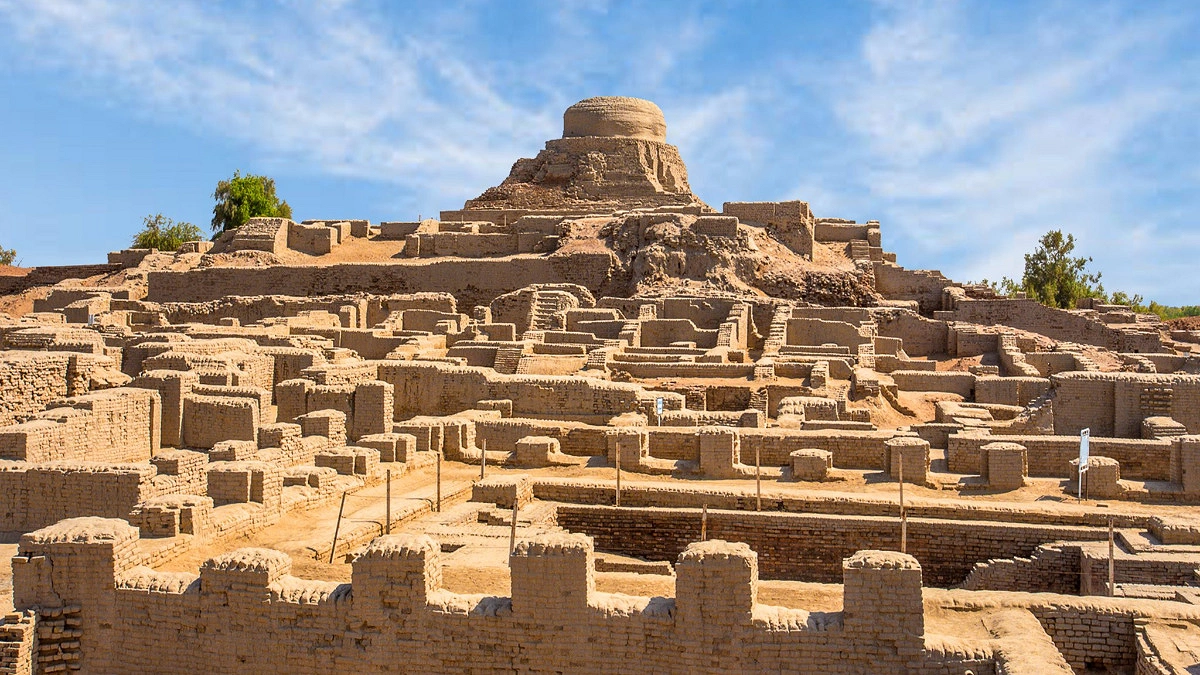
Five millennia ago, as Egypt’s rulers raised colossal pyramids and Mesopotamian cities crowned their skylines with towering temples, another kind of urban vision was taking shape along the Indus River. In present-day Sindh, Pakistan, Mohenjo Daro emerged as one of the most remarkable achievements of the Indus Valley Civilization—a city not defined by monuments to rulers, but by systems designed for everyday life.
A recent feature brings this ancient metropolis into focus, portraying it as a place that deliberately avoided grandeur. Unlike other early civilizations that glorified kings and gods through architecture, Mohenjo Daro invested in the comfort and organization of its people.
A City Designed for Living
What stands out most about Mohenjo Daro is its practicality. Rather than palaces or massive temples, the city’s greatest innovation lay underground: an advanced drainage and sanitation system. Long before similar infrastructure appeared elsewhere, residents had access to covered sewers, private wells, and household bathrooms—serving tens of thousands of inhabitants.
The city itself was carefully divided. The elevated “Citadel” protected key structures from flooding, including the famous Great Bath, a waterproofed pool likely used for communal or ritual purposes. Its public nature suggests a society where shared spaces mattered more than elite privilege.
Below, the Lower Town reveals a striking level of planning. Streets followed a precise grid, and homes were constructed from uniform bricks. Houses were designed inward, offering privacy and natural cooling. Many had their own sanitation systems, connected directly to the city’s broader drainage network—an extraordinary level of urban cohesion for its time.
The Enigma of Leadership
One of the most intriguing aspects of Mohenjo Daro is what it lacks. There are no grand tombs, no statues celebrating rulers, no clear signs of kings or military dominance. Instead, archaeologists have uncovered small, intricate objects—seals, beads, and standardized weights.
Even its most iconic artifacts are modest in size: a small “Priest-King” figure and a delicate bronze “Dancing Girl.” These findings hint at a society where authority may have been distributed among merchants or ritual leaders rather than concentrated in a single ruler. The absence of weapons and warfare imagery further supports the idea of a culture rooted in trade, cooperation, and civic order.
Decline and Preservation
By around 1900 BCE, the city was abandoned. The reasons remain uncertain. Some theories point to environmental changes—shifting river paths, tectonic disruptions, or declining trade networks that once connected the region to distant markets.
Today, Mohenjo Daro faces a quieter but relentless threat: salt. Rising groundwater carries minerals into the ancient bricks, which crystallize and slowly break them apart. The result is a haunting दृश्य—walls that appear dusted with white, as if time itself is erasing them grain by grain.
New Clues from Old Ground
After years of restricted excavation to protect the site, limited research resumed in 2025. Using modern techniques like satellite imaging and targeted drilling, archaeologists began exploring previously untouched areas.
Their discoveries suggest the city extended far beyond its known boundaries. Evidence of industrial zones and suburban districts points to large-scale production, particularly of beads and seals. These findings reinforce the idea of Mohenjo Daro as a major commercial hub—arguably one of the earliest examples of a globally connected city.
Lessons from an Ancient City
Mohenjo Daro offers a powerful perspective on what defines a successful civilization. Its legacy is not one of towering monuments, but of thoughtful design, public health, and social balance.
In a world grappling with urban overcrowding and environmental instability, this ancient “city of sanitation” feels unexpectedly modern. It reminds us that the strength of a society lies not in displays of power, but in how well it supports the lives of its people.
Though long abandoned, Mohenjo Daro endures—as both a warning and a guide.
Its silent streets suggest that sustainability, cooperation, and respect for shared space are not new ideas, but ancient principles we are still learning to reclaim. (Source: nationalgeographic.com)