
Pakistan and Afghanistan Move Out of South Asia!

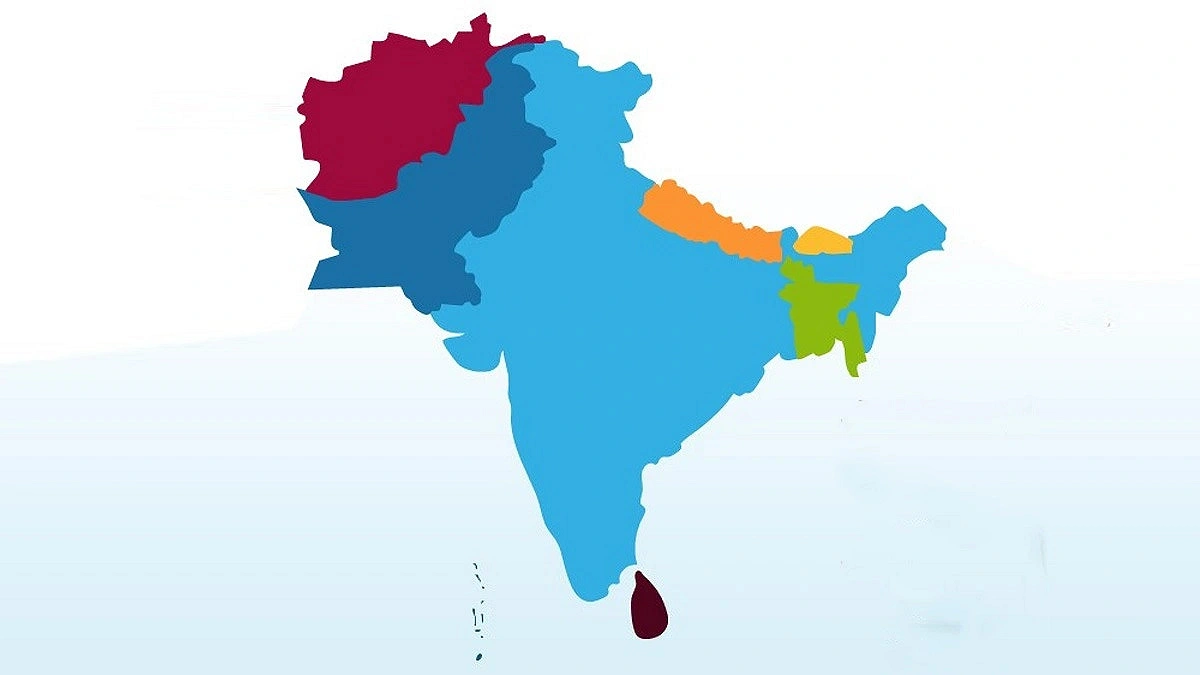
Map of once what was known as South Asia by International Organisations. Collected.
The geographical borders have not changed. Nevertheless, Pakistan and Afghanistan are no longer part of the South Asia region. The World Bank has somewhat quietly removed the two countries from the South Asia region on its global development map. From the 2026 fiscal year, these countries will be considered a part of the Middle East and North Africa (MENA) region.
However, this change did not come through a major announcement or press conference. It was revealed in the metadata list of the organization's own databank. Until now, Pakistan and Afghanistan were included under South Asia along with India, Bangladesh, Sri Lanka, Nepal, Bhutan, and the Maldives.
Organizations typically change such classifications to align with debt structures, economic models, internal management, and regional strategies. Although regional identity is never merely an administrative matter, it determines how investors, diplomats, and development planners view and evaluate a country.
This change holds particular significance for Pakistan. it comes at a time when the country is gradually expanding its foreign outlook. Previously, Pakistan was viewed almost entirely within the context of South Asian rivalries. However, in recent years, the country has deepened economic and strategic ties with the Gulf region.
Currently, Saudi Arabia, the United Arab Emirates, and Qatar have emerged as Pakistan's key financial and diplomatic partners. Riyadh has repeatedly assisted Pakistan's economy through deposits and financial aid. UAE investments have expanded into logistics, aviation, and infrastructure. Furthermore, millions of Pakistani workers play a vital role in the labor markets of Gulf countries.
The symbolic aspect of this change is also important. Historically, India’s size, market, and political influence have been dominant in South Asia. Pakistan's position in terms of growth, security, and diplomacy was often explained in comparison to India. Within this framework, Pakistan remained politically and economically cornered for a long time. On the other hand, the Greater Middle East is a different kind of power center. Integrating with this region could create economic opportunities for Pakistan, though it will also increase risks.
However, this realignment indicates that international organizations are now viewing Pakistan and Afghanistan through a broader lens. Pakistan's economic dependence, labor market, security role, and diplomatic relations are now expanding westward as much as they were eastward.
The timing of this decision is also significant. Amid instability in the Gulf and the Greater Middle East, Pakistan seeks to present itself as a "connector state." In line with this, relations with Gulf countries have been strengthened. Pakistan is being showcased not just as a crisis-ridden economy, but through new efforts to establish it as a hub for investment and trade.
