
New species of spotted wild cat discovered in Bolivia’s forests

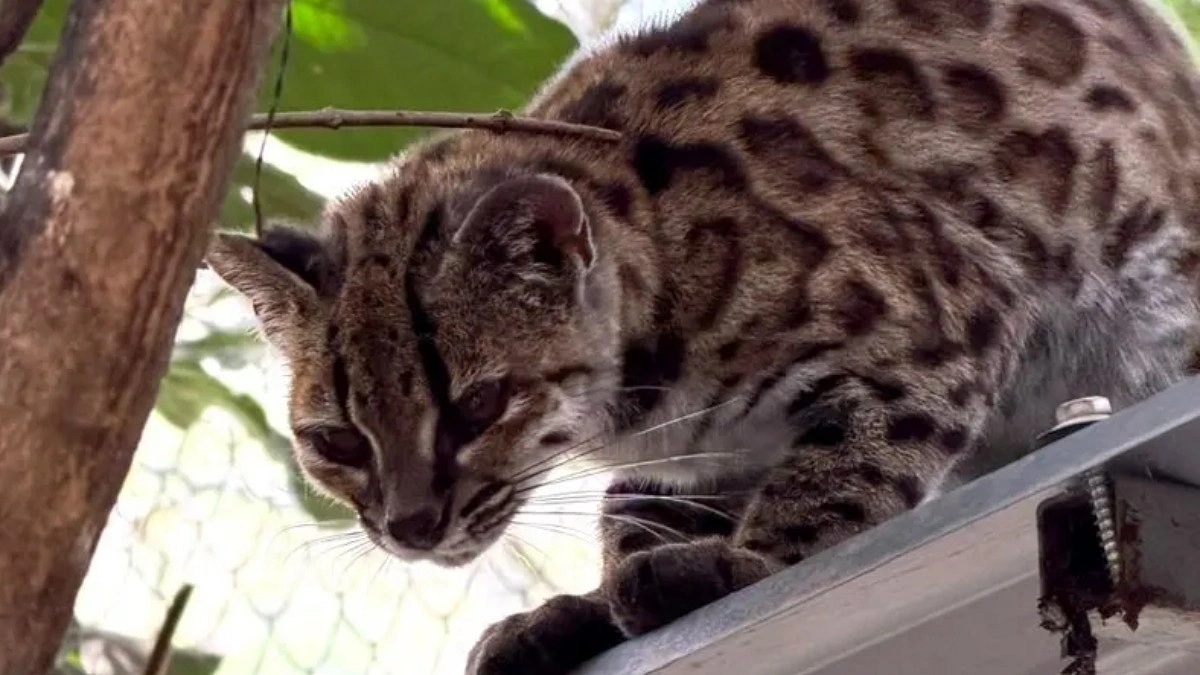
Collected Photo
Researchers have confirmed a new species of spotted wild cat living in the forests of Bolivia. The feline, which matches the size of a typical house cat, evaded detection for years because scientists routinely confused it with other wild cats exhibiting similar spots and stripes.
However, recent DNA analysis revealed that the animal belongs to an entirely distinct genetic class, underscoring how little humanity understands about the planet’s most elusive mammals.
Experts hope this revelation will redirect critical focus toward the preservation of tiger cats - a group of small South and Central American felines that receives substantially less public interest than larger big cats like lions, leopards, and tigers.
Distributed from Costa Rica across Central and South America down to Bolivia and Argentina, tiger cats feature subtle markings so remarkably alike that even seasoned specialists struggle to distinguish between them.
Paola Nogales-Ascarrunz of the Universidad Mayor de San Andres said, “It’s an amazing result that we have a new species for the world, which is the Leopardus tilcayo. It’s amazing that there are still new species waiting to be discovered: we don’t have to go to a volcano, an island, or deep into the sea.”
Researchers have verified only a single living member of the species - a 10-year-old cat living at a Bolivian rescue sanctuary - though scientists feel confident that other members inhabit the wild.
This solitary feline, nicknamed “Tigrino”, initiated the entire scientific investigation. Nogales-Ascarrunz, a Bolivian scientist, spotted the animal’s unusual physical traits while volunteering at the shelter.
A local resident had originally rescued the young cat from the forest believing it was a domestic kitten, but as the animal matured, its behavior clearly diverged from that of a household pet.
The study, published in Current Biology, delivered additional revelations by indicating that five distinct species of tiger cats exist rather than the previously accepted three, featuring the newly classified Tilcaya cat (Leopardus tilcayo) of Bolivia.
However, researchers emphasize that defining the species represents merely the initial step. Co-researcher Caroline Sartor from the Wildlife Conservation Research Unit at the University of Oxford highlighted the discovery’s importance for conservation efforts, noting that conservationists cannot safeguard a species without knowing its identity or habitat.
She said, “These are animals similar in size to a domestic cat, so you might think we would know them all by now, but this discovery shows how much biodiversity is still to be uncovered in some of the less-studied regions of the world.”
Threat factors such as deforestation, habitat destruction, and illegal hunting render tiger cat species vulnerable to extinction, yet previous environmental assessments entirely omitted this newly identified feline.
This breakthrough also carries broader ramifications for the global feline family, Felidae, which encompasses every living cat species ranging from miniature domestic pets to giant tigers. While taxonomists officially recognize 41 species, this discovery - along with evidence of multiple tiger cat classifications - elevates the total count to 44 or more.
Andrew Kitchener, an expert in mammals at National Museums, Scotland, who was not involved in the research, noted that scientists have long considered these small spotted South American felines a “taxonomic nightmare”.
He explained, “These cats are confusing because they look so similar and there are few specimens in museums, so even now we are still learning how to tell them apart as genetics reveal more species.”
Source: BBC (adapted)
