
1,000 tons of plastic, polythene thrown away daily
Will Dhaka Be Flooded With Polythene Again?

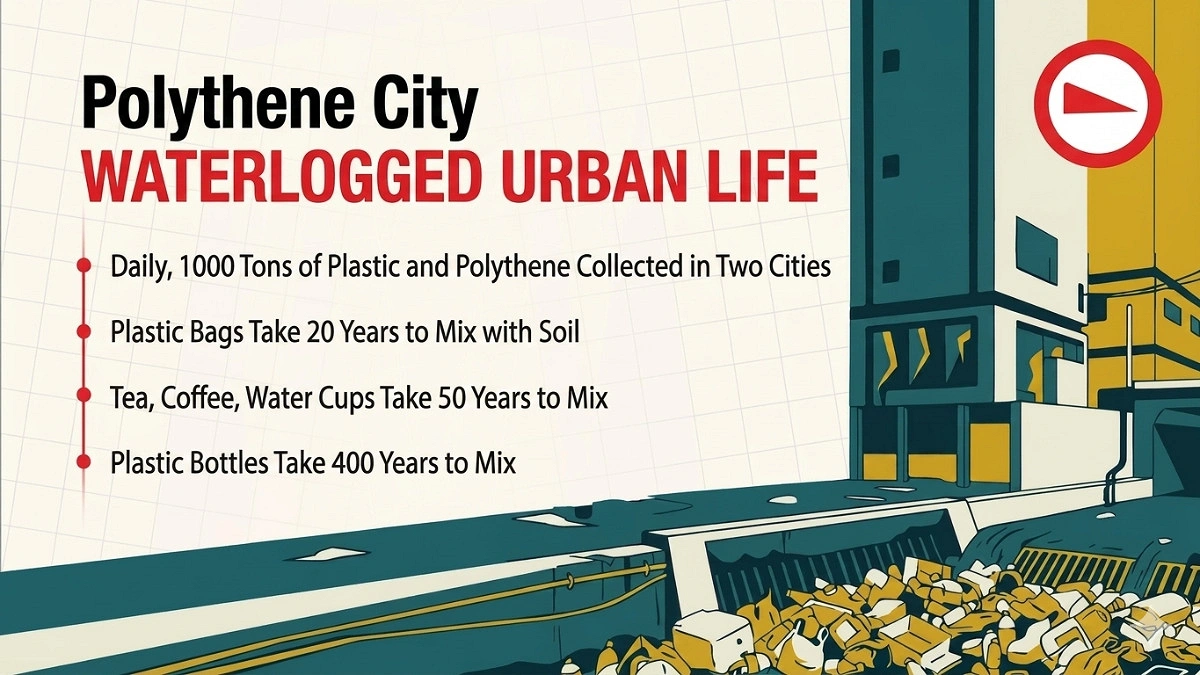
Image regenerated by AI.
Rain and waterlogging are like two sides of the same coin in the 'garbage city' of Dhaka. Every year during the monsoon season, citizens face immense suffering. Their anger is typically directed to the City Corporation or the government.
The citizens vent their frustrations over knee-deep water on Facebook pages or before media microphones. However, a calm reflection reveals that the citizens' own responsibility for this suffering is not insignificant.
Last Saturday (May 2), the Meteorological Department recorded 1.4 mm of rain in Dhaka. Even this small amount of rain caused waterlogging in various areas, including Gendaria, Old Dhaka, Bangshal, Arambagh, Shantinagar, Sayedabad, Shanir Akhra, Dhanmondi, Malibagh, Kawran Bazar, Agargaon, Farmgate, Tejgaon, and Mohammadpur.
On that day, plastic and polythene waste were seen accumulated in manhole openings and drains on both sides of the roads in Old Dhaka's Dholaikhal Haji Abdul Majid Lane, Nasiruddin Sardar Lane, Johnson Road, Bangshal, Gulistan, New Market, Nilkhet, and Kawran Bazar.
At the Nilkhet intersection, dirty water was overflowing onto the road because one manhole was relatively low. After water flowed through the cover for a short while, it became blocked, causing waterlogging. Moments later, a pedestrian cleared a piece of polythene from the opening of the cover with his foot, and then water gusted into underground drain again.
This habit of throwing polythene everywhere and treating the entire city as a dustbin instead of using designated spots is a common practice of this city's most of the people.
The Dhaka South City Corporation collects approximately 3,000 to 3,200 tons of waste daily. Of this, 15% consists of plastic and polythene. This means at least 480 tons of plastic waste are generated daily, which amounts to 14,400 tons per month and 175,200 tons annually.
This is only the figure for the Dhaka South City Corporation. Even more waste is collected in Dhaka North City. Between the two cities, an average of nearly one thousand tons of plastic and polythene waste is generated in Dhaka every day.
Plastic is created from fossil fuels through chemical processes. Bacteria cannot penetrate it, so it does not rot easily. The widely used plastic bags found in markets take about 20 years to decompose into the soil. One-time cups used for tea, coffee, and soft drinks take about 50 years to decompose, while plastic bottles take 400 years to merge with the earth.
Yet, in our country, plastic is being discarded indiscriminately in streets, fields, and open spaces. This is particularly visible in front of roadside food stalls and tea shops, where piles of plastic items—ranging from disposable cups to bread and biscuit packets and water bottles—can be seen.
Along the footpaths of New Market, discarded polythene used in the market was found lying around. These polythenes end up on manhole covers, blocking the flow of water and creating waterlogging.
At that location, a 55-year-old battery-operated rickshaw puller named Md. Ashraf Hossain, who lives in the Sayedabad area, raised his concerns. He said he is afraid to take his rickshaw out of the garage when it rains because water accumulates there even after slight rainfall, risking damage to the rickshaw's engine.
Ashraf also noted that the drains and manholes in the Sayedabad area are frequently clogged with plastic cups, polythene bags, and various other items. He admitted that locals discard trash everywhere and confessed to doing so himself. "Nobody says anything if you throw trash on the street," he pointed out. "Even the government officials have never told us where the trash should be thrown."
From rickshaw pullers to educated individuals, this awareness has not been instilled in anyone, resulting in waterlogging and suffering whenever the monsoon arrives. As this year's monsoon season begins, the same crisis will take place.
Due to the situation, the Dhak a South City Corporation (DSCC) is giving special attention to plastic waste. Chief Waste Management Officer Mahbubur Rahman Talukdar stated, "We are making arrangements to produce clothing and fuel from plastic waste through agreements with foreign companies. Additionally, we are personally inspecting various parts of the city every Friday and Saturday and distributing leaflets to raise awareness."
He said it is not possible for the City Corporation alone to resolve the waterlogging caused by plastic waste and urged citizens to be more responsible.
Polythene was first banned by law in the country in 2002. Despite this, its use continues to grow, and 80% of it is neither recycled nor collected. These items travel from the streets through drains to ditches, canals, and rivers, eventually ending up in the ocean.
Because biodegradable and plastic wastes are not disposed of separately, everything ends up in landfills together. Under ultraviolet rays, these plastic particles break down into even smaller microplastics, which are harmful to humans and all living creatures.
Environmentalist Professor Akter Mahmud said, "According to the City Corporation, they can collect 70% of the waste. This means the remaining 30% is left behind. These remnants later stay on the streets, causing waterlogging and eventually reaching canals, ditches, and rivers. This responsibility lies with both the waste management department and the general public."
He added that citizens must be mindful not to throw plastic and polythene everywhere. Otherwise, whenever the monsoon arrives, Dhaka will submerge, and the general public will continue to suffer.
