
Emphasis on Creative Economy

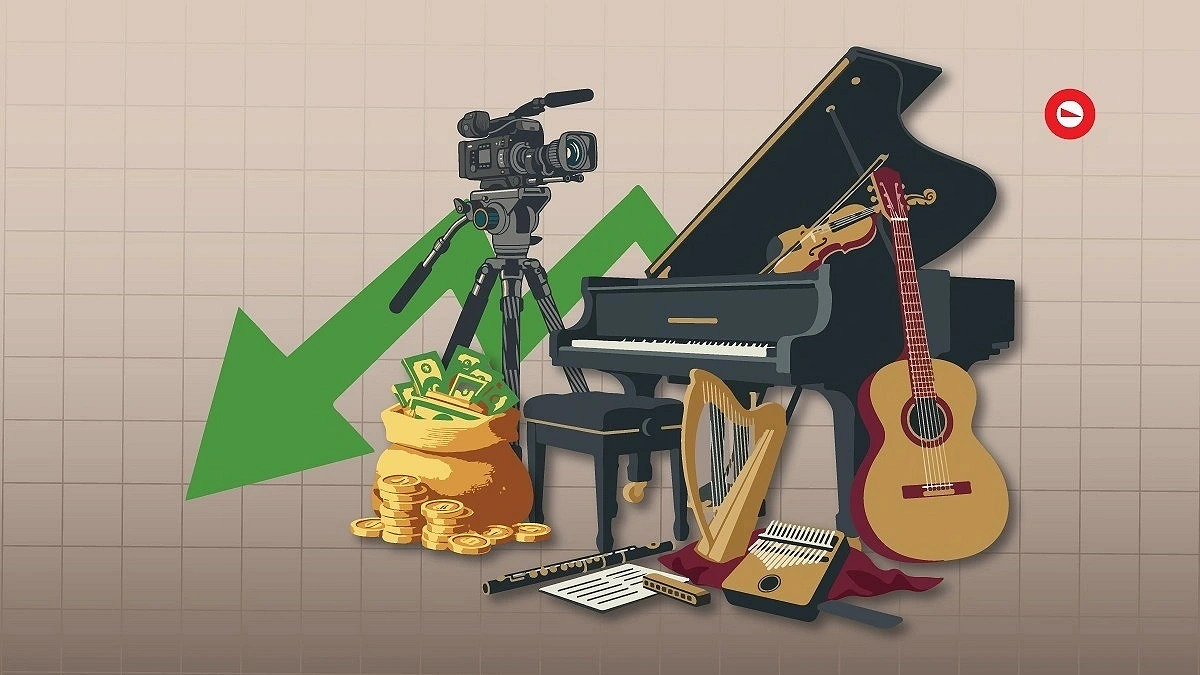
Graphics: Agamir Somoy
In the budget for FY 2026-27, allocation for the Ministry of Cultural Affairs has increased by only Tk 2 crore. However, the government has proposed Tk 300 crore for the development of the creative economy sector, which is expected to contribute to cultural growth. Finance Minister Amir Khasru Mahmud Chowdhury also said that an additional Tk 500 crore fund will be mobilized for the creative economy from the CSR funds of Bangladesh Bank.
The finance minister placed the budget proposal for FY 2026-27 on Thursday. The size of the budget has been set at Tk 9.38 trillion.
The proposed allocation for the Ministry of Cultural Affairs stands at Tk 826 crore, including Tk 485 crore for operating expenses and Tk 341 crore for development spending. In FY 2025-26, the allocation was Tk 824 crore, while the revised budget stood at Tk 753 crore. Compared to the previous budget, the increase is only Tk 2 crore.
Cultural practitioners had earlier demanded at least 2 percent of the national budget for the cultural sector to support cultural development and promote social harmony, human values, and the preservation of national heritage.
This year, the allocation for the Ministry of Cultural Affairs accounts for less than 1 percent (0.09 percent) of the total budget.
In immediate reactions, cultural personality Mamunur Rashid and Actors’ Equity president Azad Abul Kalam told Agamir Somoy that the culture sector has once again been neglected in the budget and their expectations have not been met.
Mamunur Rashid said, “We have long demanded at least 1 percent of the total budget for the cultural sector. That demand has not been fulfilled.”
He and Azad Abul Kalam also said it is not clear how the allocation for the creative economy will actually contribute to the cultural sector.
The “creative economy” mainly refers to film, dance, music, theatre, publishing, advertising, architecture, visual arts, crafts, design, software, and video games. The government aims to integrate this potential sector into the mainstream economy and strengthen national branding through its development.
Azad Abul Kalam told Agamir Somoy, “The cultural sector allocation remains neglected as usual. However, it is not clear how the proposed funding for the creative economy will be implemented. Still, we are viewing this initiative positively.”
Prices of Musical Instruments and Film Equipment Expected to Reduce
In his budget speech, the finance minister proposed reducing duties on selected items to help build a global-standard “creative economy” by harnessing the talent and creativity of the country’s young population. He also aimed to ensure that high-quality content production and filmmaking equipment remain accessible to young creators. As a result, prices of various musical instruments are expected to decrease.
The finance minister said, “To improve the quality of music used in digital media and support the creation of creative music, I propose to fully withdraw the existing 5 percent regulatory duty on imports of essential musical instruments such as guitars, pianos, violins, and related accessories.”
He also proposed reducing import duties on high-tech cinematographic cameras and spare parts for cameras and projectors from 15 percent to 5 percent to enhance the technical standards of the film and creative media industry in line with international standards.
Actors’ Equity president Azad Abul Kalam said, “The withdrawal of duties on musical instruments and the reduction of taxes on film equipment are positive steps.”
Tax Exemption for Content Creators
The finance minister has said that establishing creative hubs at national and regional levels is essential for the development of the creative economy. In his budget speech, he stated, “These creative hubs will include cultural stages, bookshops with reading facilities, cineplexes, and small cafeterias, along with arrangements for displaying and marketing local specialty products.”
To encourage young content creators on platforms such as YouTube and Facebook, the government has fully exempted digital content creators and freelancers from the existing 15 percent VAT on services. This benefit will remain in effect until 2035.
The finance minister said, “Although the creative sector is a promising area of the economy, it has never been given due importance. We are prioritizing the creative economy to fulfill our electoral commitments. Our goal is to unlock the vast economic potential of the creative industries and integrate them into the mainstream economy.”
He also said a 10-year investment and action plan is being prepared to develop regional creative hubs across the country. The government plans to establish such hubs at divisional, district, and upazila levels, as well as in the premises of Shishu Academy and Shilpakala Academy.
In his budget speech, the finance minister said, “Our government is taking multi-dimensional strategies to increase the contribution of the creative economy to 1.5 percent of GDP and to create 500,000 new jobs in this sector through effective development initiatives. We are working to integrate rural artisans into the global value chain, improve product quality and design diversity, and bring them into the mainstream of financing and development efforts.”
